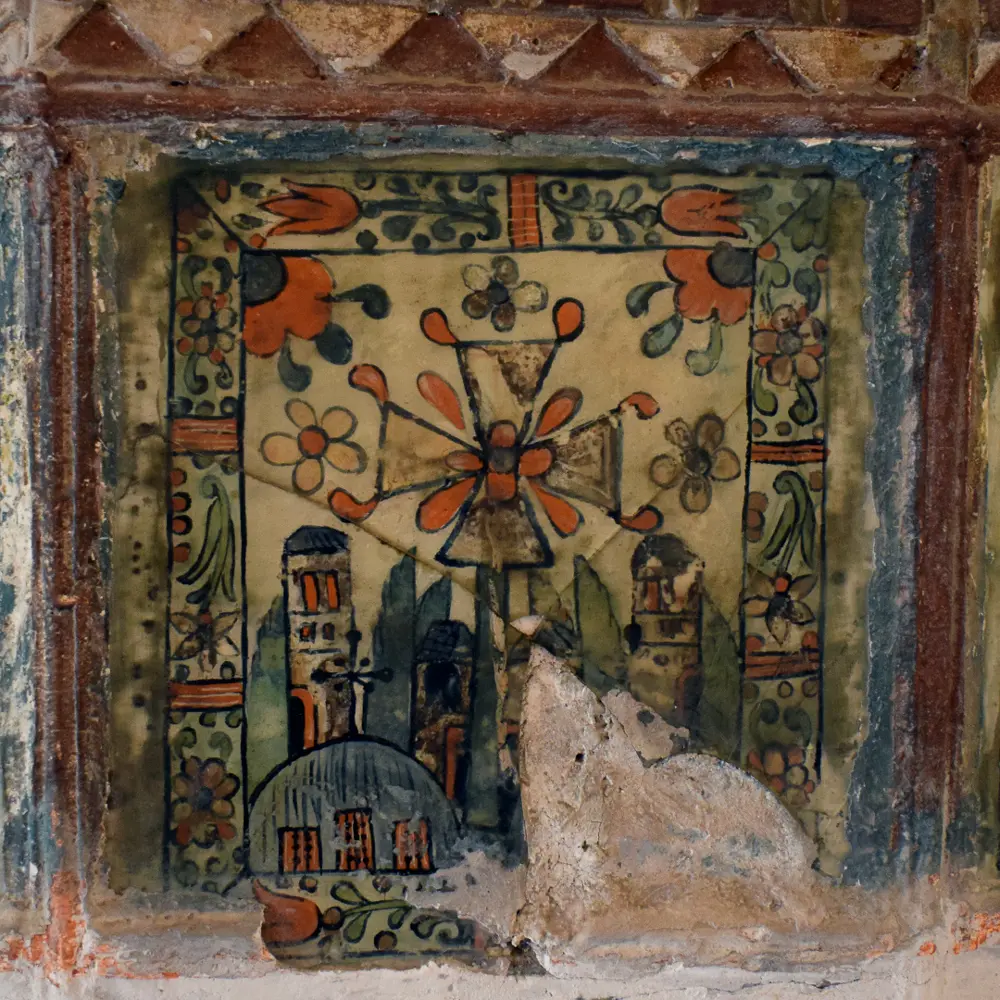
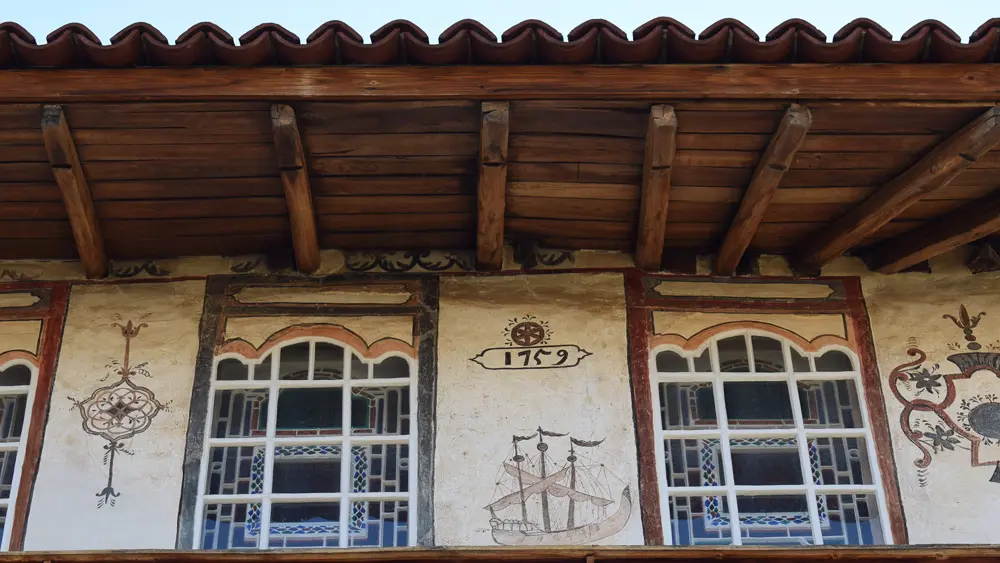
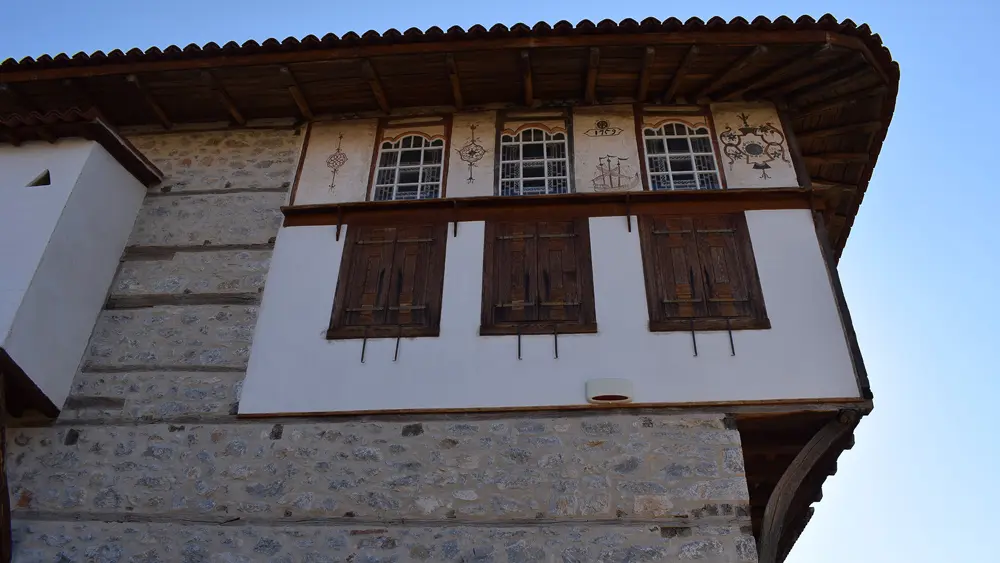
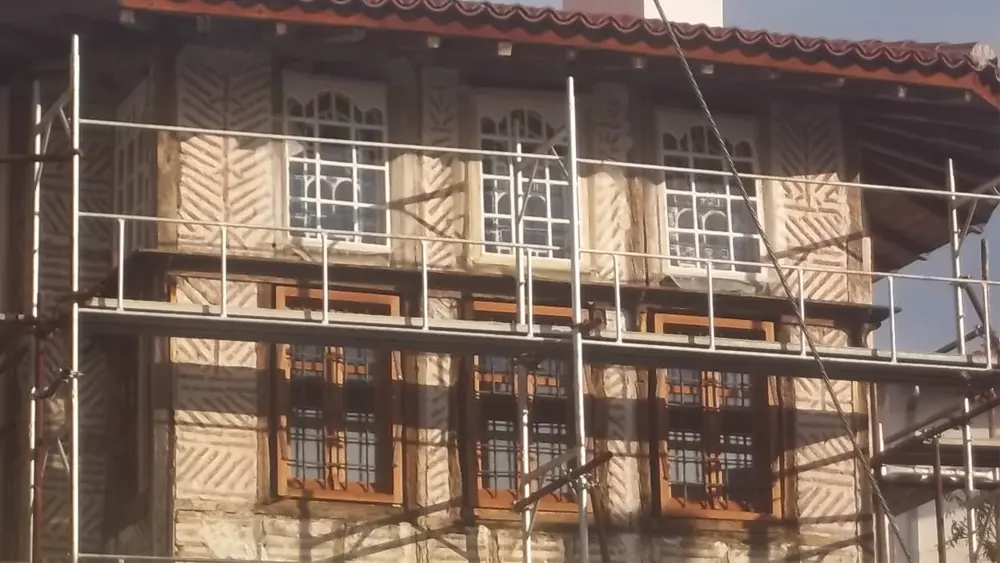
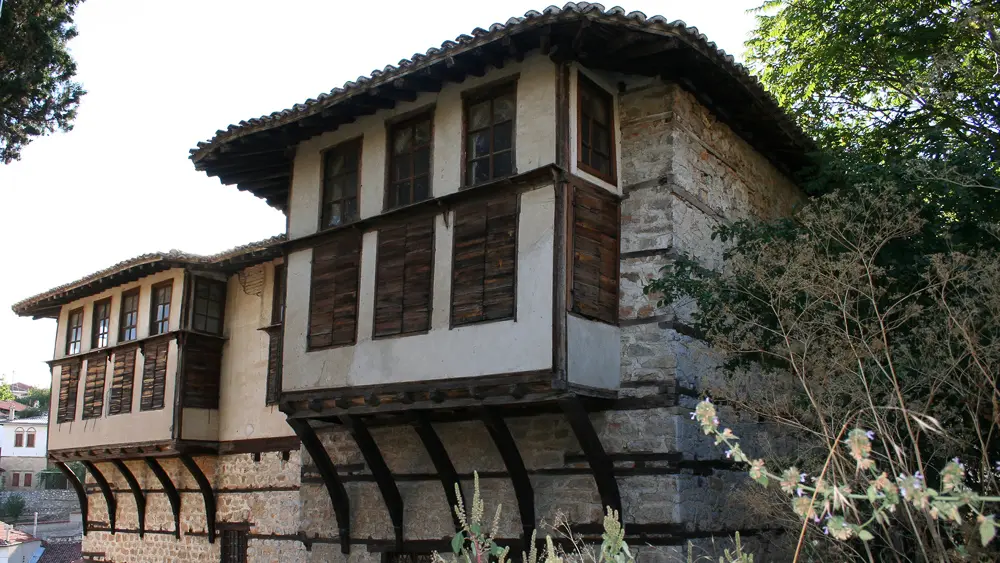
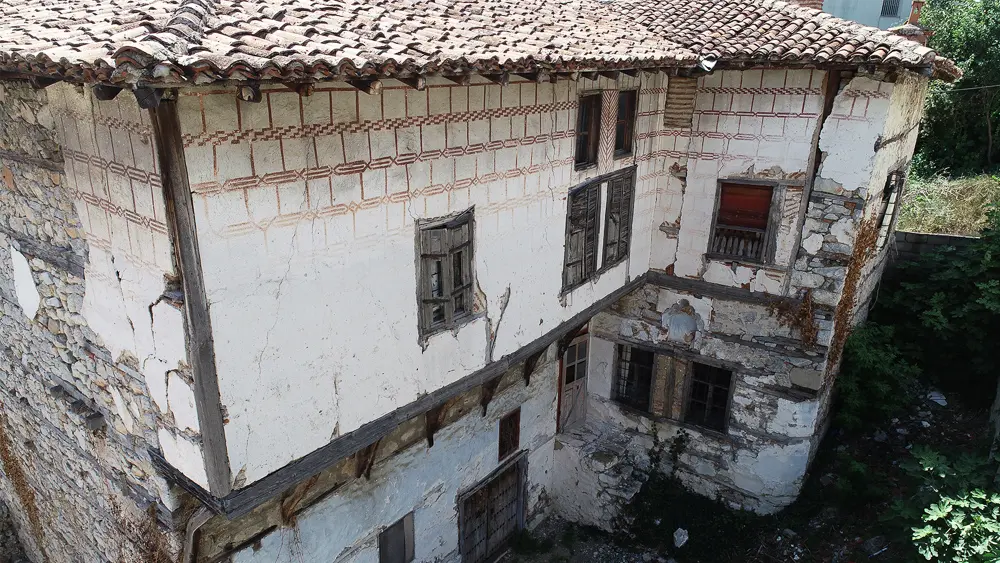
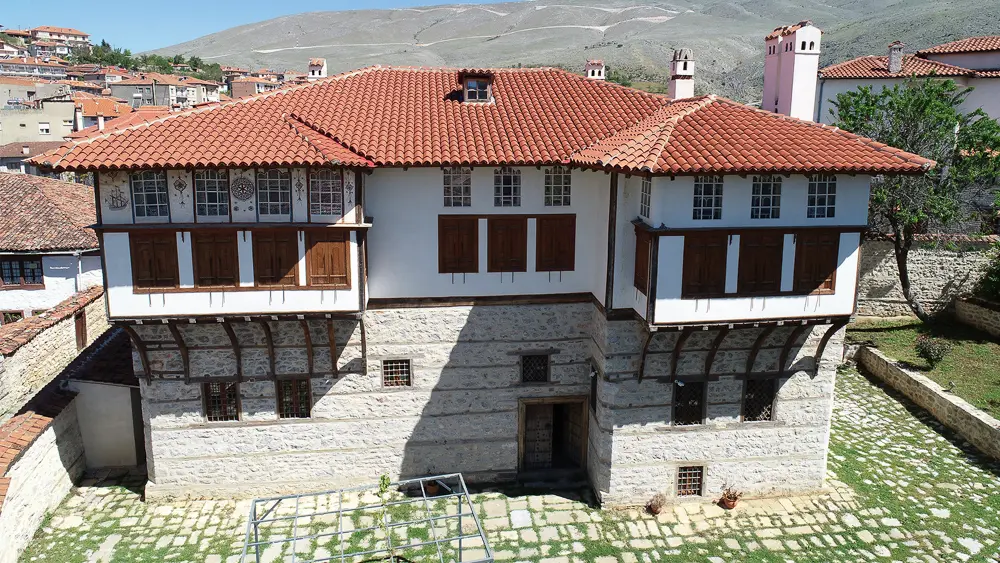
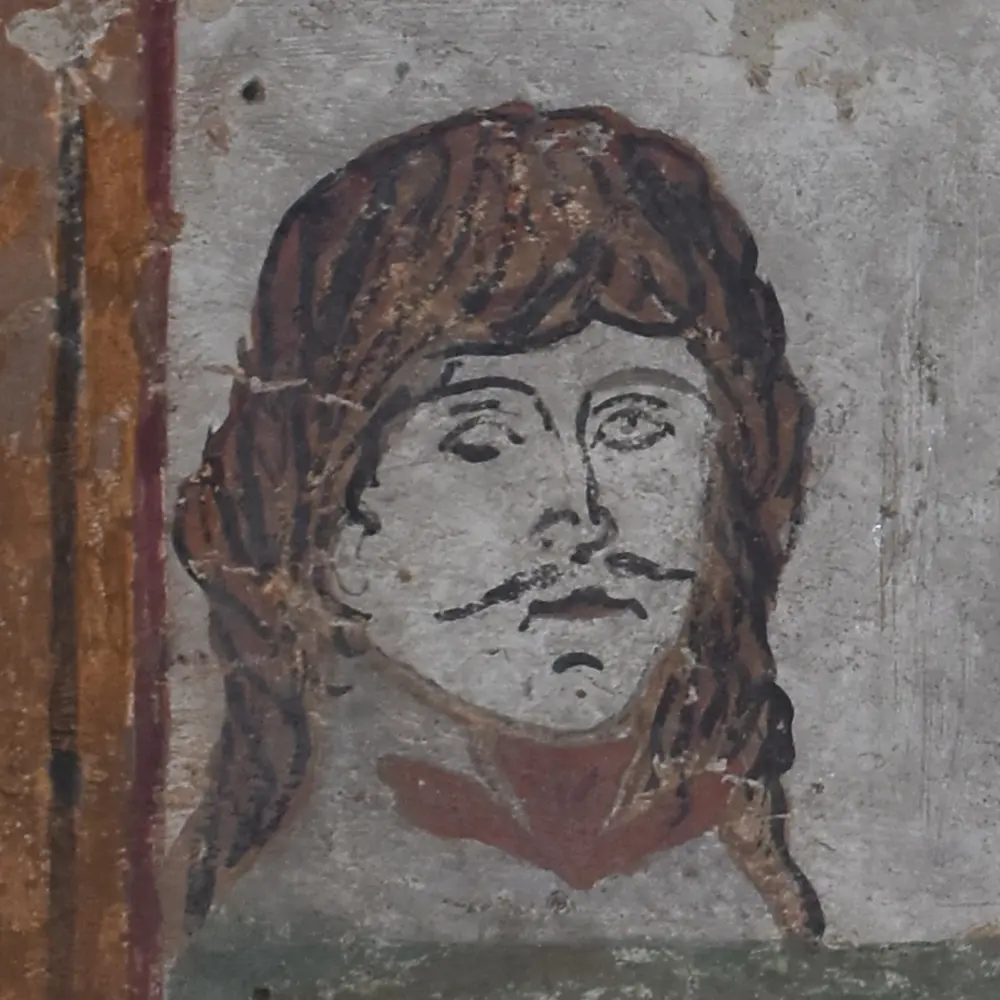
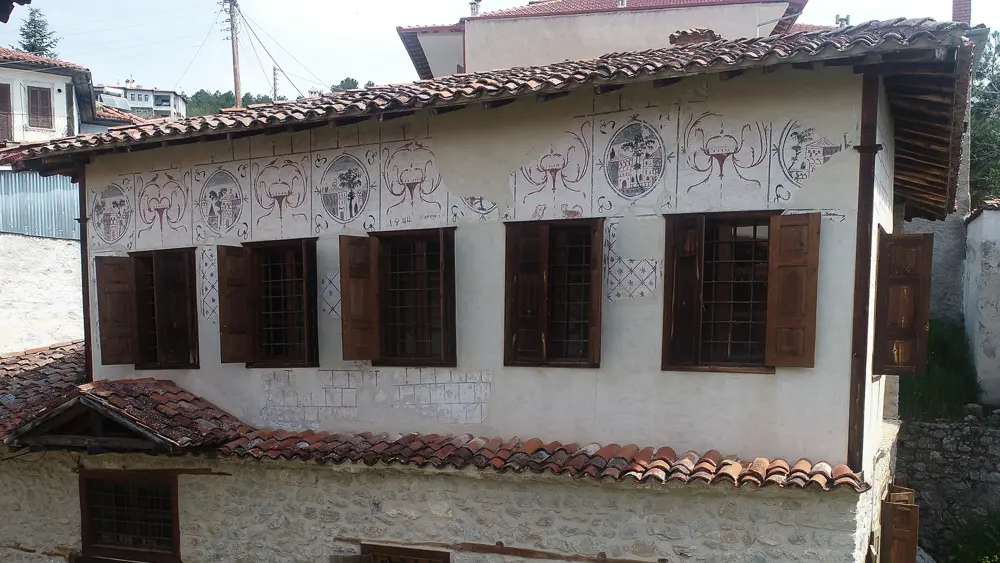
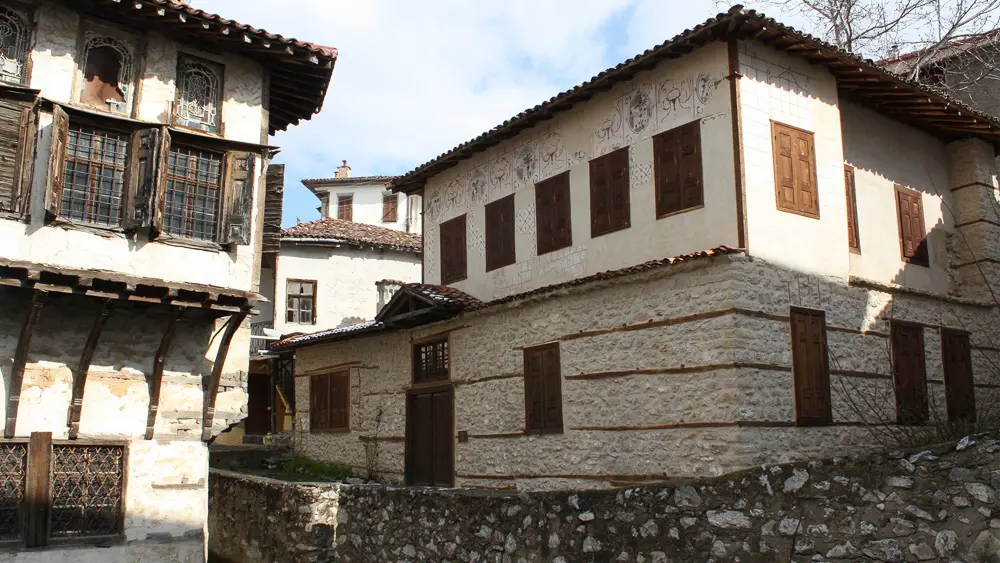
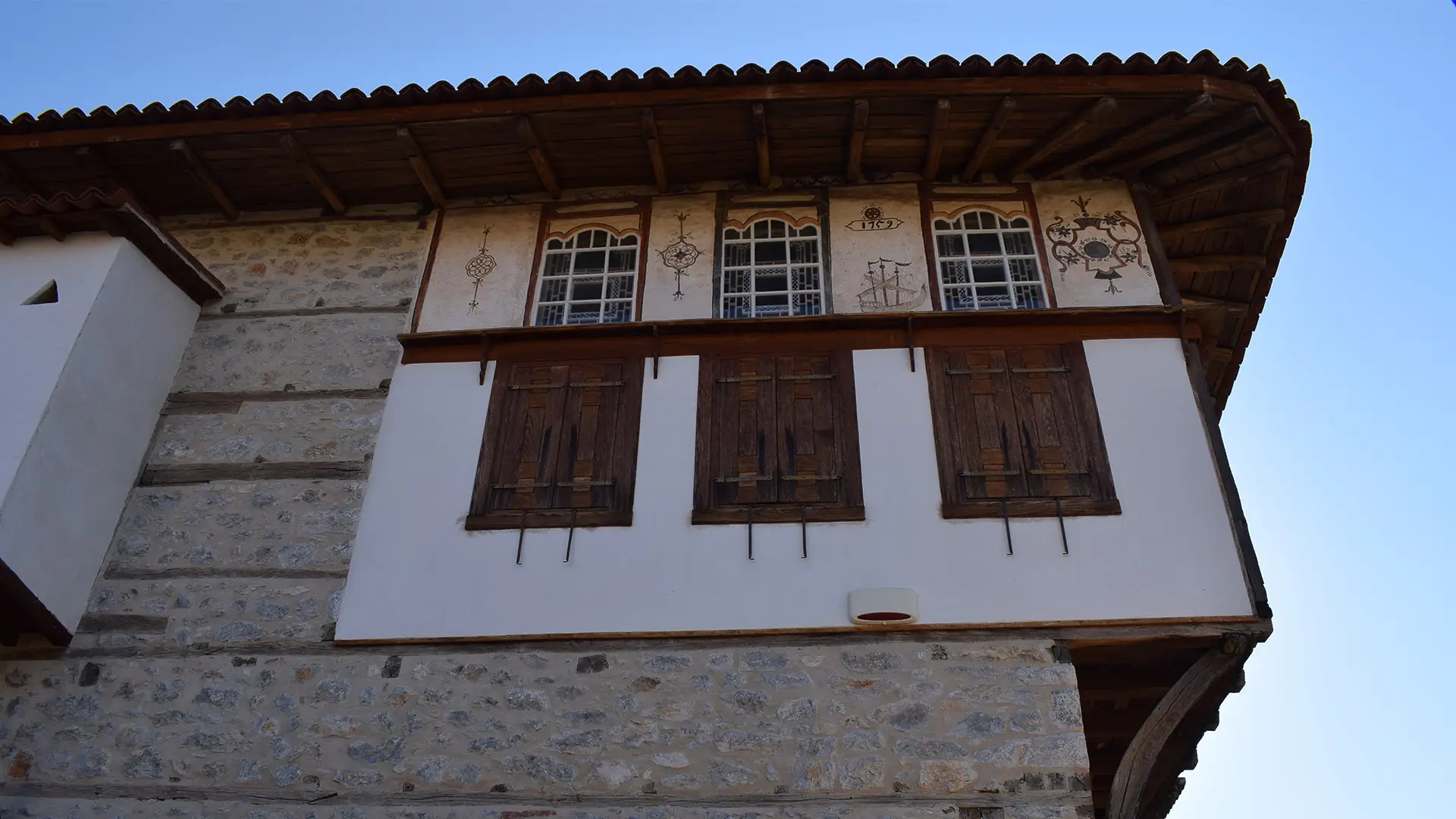
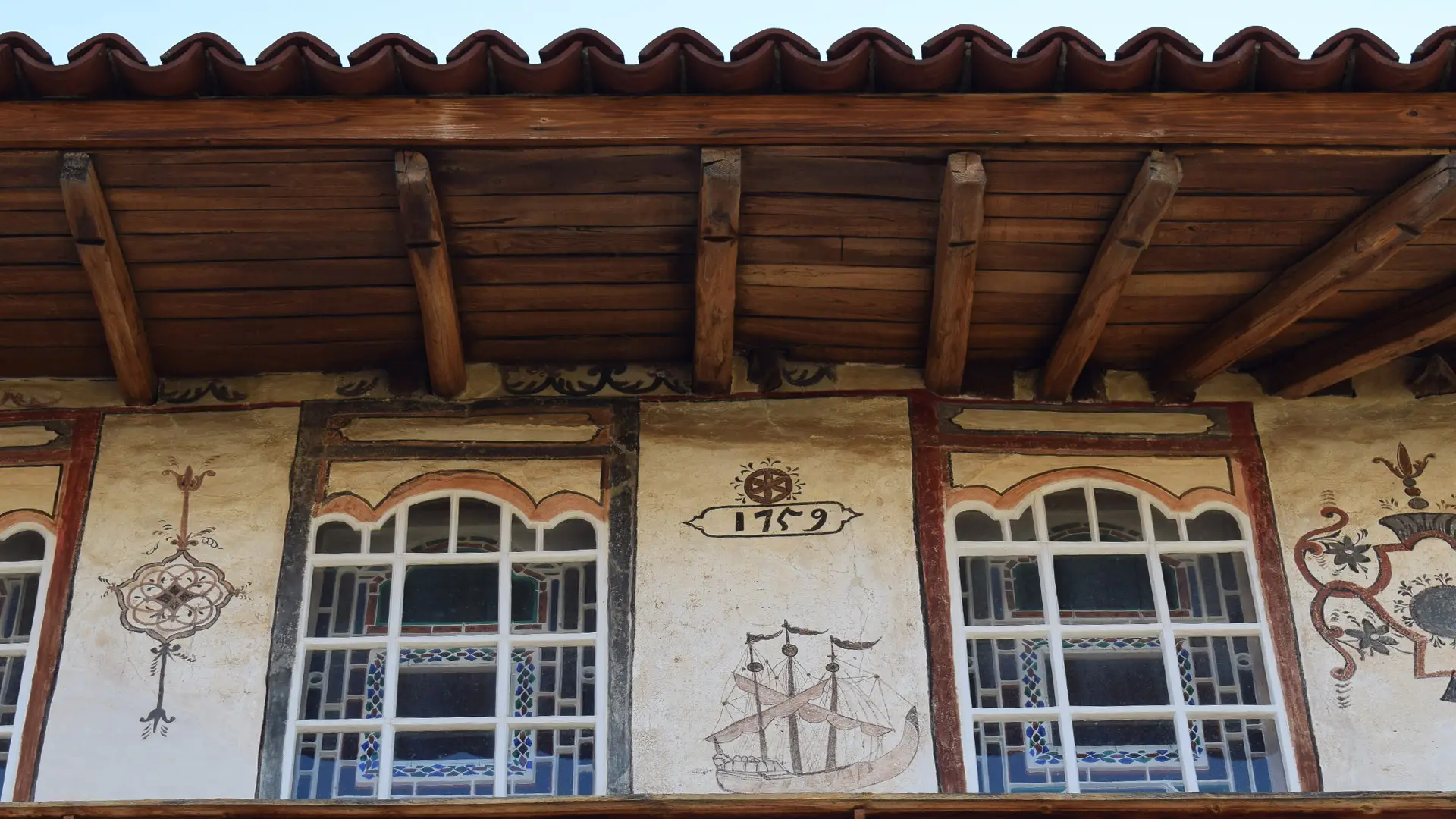
One of the best preserved mansions of Siatista is the mansion of Poulkidis, known in Siatista as the mansion of Pulko, in the district of Geraneia. The inscription at the entrance of the mansion testifies that it was founded in 1754 and that its owner was Theodoros Emmanuel or Emmanouilides. A second date, 1759, is inscribed on the frescoed decoration of the exterior of the mansion visible from the street, indicating the time of completion of the fresco work.
The courtyard
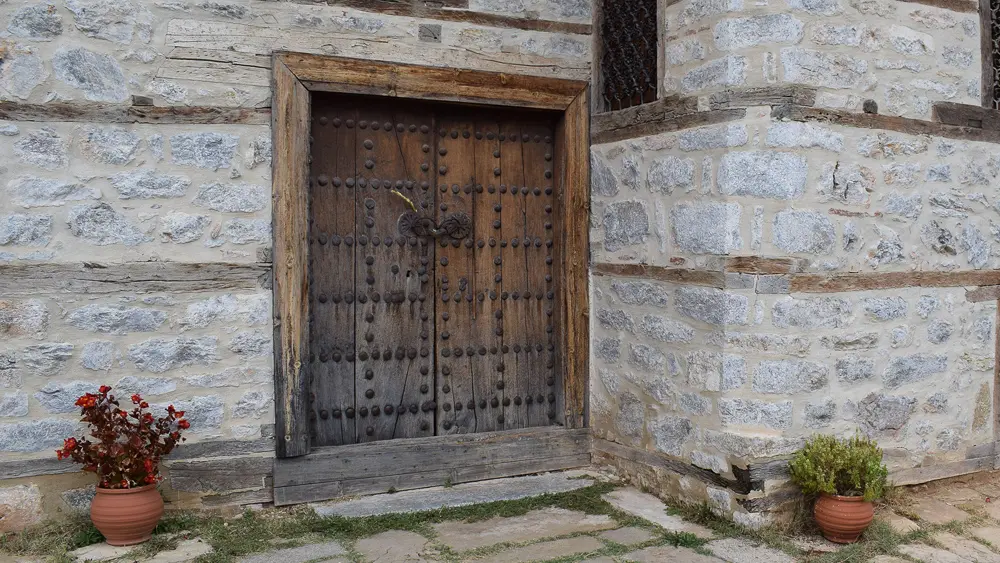
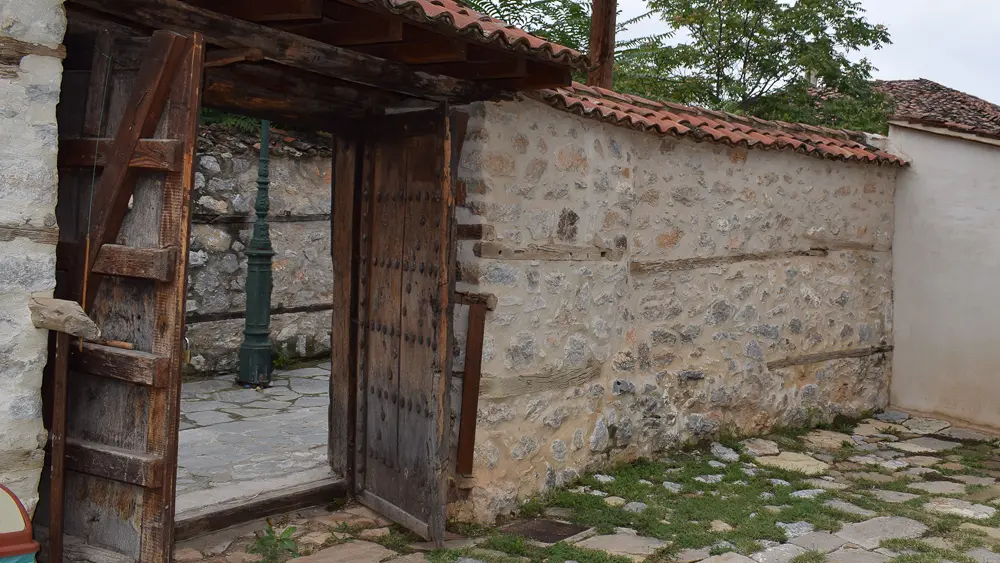
A wooden double-leaf door with nails and a high curtain wall protected the mansion and its occupants from the prying eyes of passers-by but also enemies and bandits.
In the paved courtyard there were once the auxiliary rooms of the mansion (wood-fired oven, toilet, stables). Today only the water well, essential for any mansion of that time, and the marble decorated bases for the installation of a wooden pergola are still standing in the courtyard. The house probably also had a small orchard with fruit trees. At the back of the mansion there is an outhouse, a house built to accommodate servants, visitors or family members after their marriage. It is not known whether it was built at the same time as the main mansion.
On the ground floor
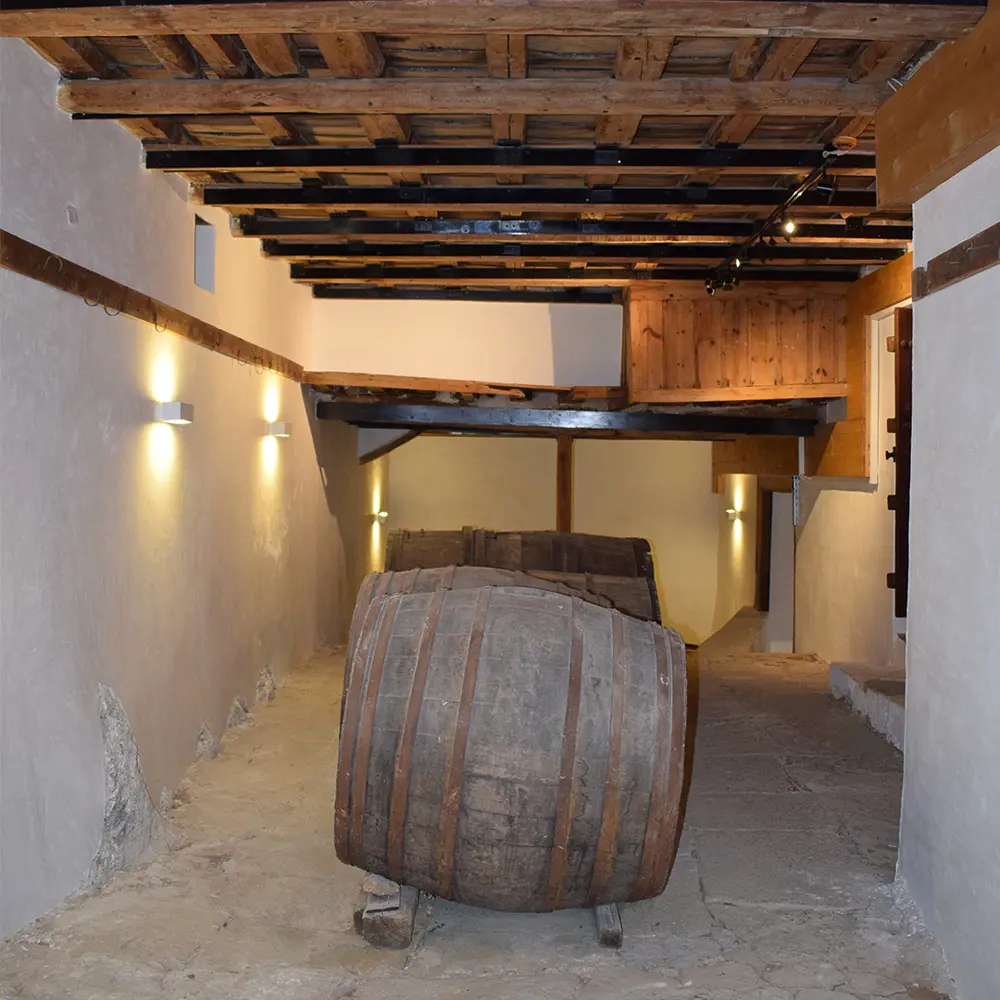
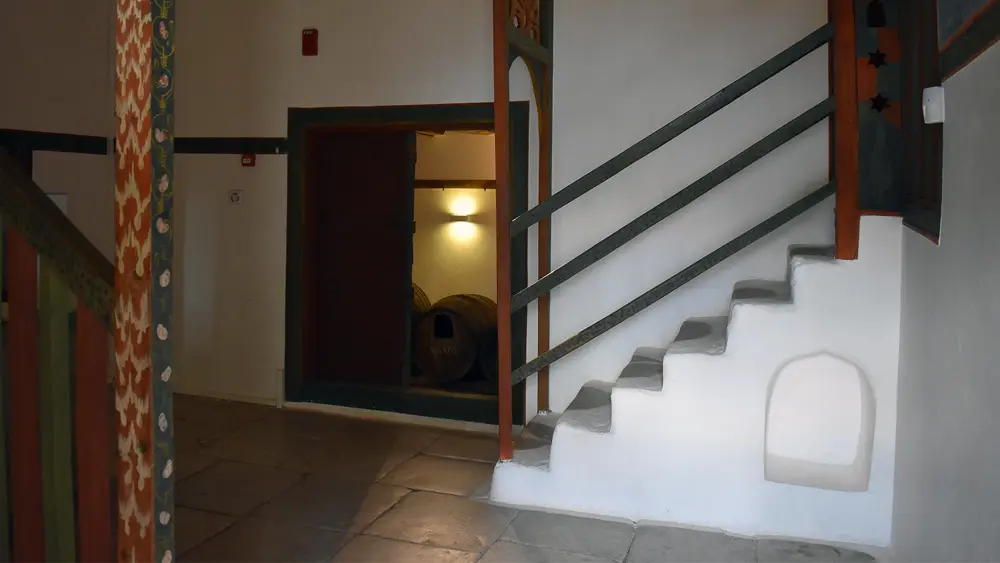
A double-leaved, wooden door is leading to the “embati” or “messia”, an inner yard paved with square marble slabs. A second double-leaved door is leading to the “katoi”, a semi-basement where the family kept the kitchen utensils, the tools and the wine in large wooden barrels.
A smaller wooden door on the ground floor of the mansion leads to the shop and workshop-storage room. In these rooms the owner of the mansion stored and displayed the products he brought back from his travels.
On the middle-floor
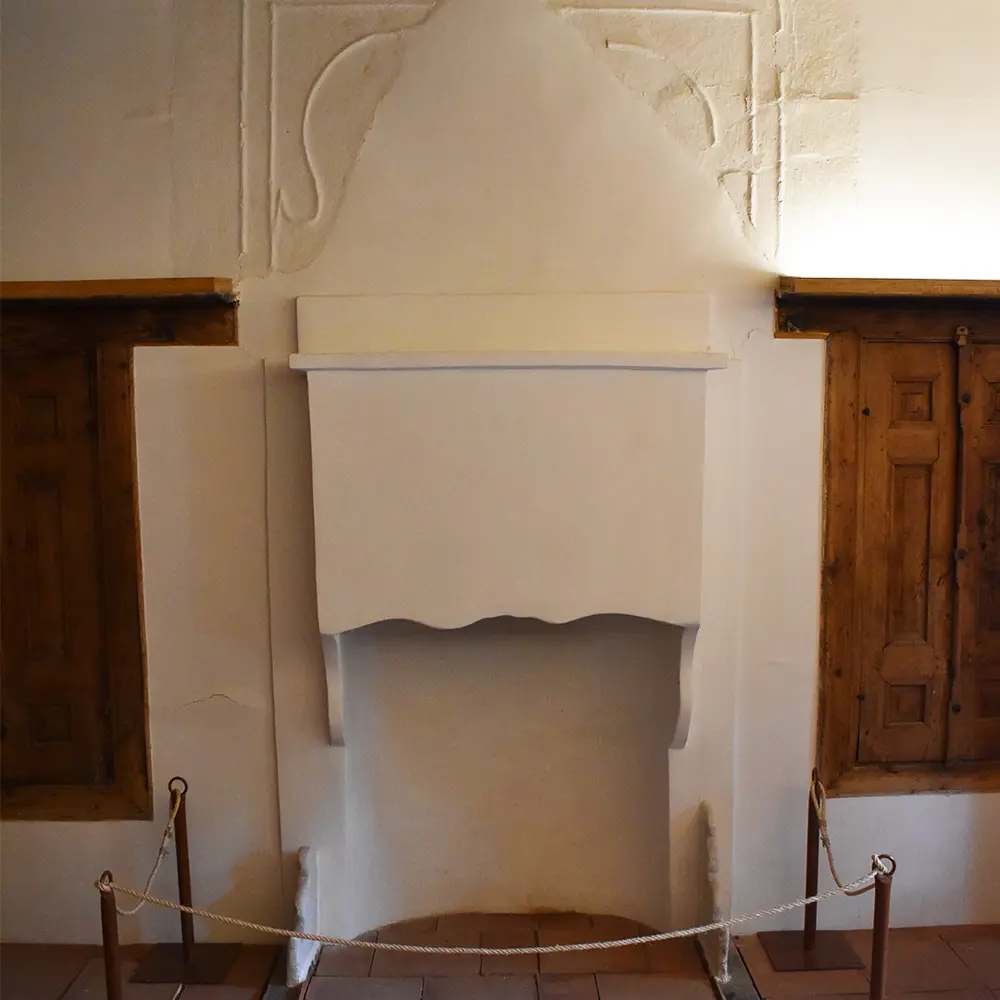
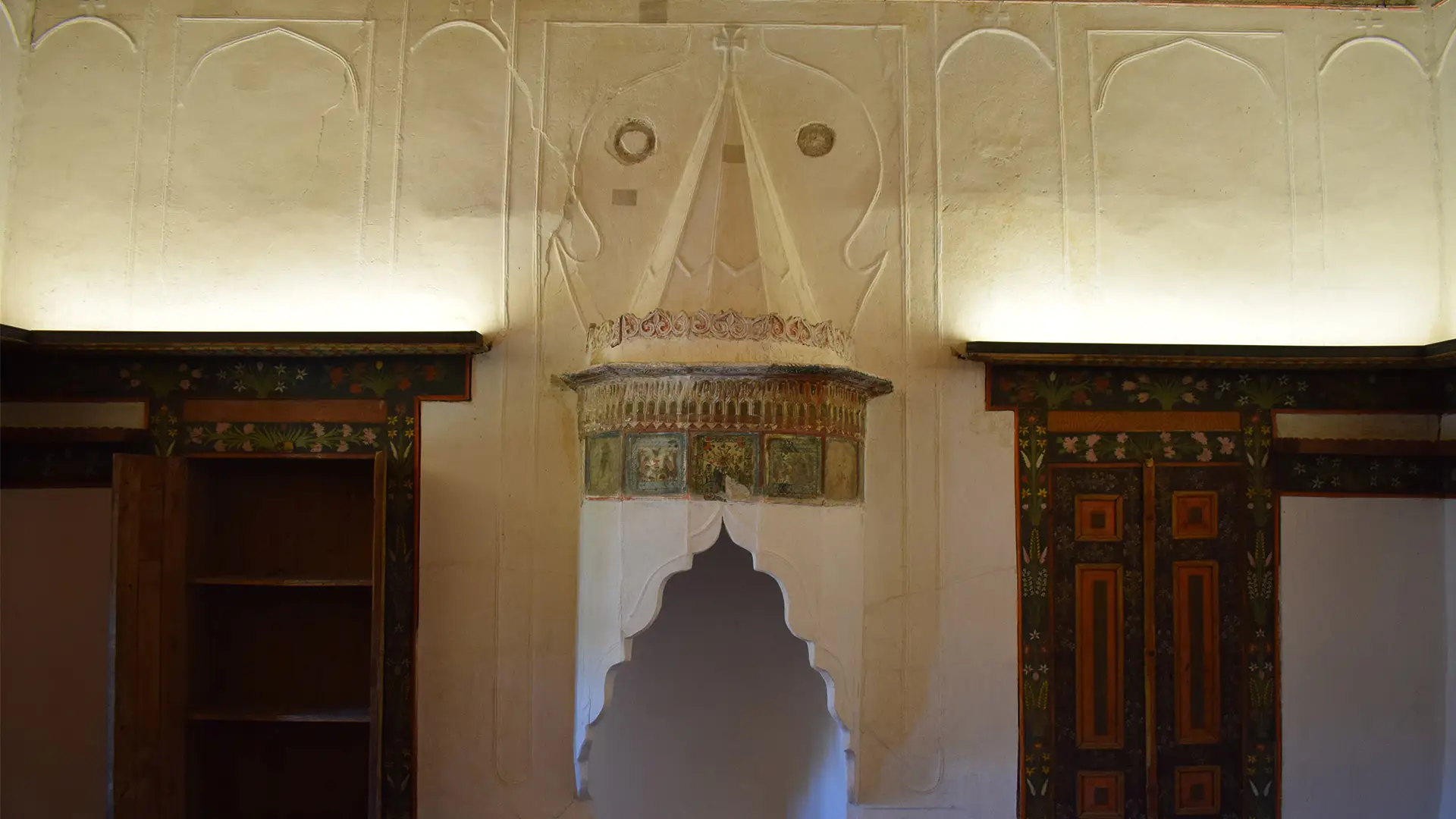
From the “embati”, a small door leads to the middle-floor, the so called “mezzo-patoma” and to the winter room with the fireplace and the beautiful wall paintings. Next to the winter room there is a small room and the kitchen with a big fireplace, a marble sink placed on the window sill and the service exit. Opposite the kitchen are two elevated spaces, which were used for weaving by the women.
On the first floor5
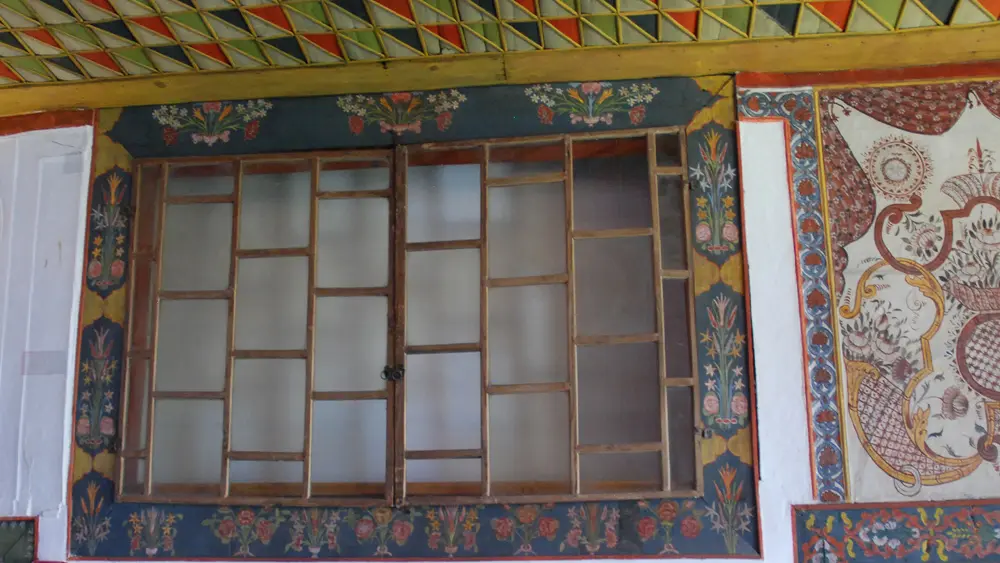
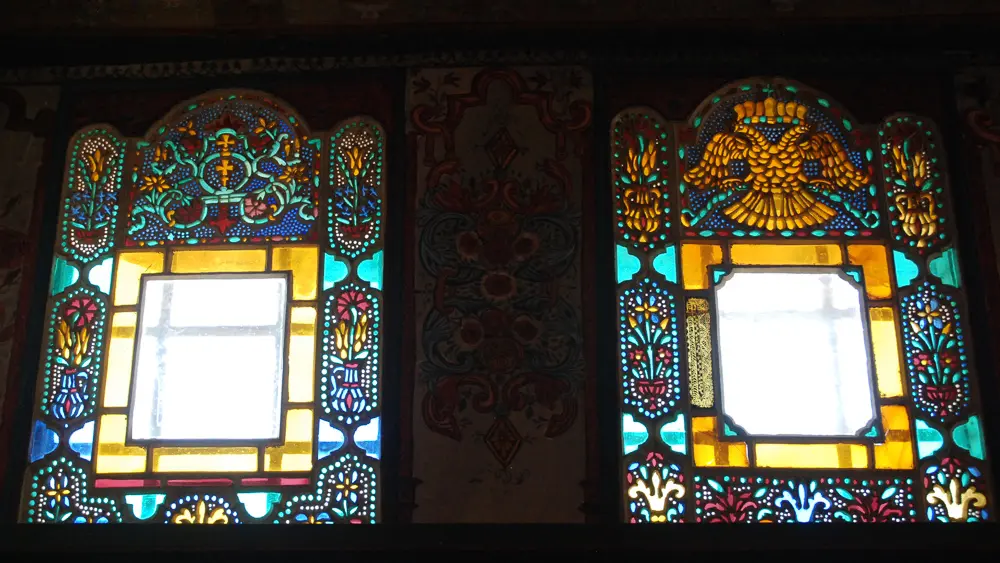
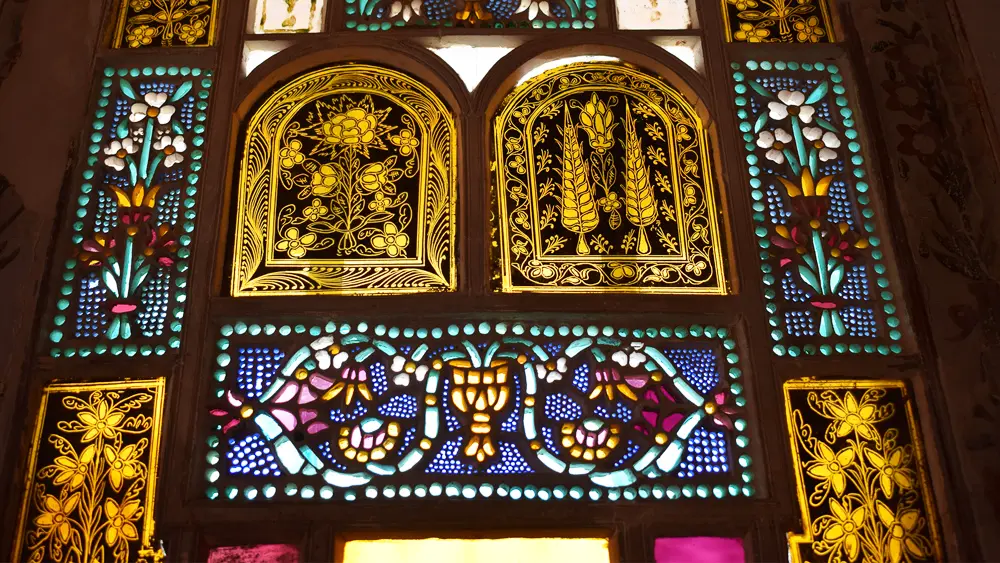
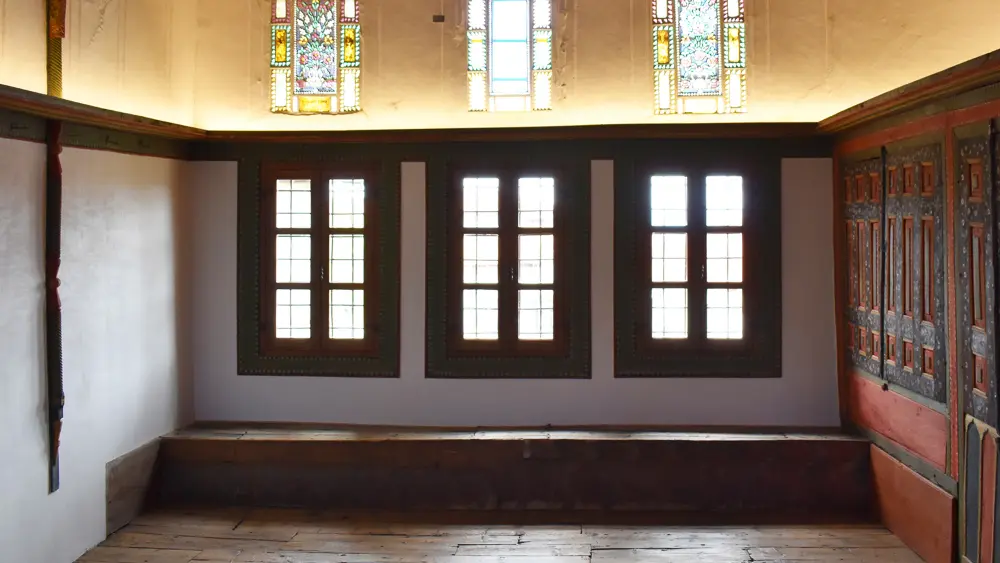
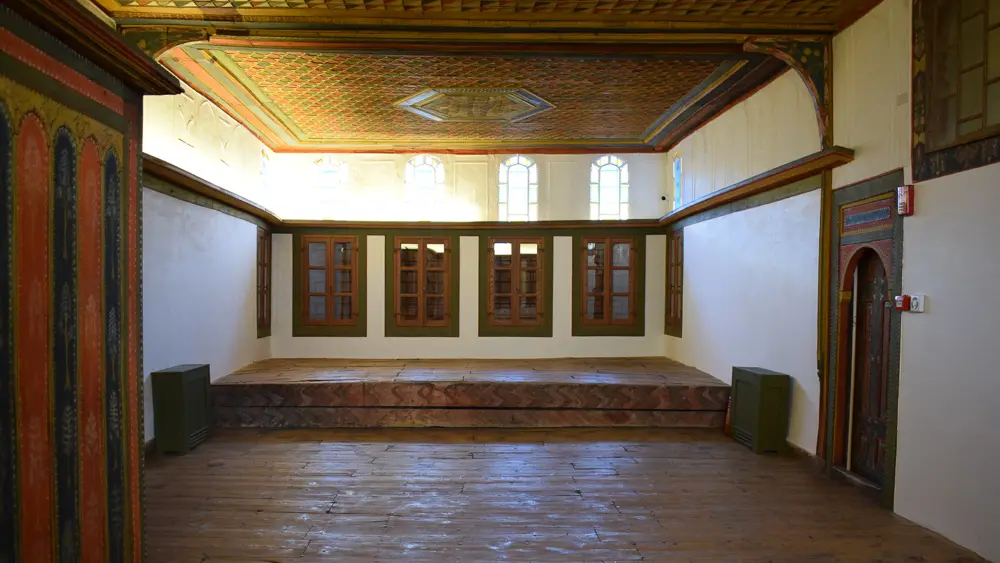
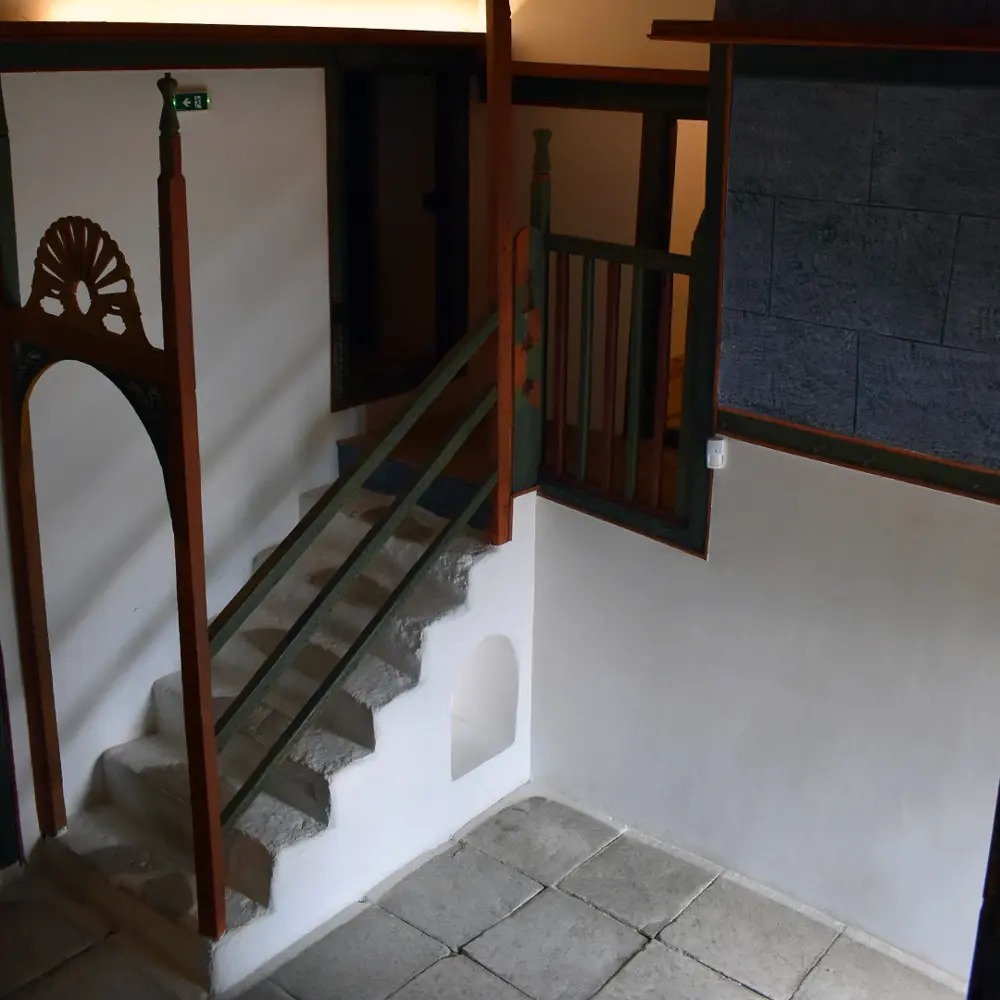
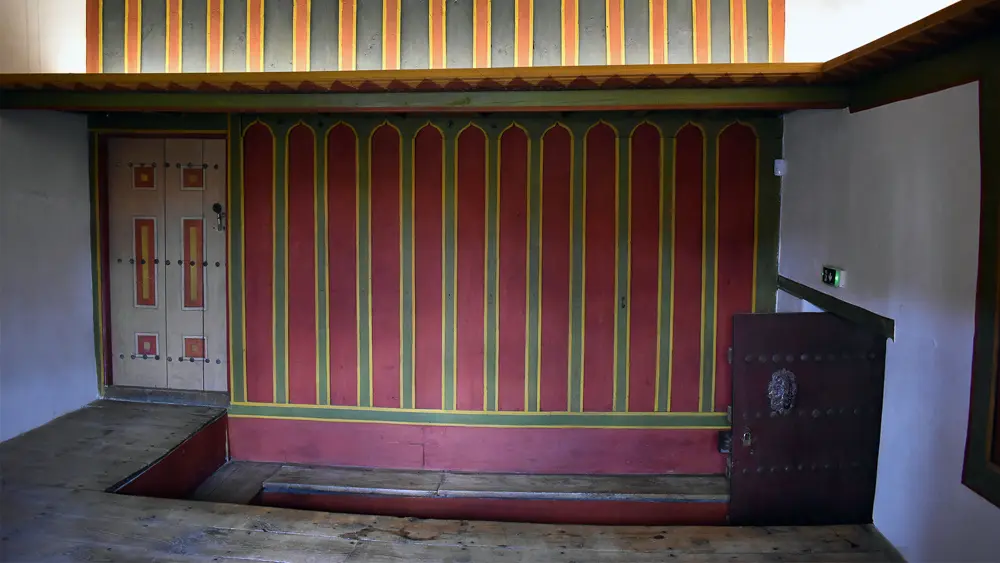
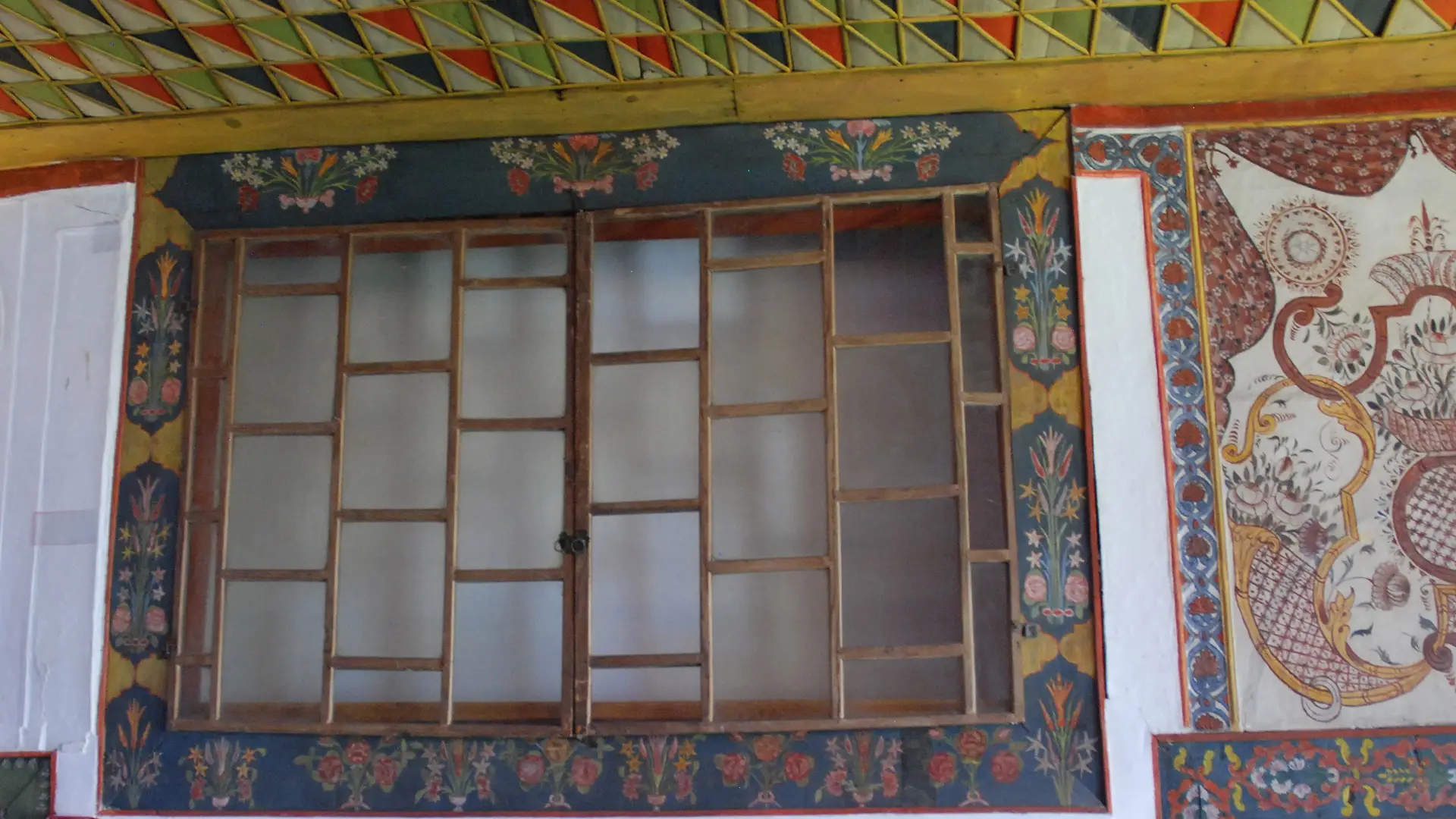
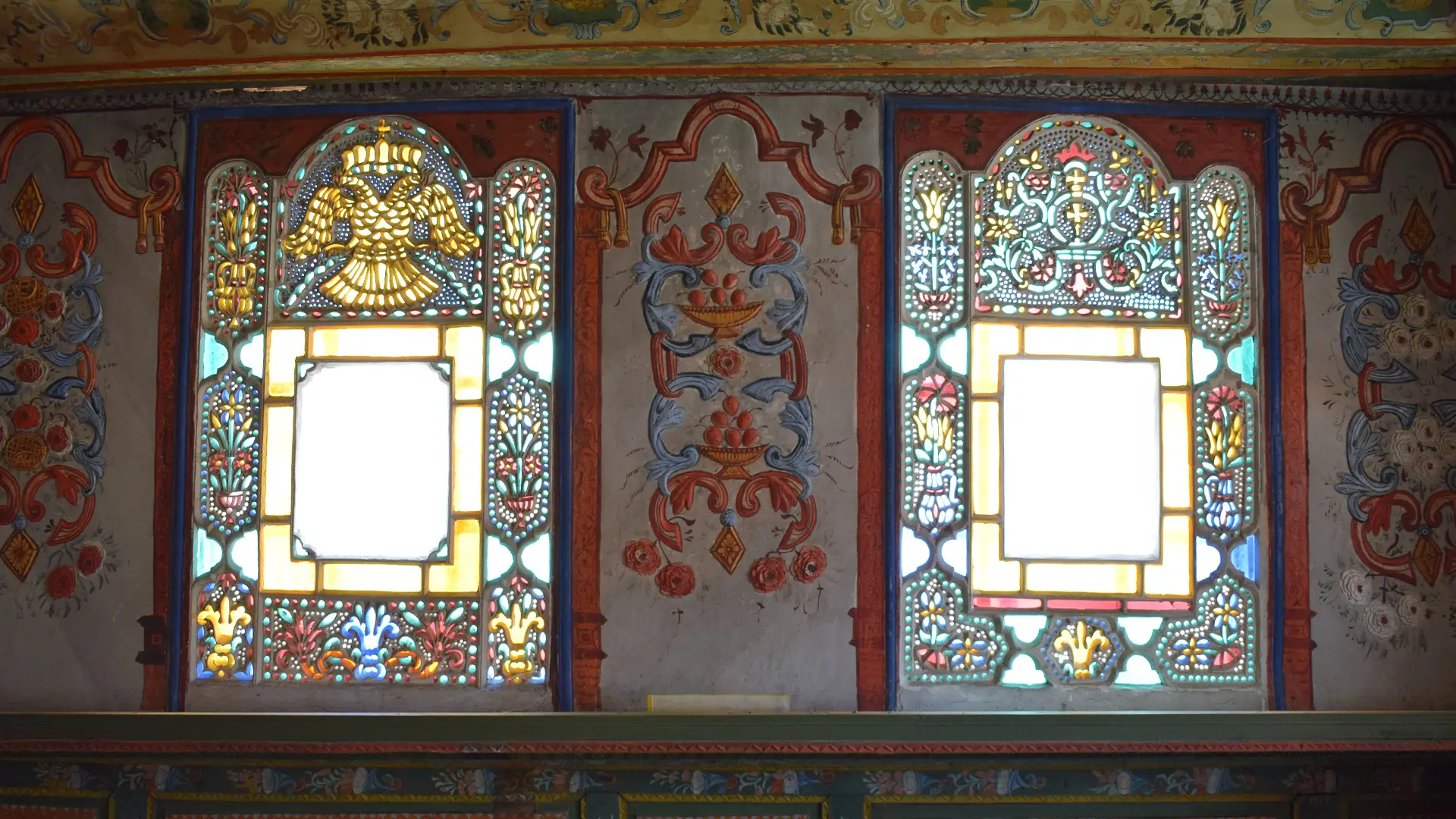
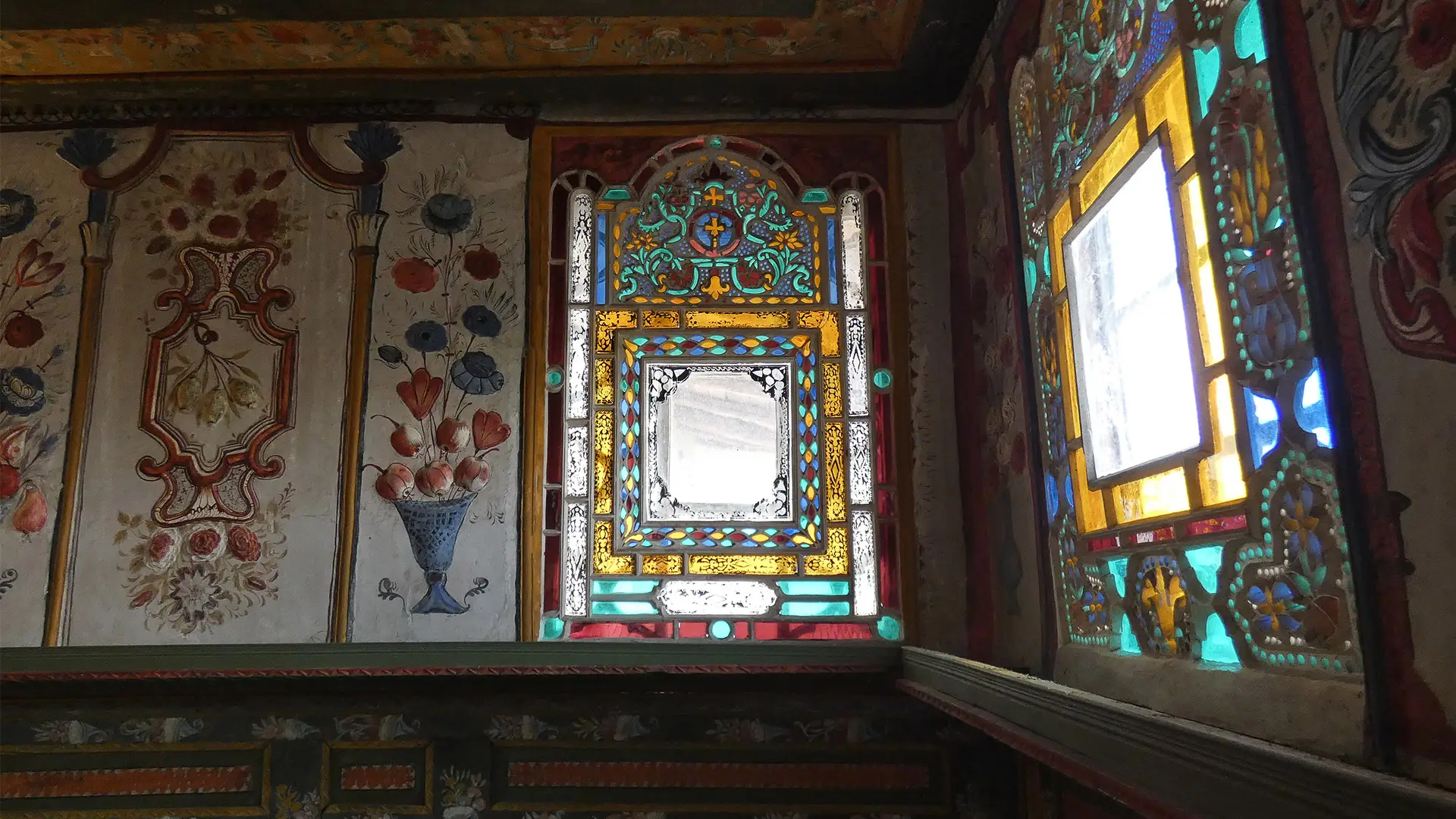
A second, larger staircase leads to the “anoi” (upper floor), the floor of the mansion that was mainly used during the summer months. In the centre of this floor there is the “sala”, a single elongated space. On one side it has a raised floor that was used to accommodate the orchestra that entertained the family and their guests at celebrations. The space has a series of wooden windows and a second set of vitraux, i.e. skylights decorated with colored glass that were probably supplied from Venice.
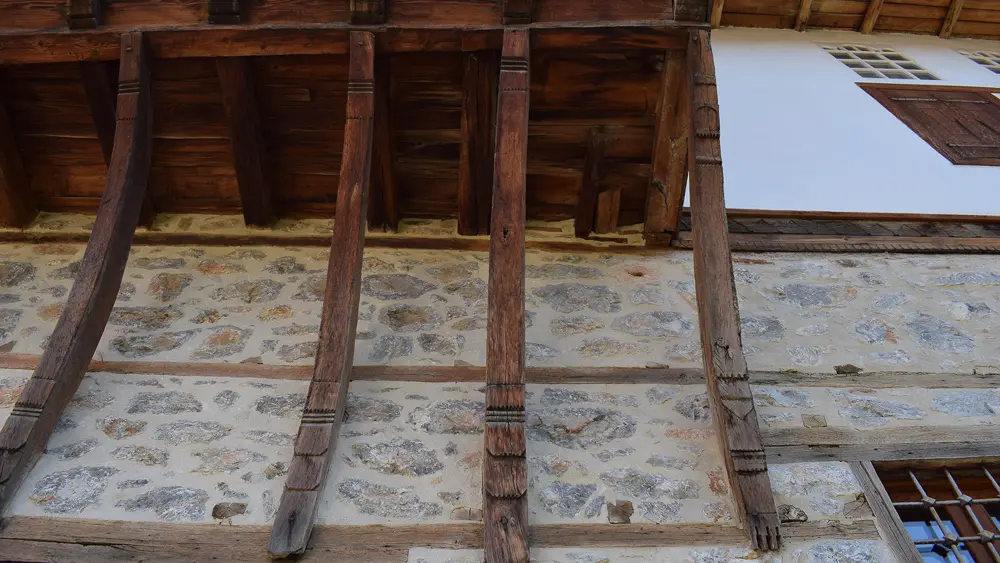
The two rooms on this floor, to the right and left of the staircase, were the good rooms of the house. They had wooden elevated floors that served as sofas or beds, the ‘minteria’. On the outside, they formed projections called ‘sahnisia’.
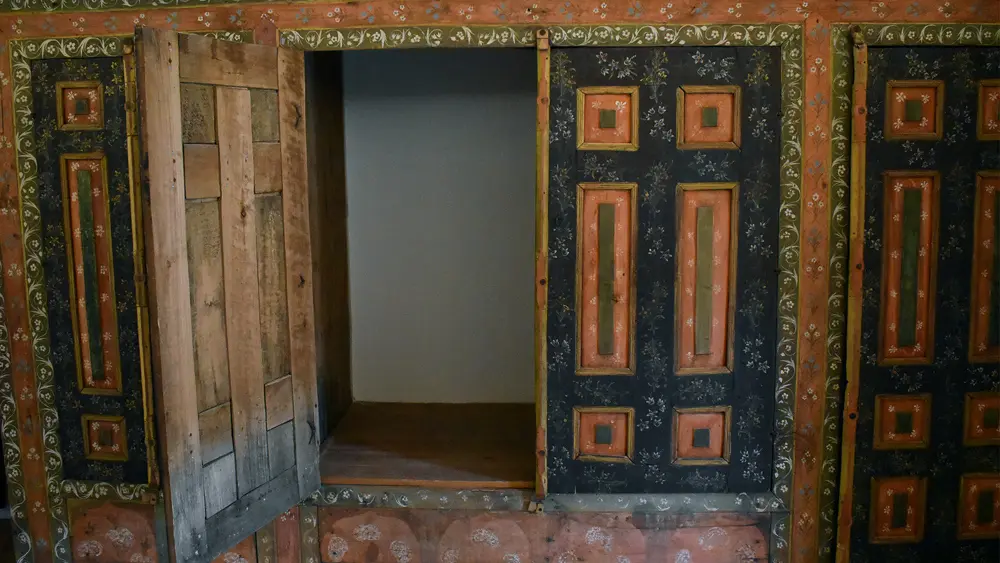
At the back of this floor was another room with a fireplace. Its mesantra, that is, the wardrobe of this room concealed a small corridor leading to the “necessary”, an indoor toilet. On the opposite side of the floor is another room with a fireplace that was used as a bedroom.
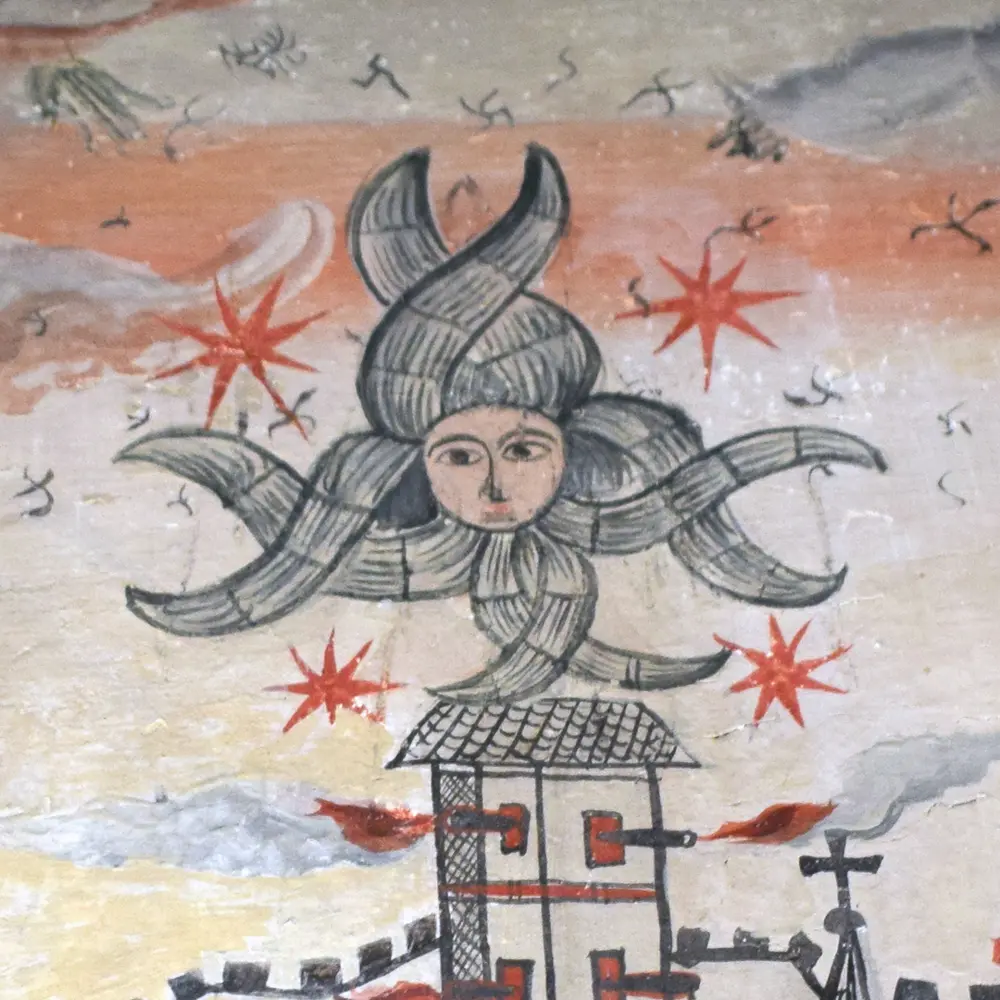
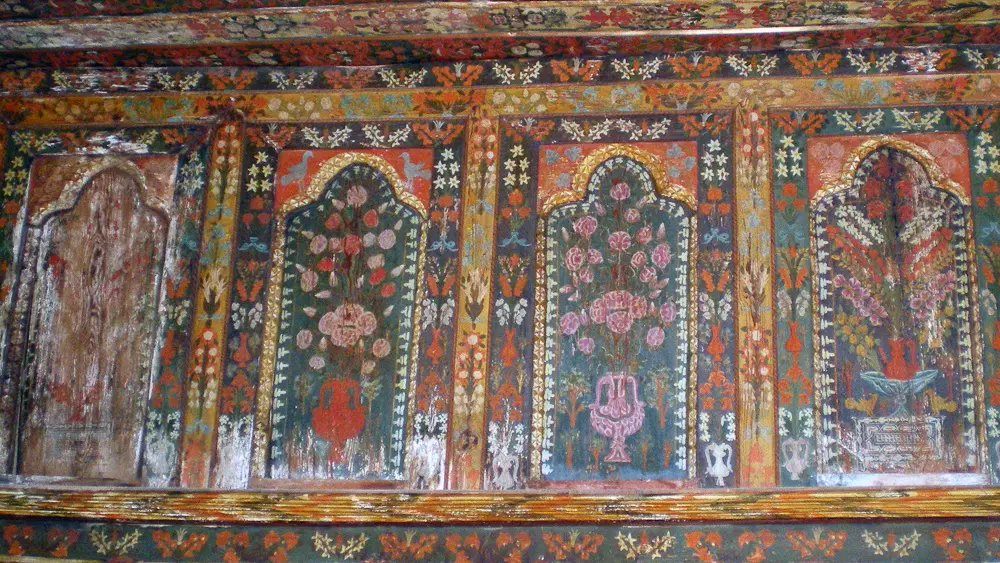
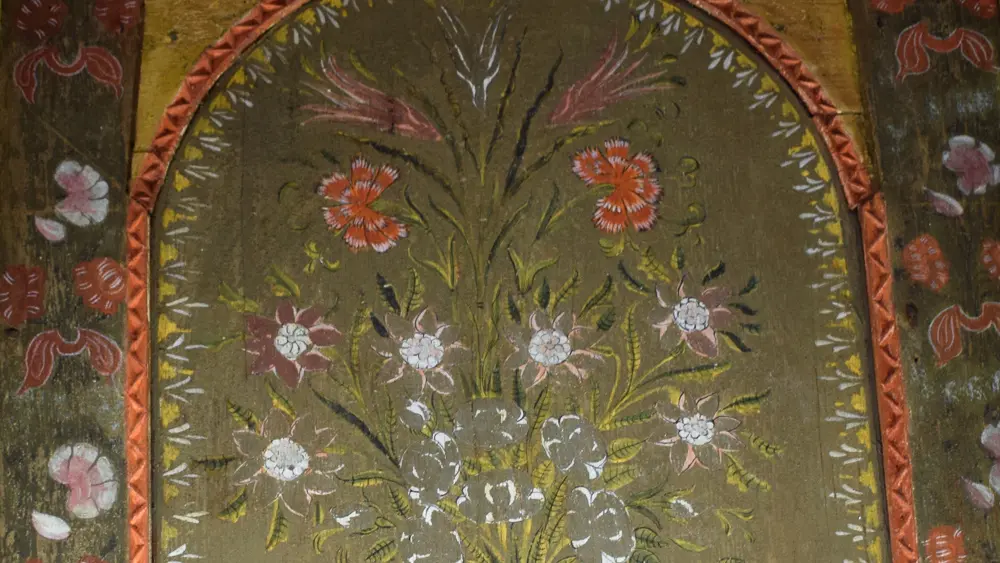
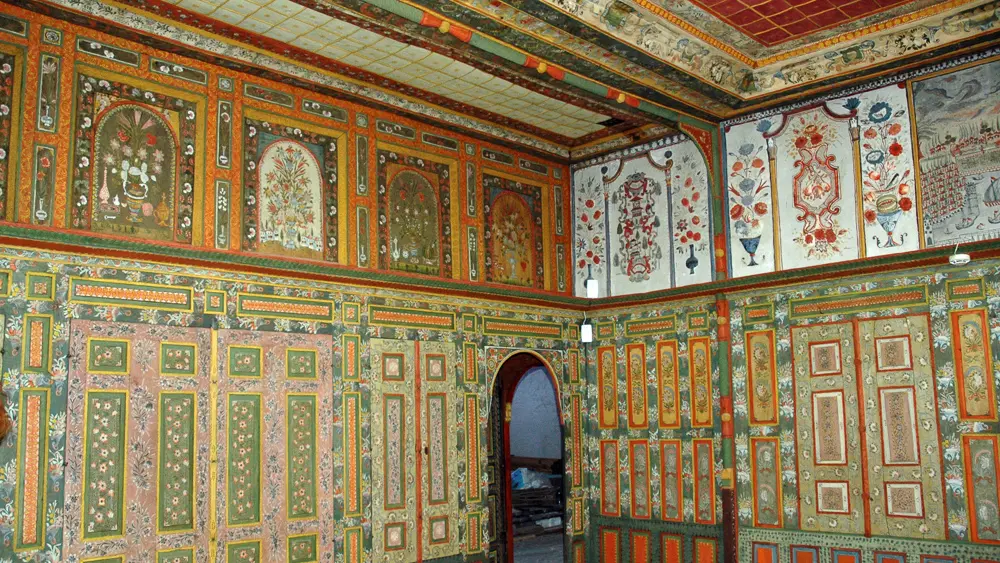
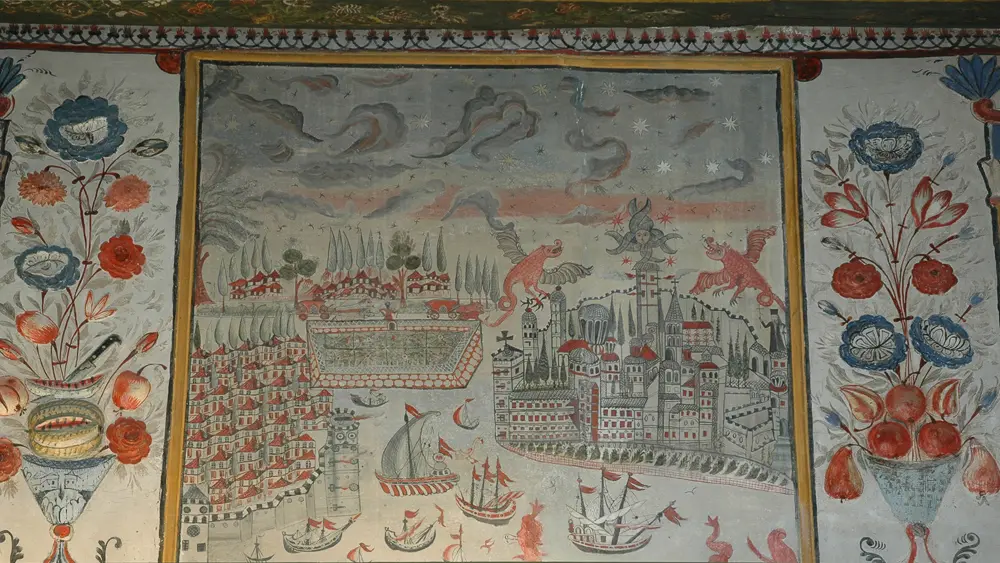
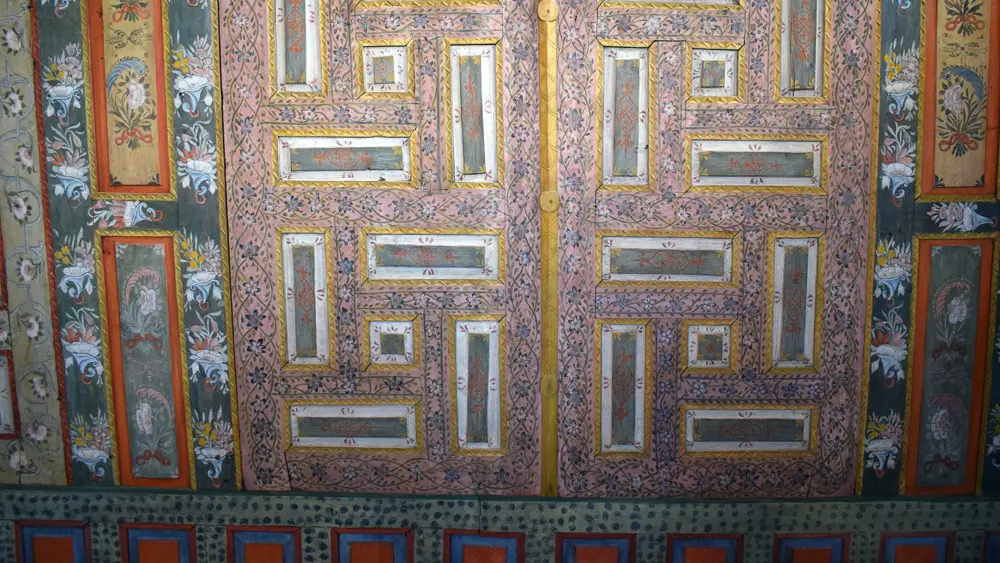
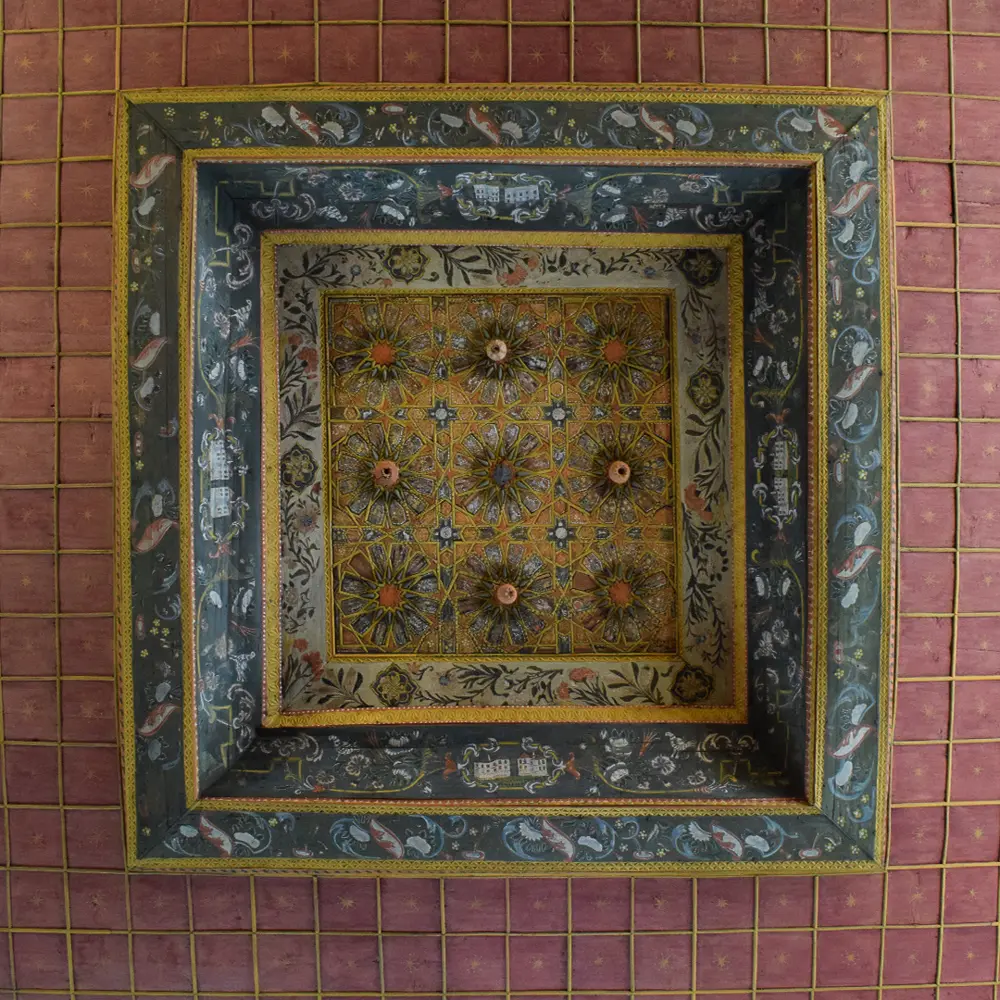
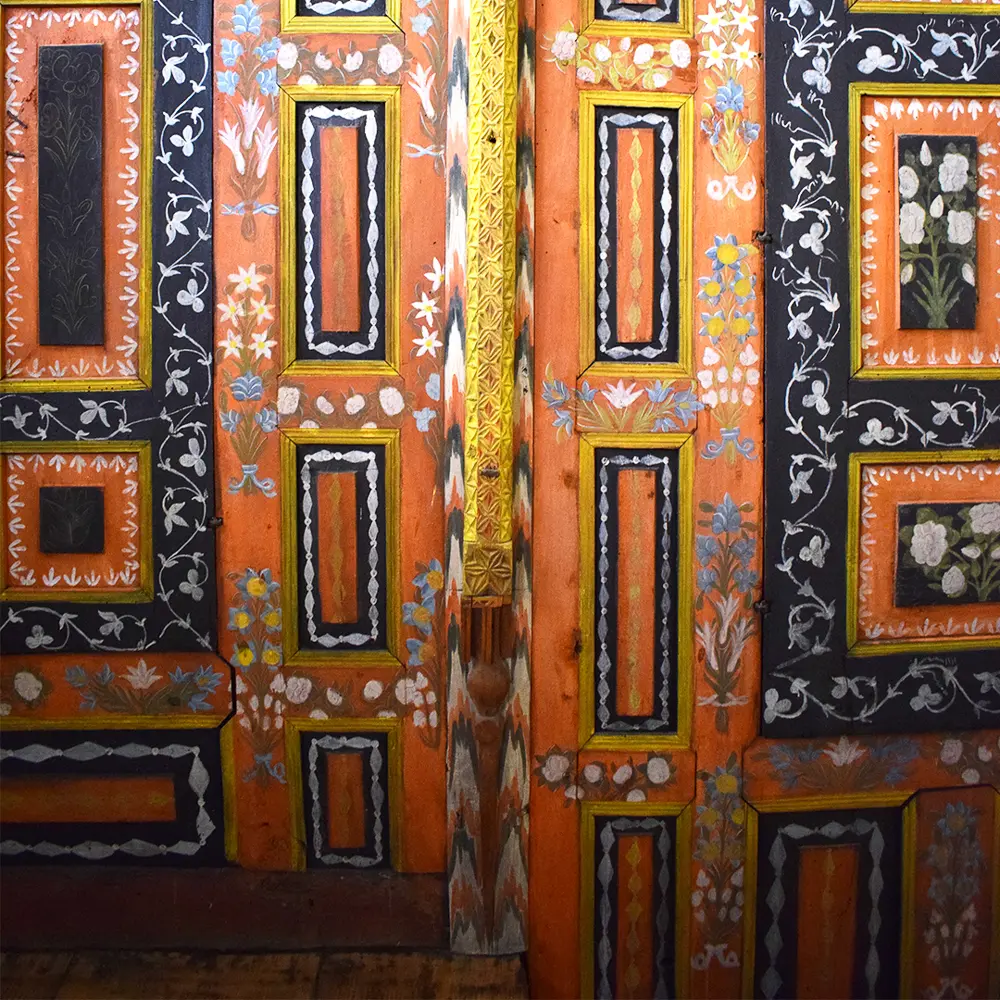
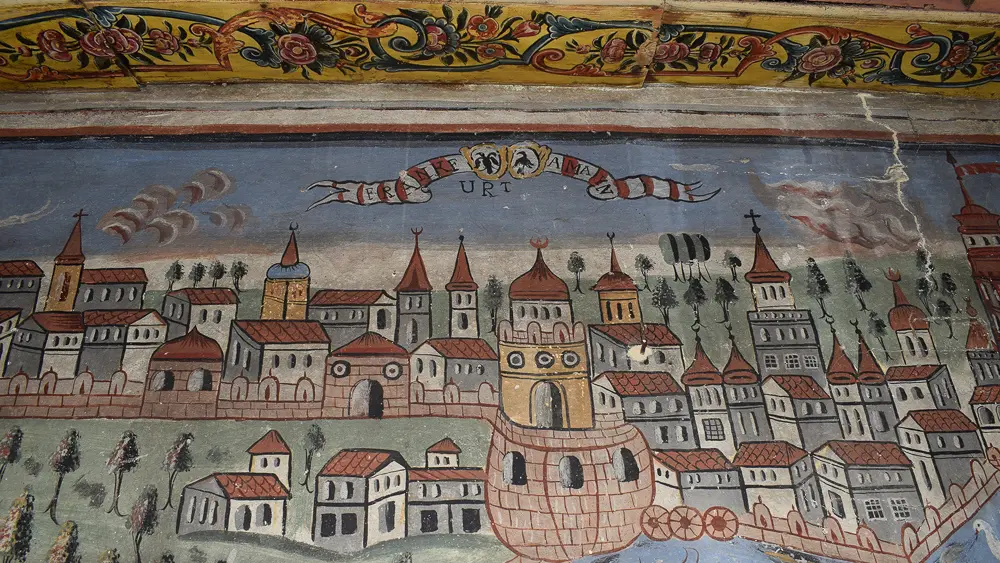
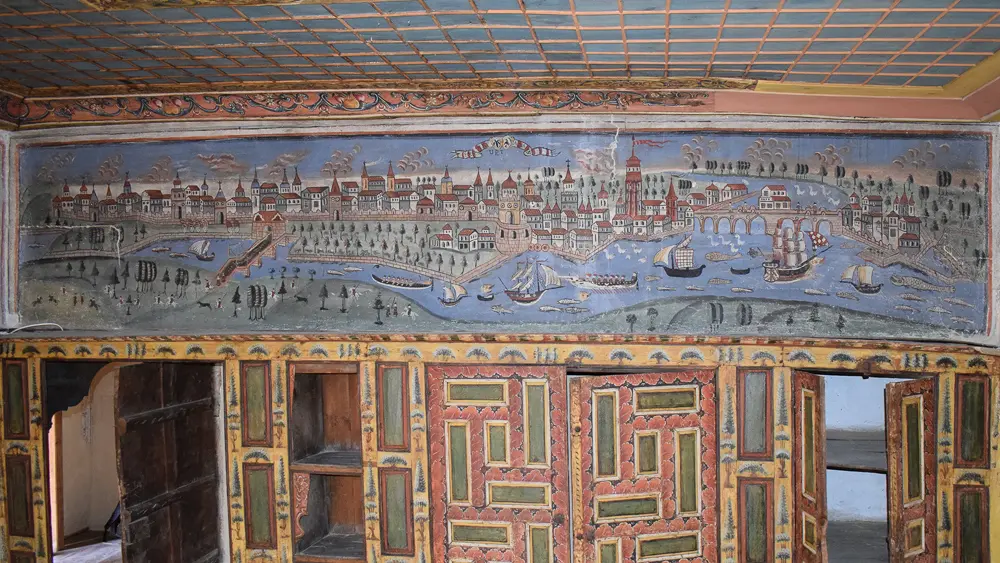
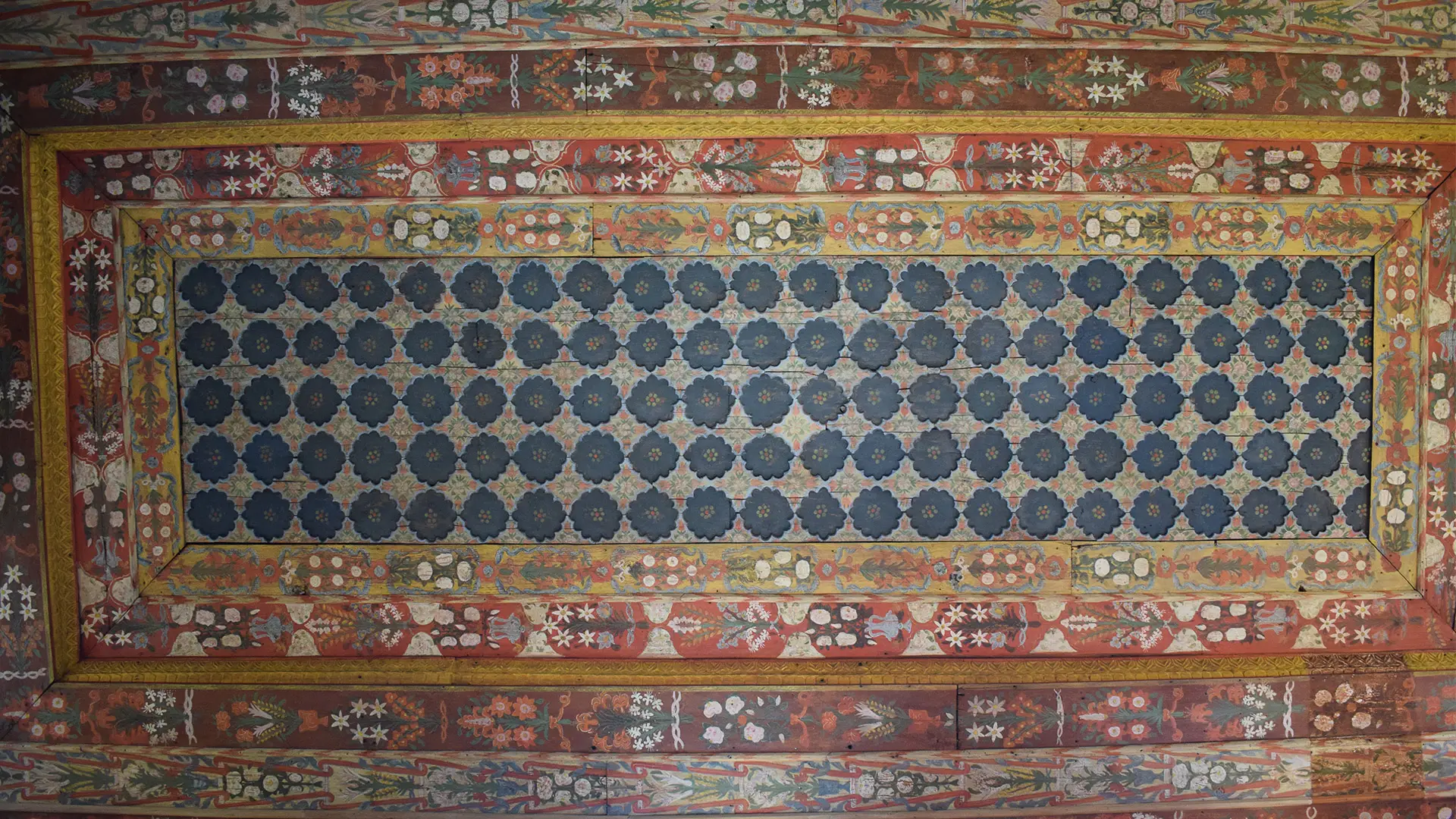
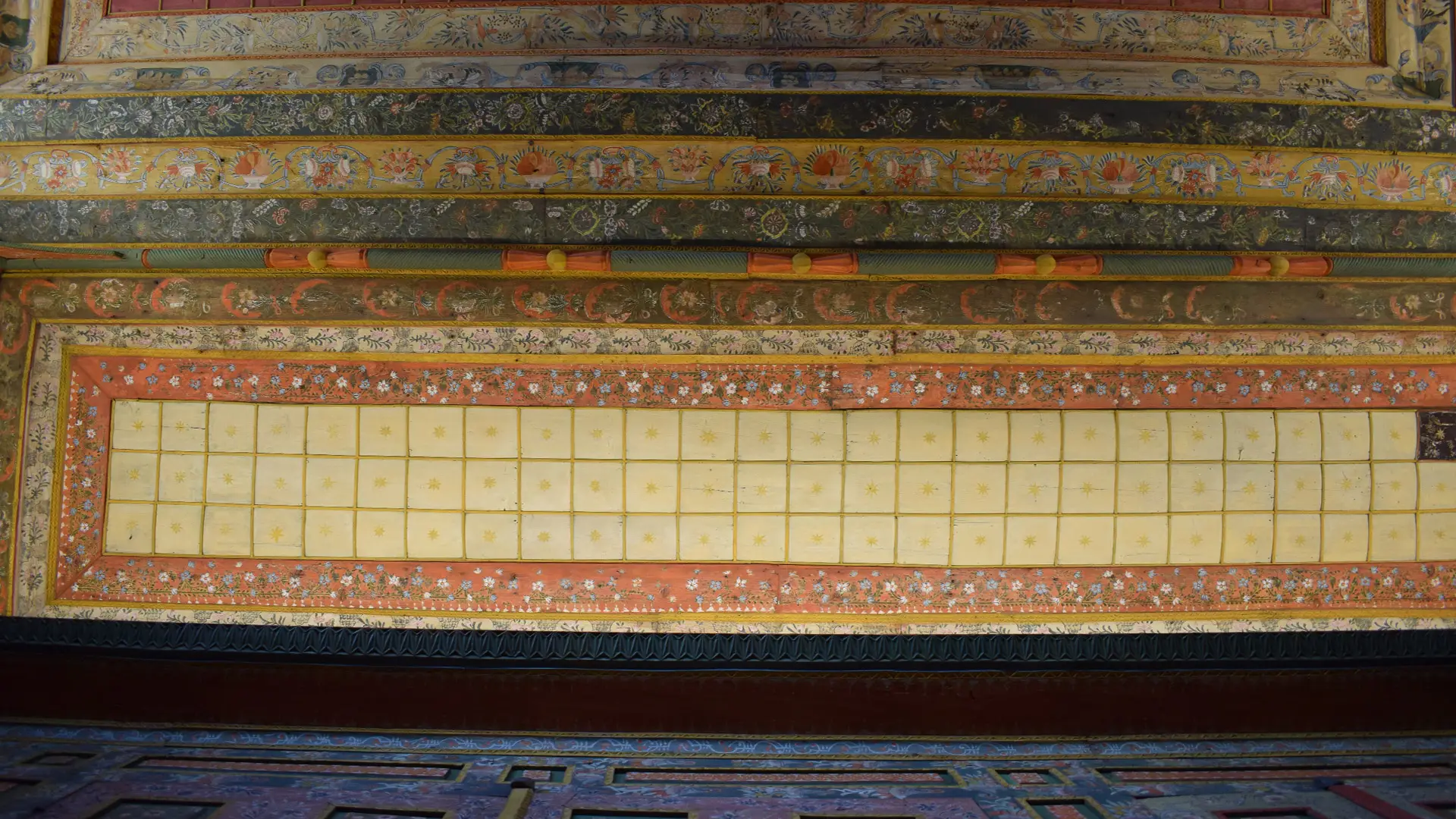
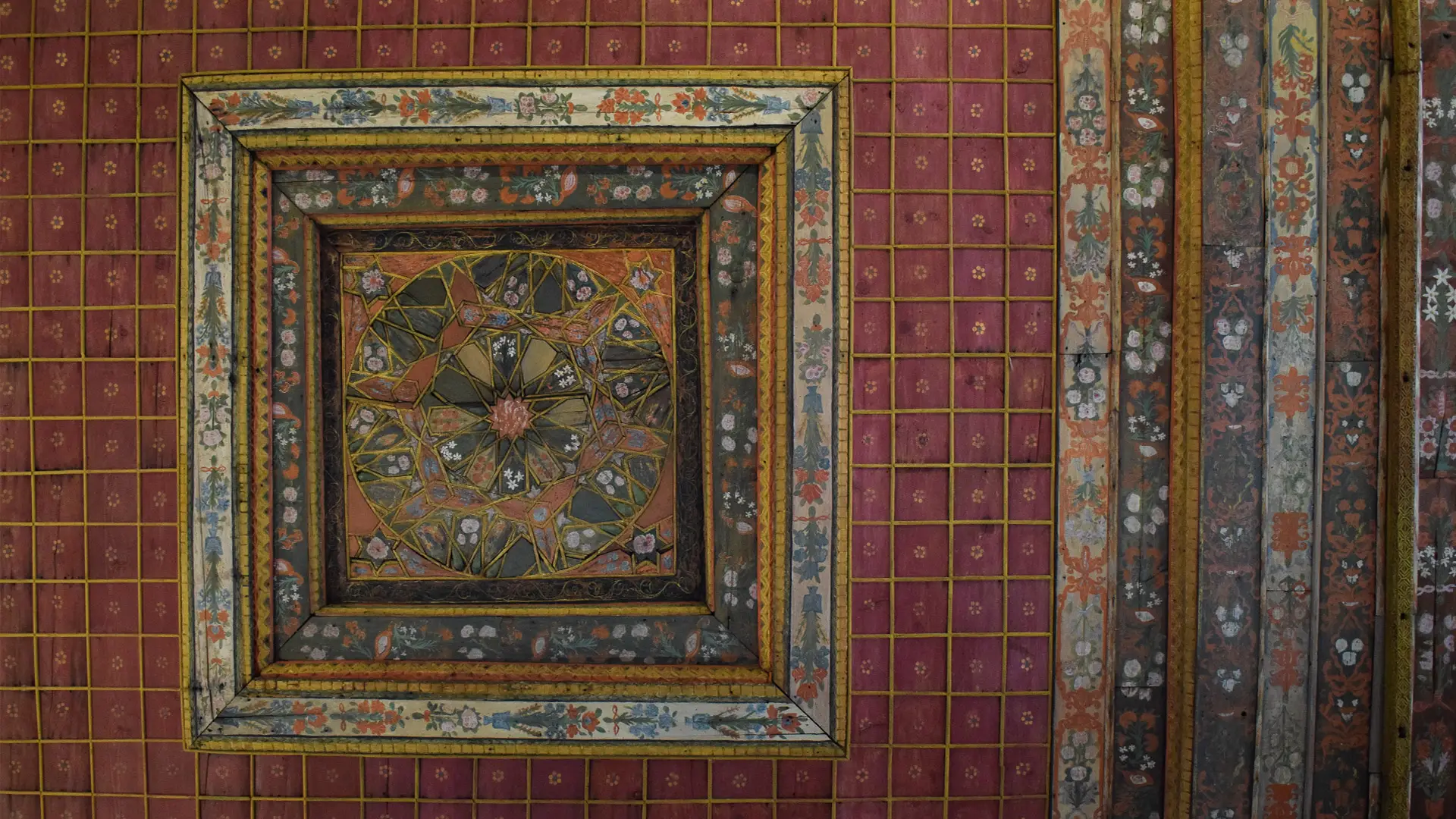
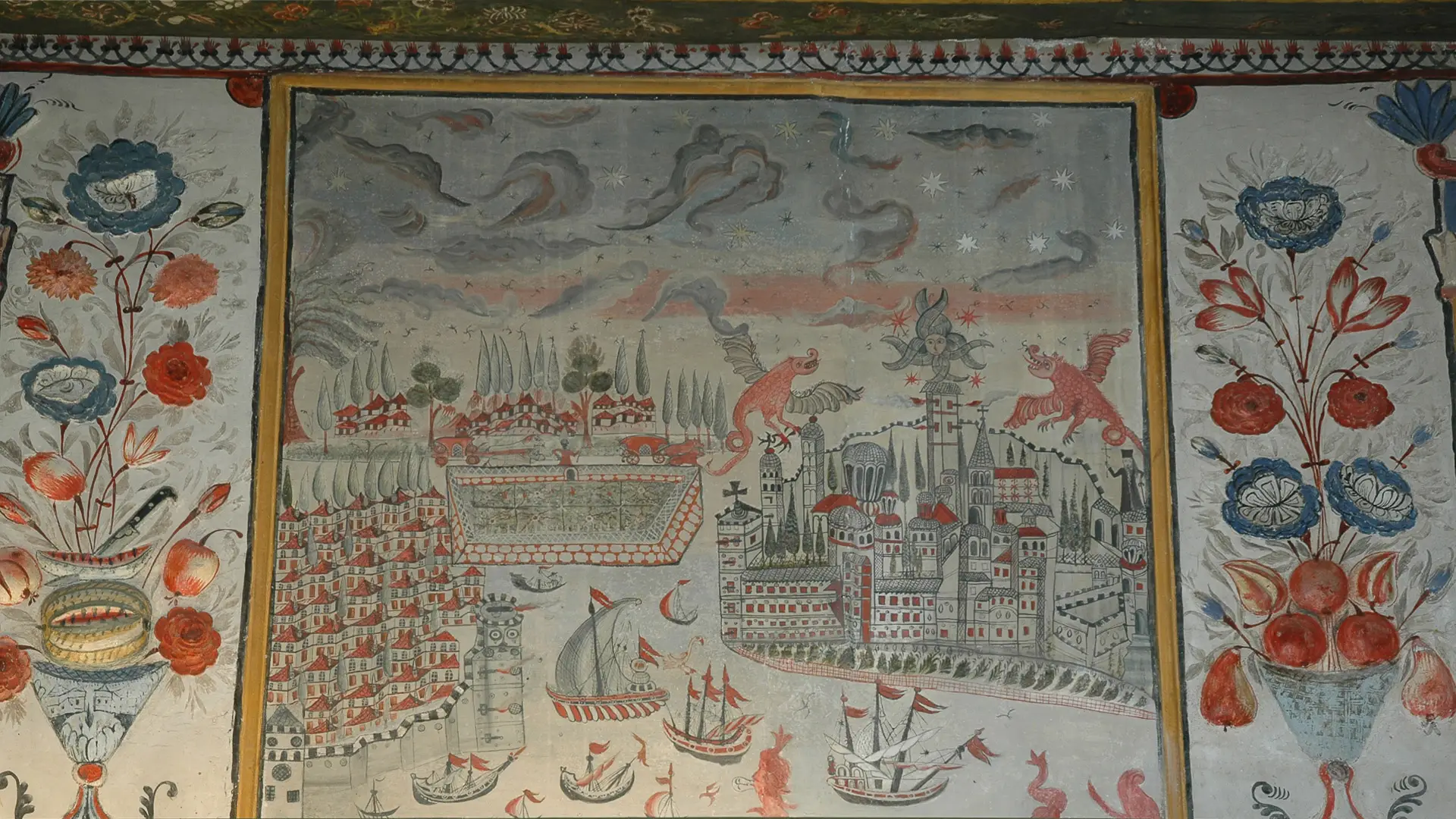
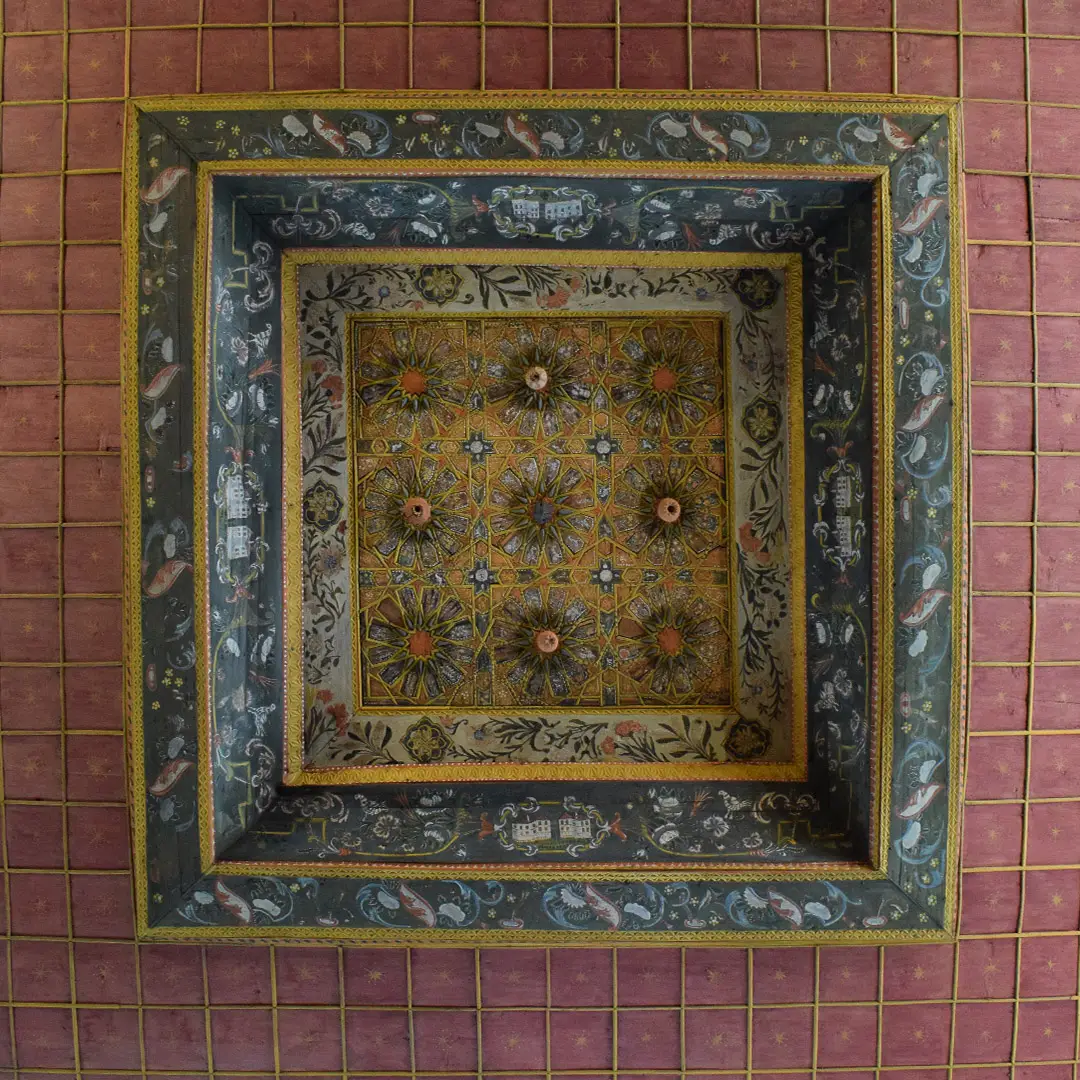
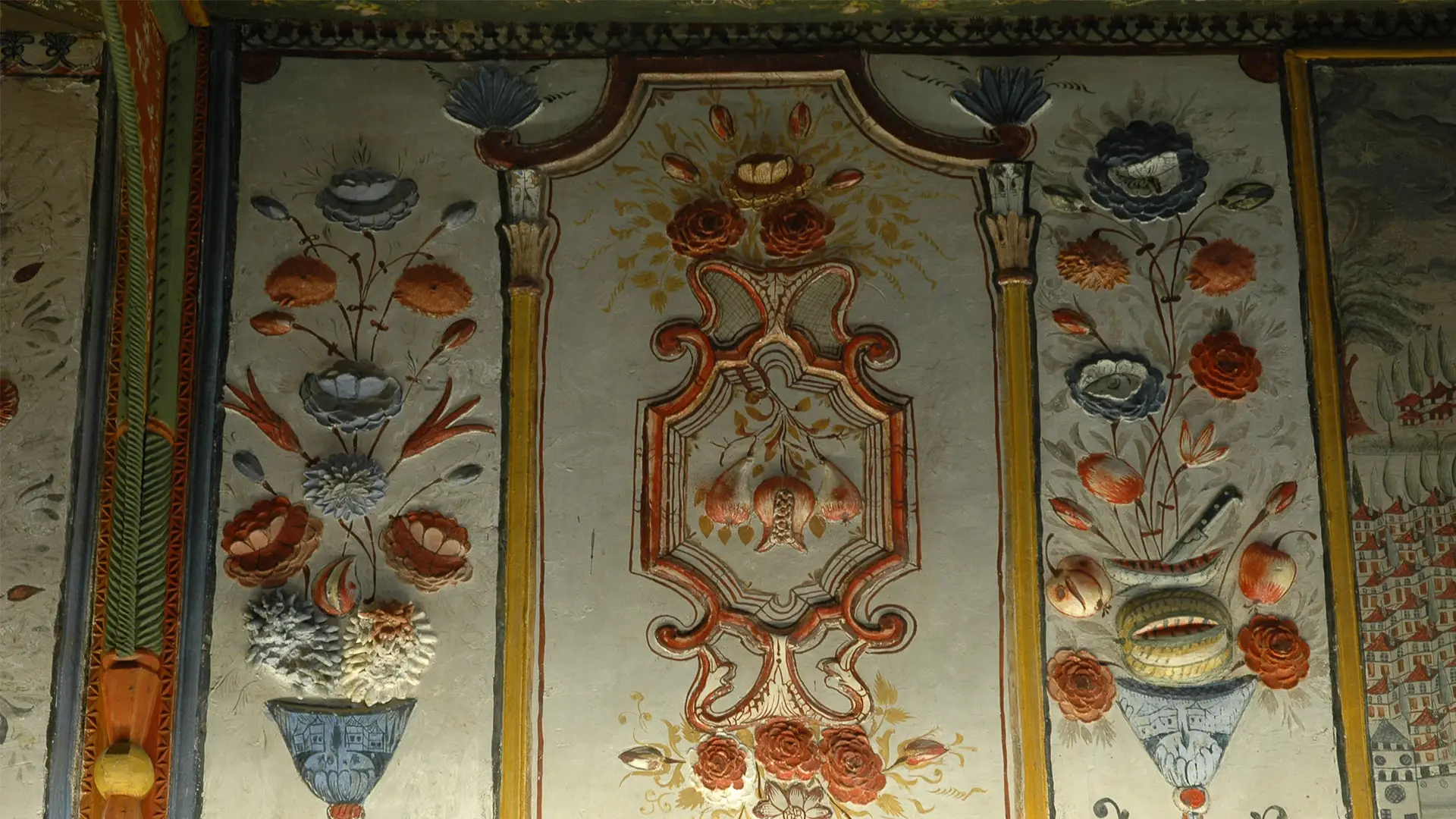
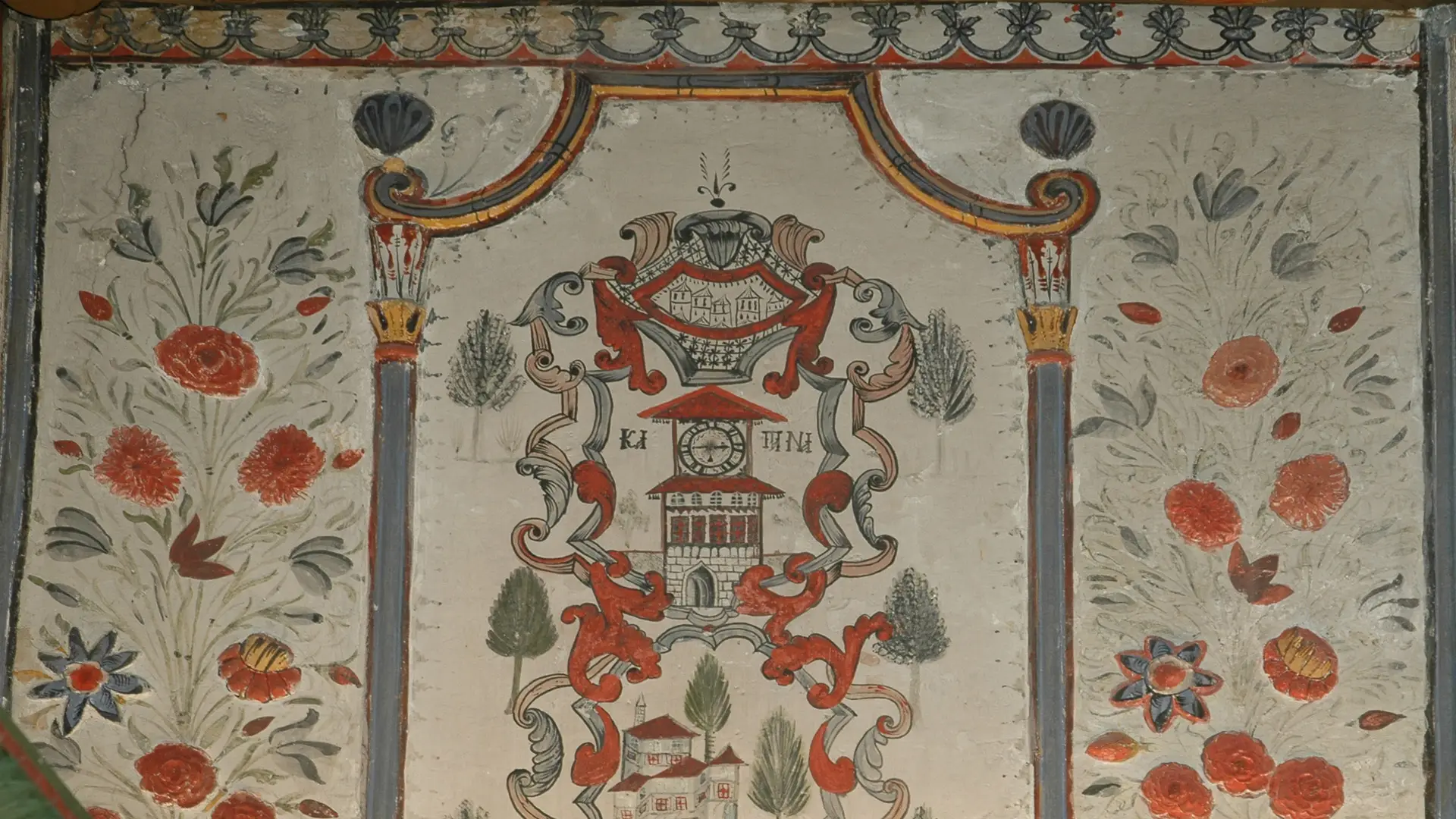
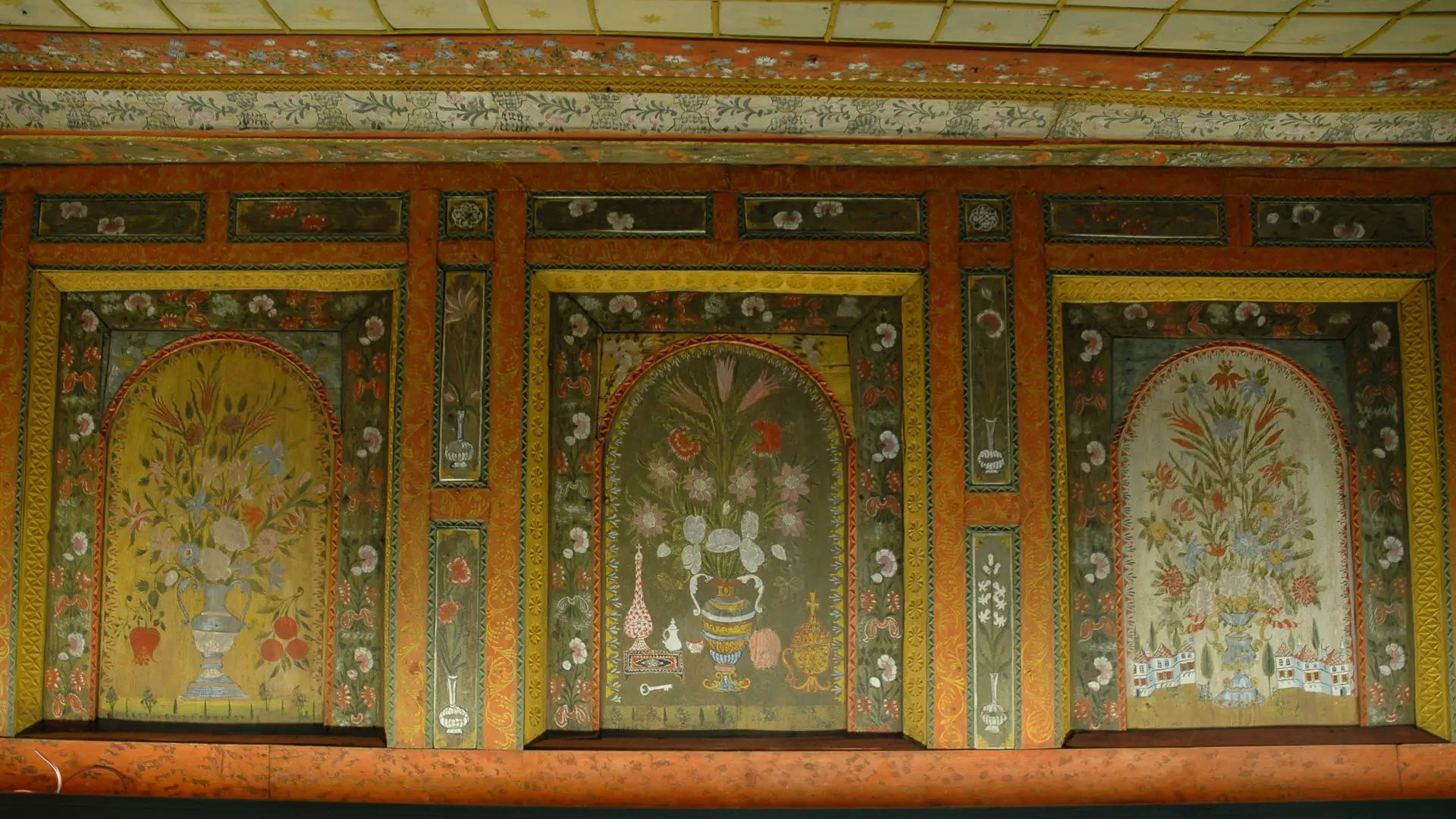
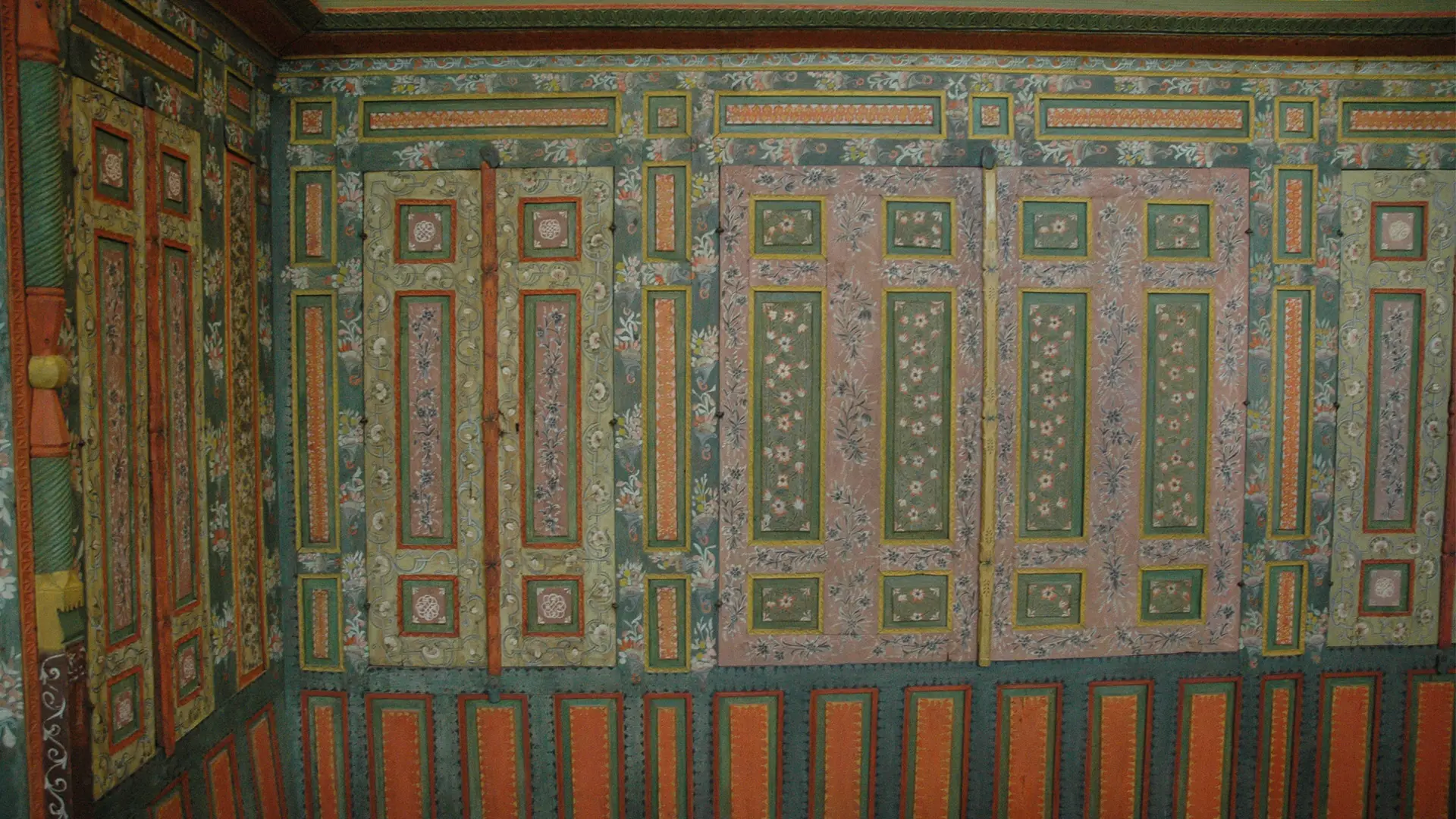
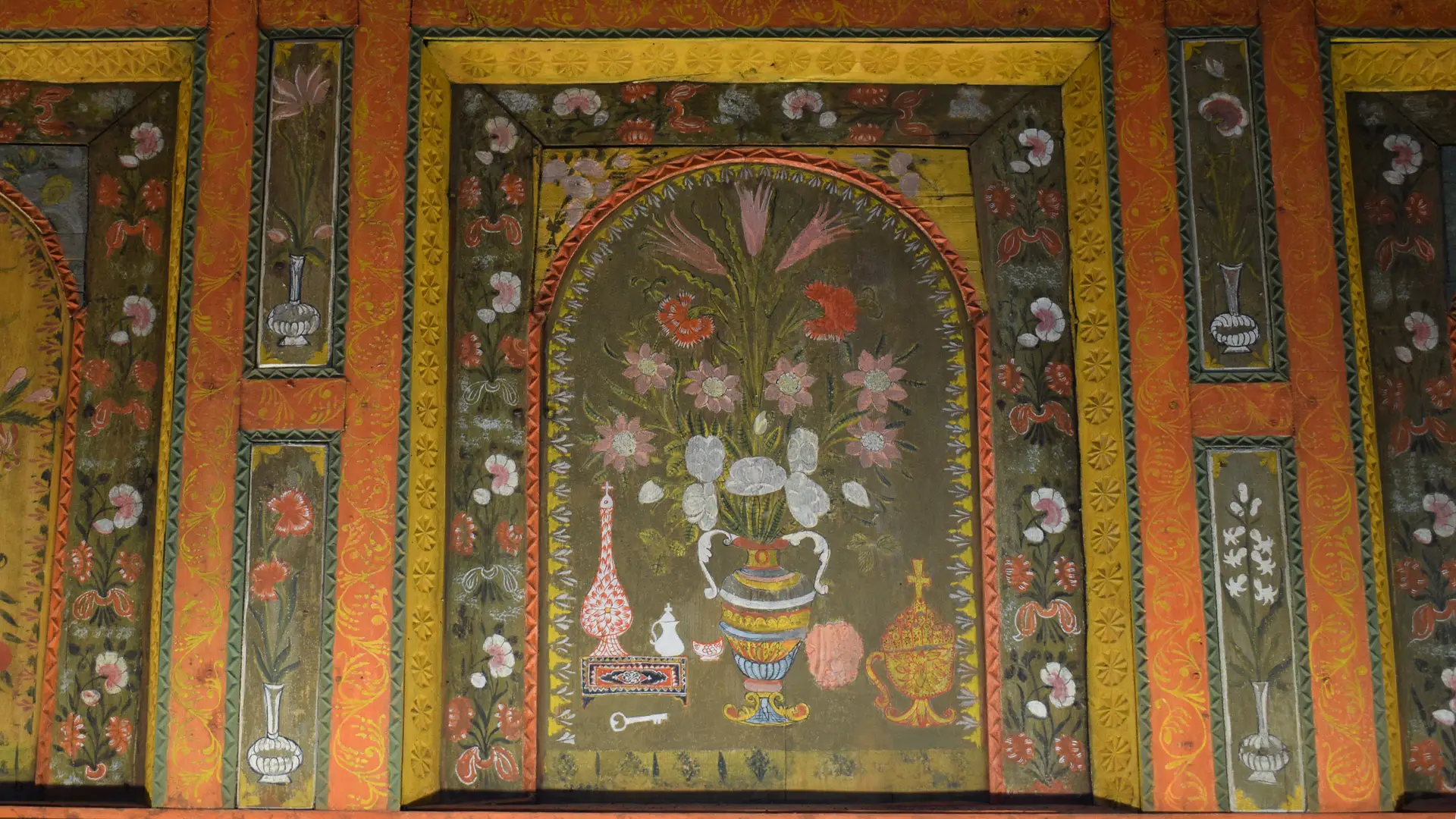
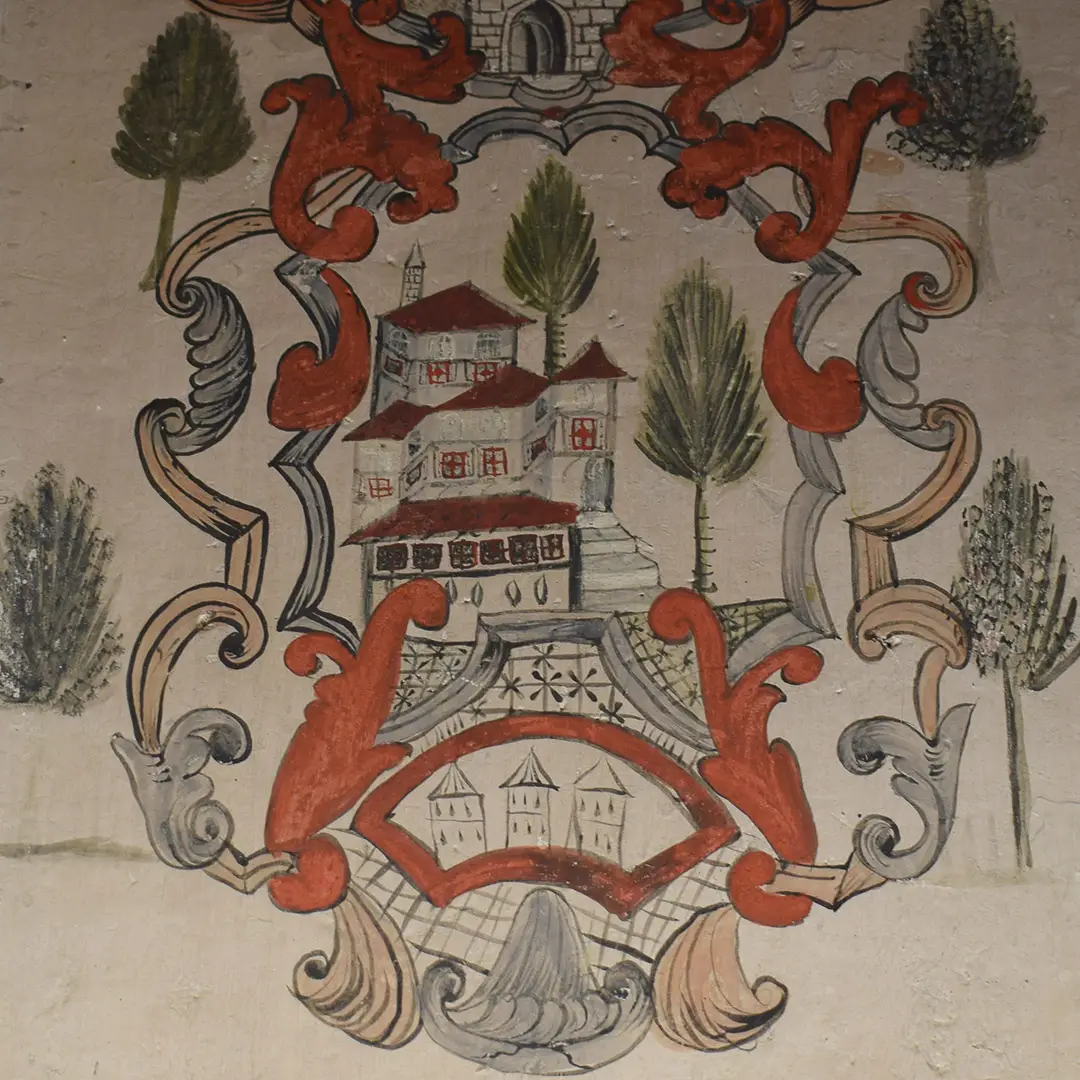
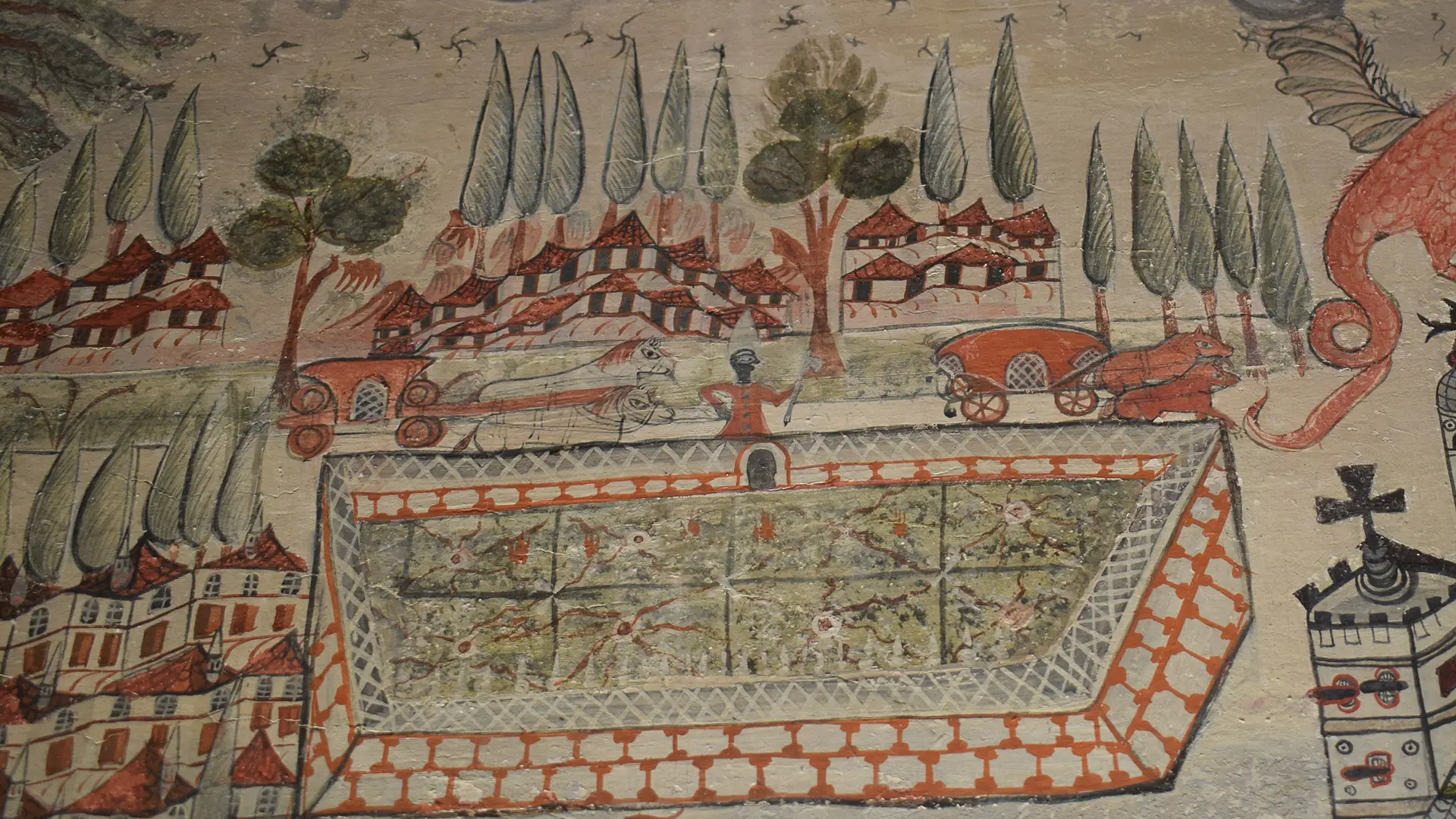
Colorful murals decorate the walls of the mansion and its wooden roof. A special place in one of the good rooms of the floor is occupied by a representation of Constantinople, a beloved city for the enslaved Greeks and a symbol of Orthodoxy. The ceilings of the mansion also bear elaborate wooden and wood-carved decoration with coloured rosettes in the centre, the so-called “omphaloi”.
From Theodoros Emmanuel to Lazaros Poulkidis
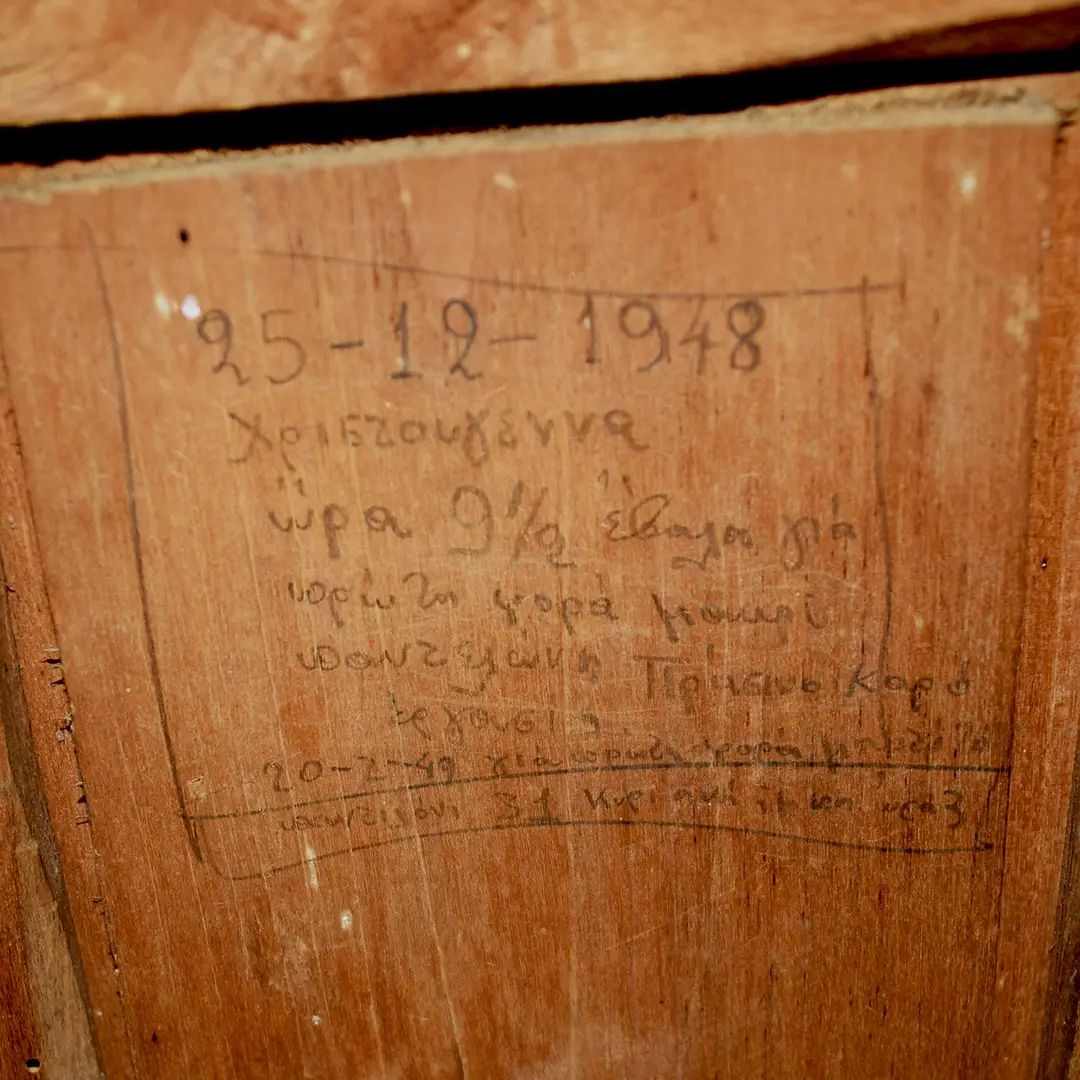
It remains unknown to this day when the first owner sold his mansion, but also when and under what circumstances it came into the hands of Lazaros Poulkidis. Markings of Constantine, son of Lazarus, on the mezzanines of the floor testify that in 1884 the family was already living there. At the beginning of the twentieth century the house passed as a dowry into the hands of a daughter, Eleni, who lived there with her family probably until the beginning of the Second World War. In the difficult years that followed, the mansion “hosted” many passers-by, some of whom left their “traces” in the mansion. The mansion was declared a listed building by a presidential decree as early as 1924 (Government Gazette 312/A/16-12-1924) but it was only in 1963 that the Ministry of Culture managed to acquire the mansion. In 2013, maintenance and restoration work began on the mansion, as part of the co-funded by the EU project “Restoration of the Poulkos Mansion in Siatista, Kozani” (NSRF 2007-2013), which was completed by the Ephorate of Antiquities of Hemathia in 2016 and was handed over to the Ephorate of Antiquities of Kozani, which as the protective authority of the mansion, can now welcome daily visitors to this monument.
Αρχοντικό της Πούλκως, όροφος, καλός οντάς: Λεπτομέρεια από την τοιχογραφία της Κωνσταντινούπολης: Εξαπτέρυγο.
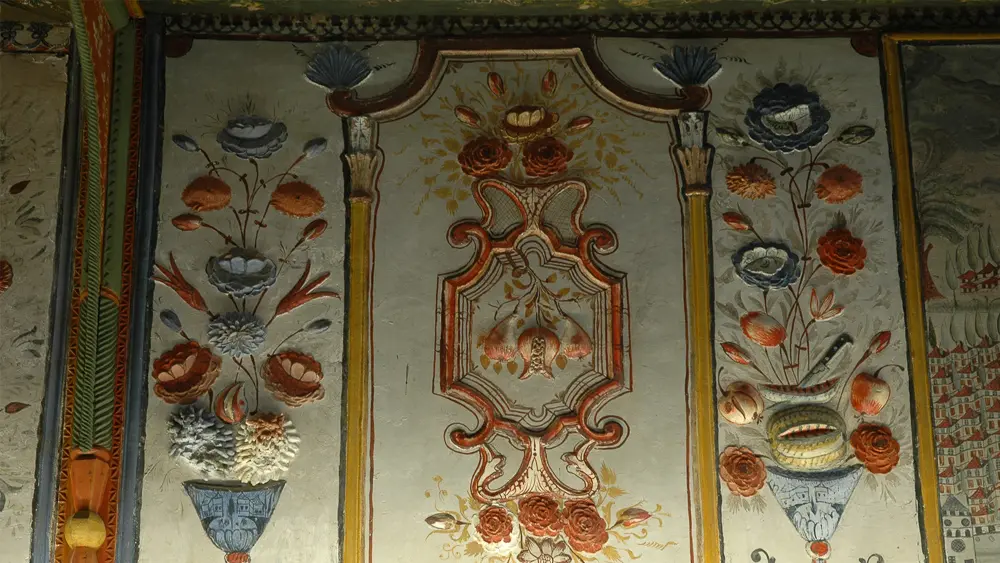
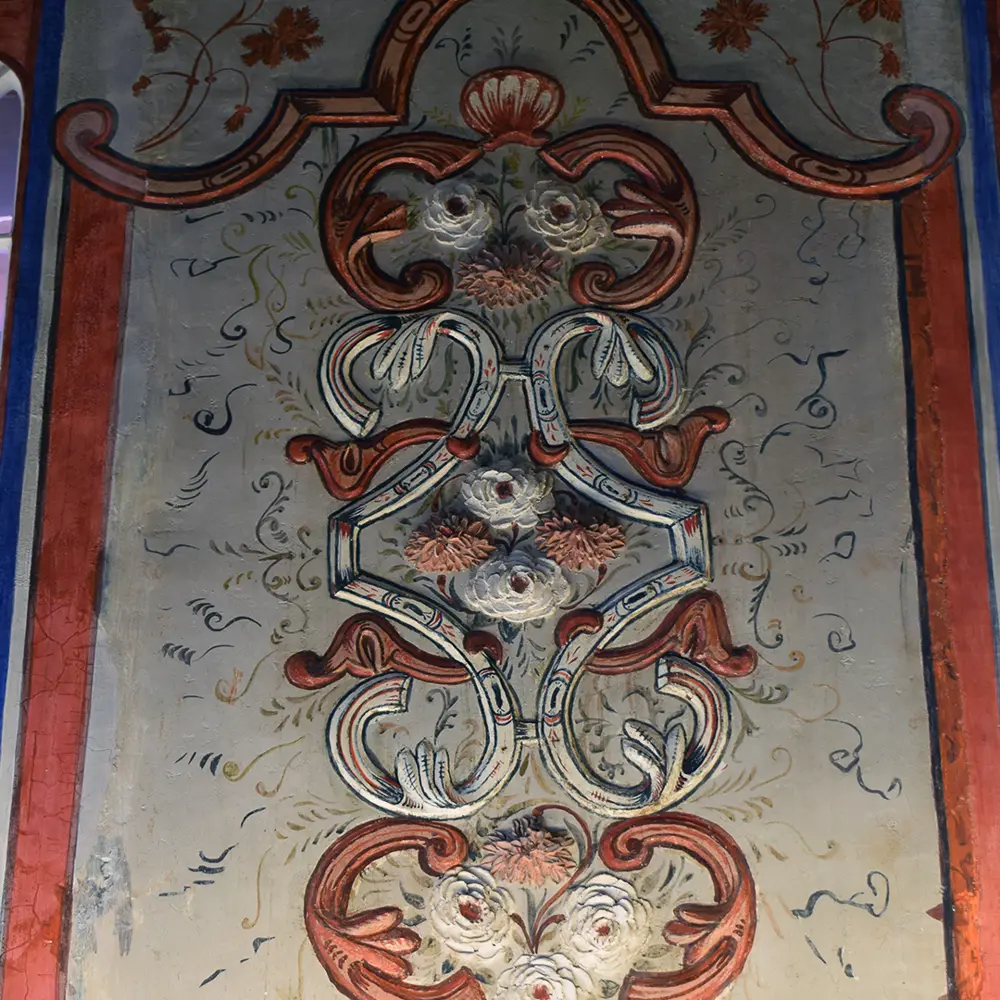
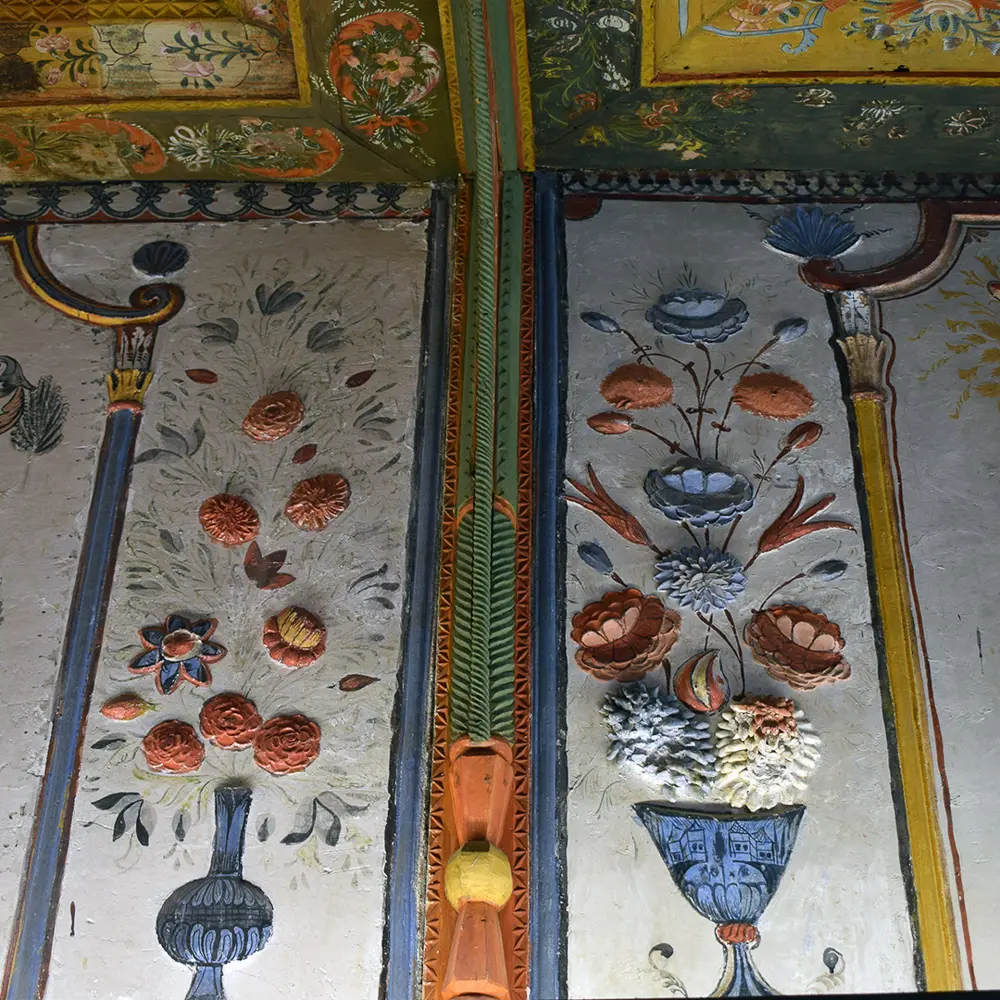
Αρχοντικό της Πούλκως, όροφος, καλός οντάς: Τοιχογραφίες λουλουδιών και φρούτων με γύψινες λεπτομέρειες.
Αρχοντικό της Πούλκως, λεπτομέρεια από τις εξωτερικές τοιχογραφίες στην πλάγια όψη του αρχοντικού: Διακοσμητικά μοτίβα, καράβι και επιγραφή με τη χρονολογία 1759.
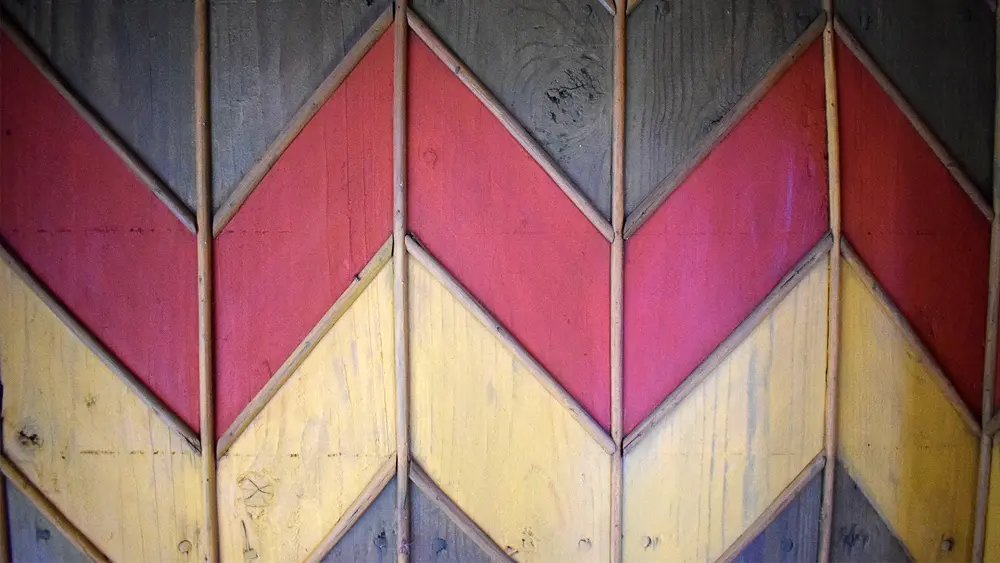
Αρχοντικό της Πούλκως, όροφος, οντάς, η ζωγραφική διακόσμηση ξύλινης επένδυσης πριν τις εργασίες συντήρησης του αρχοντικού.
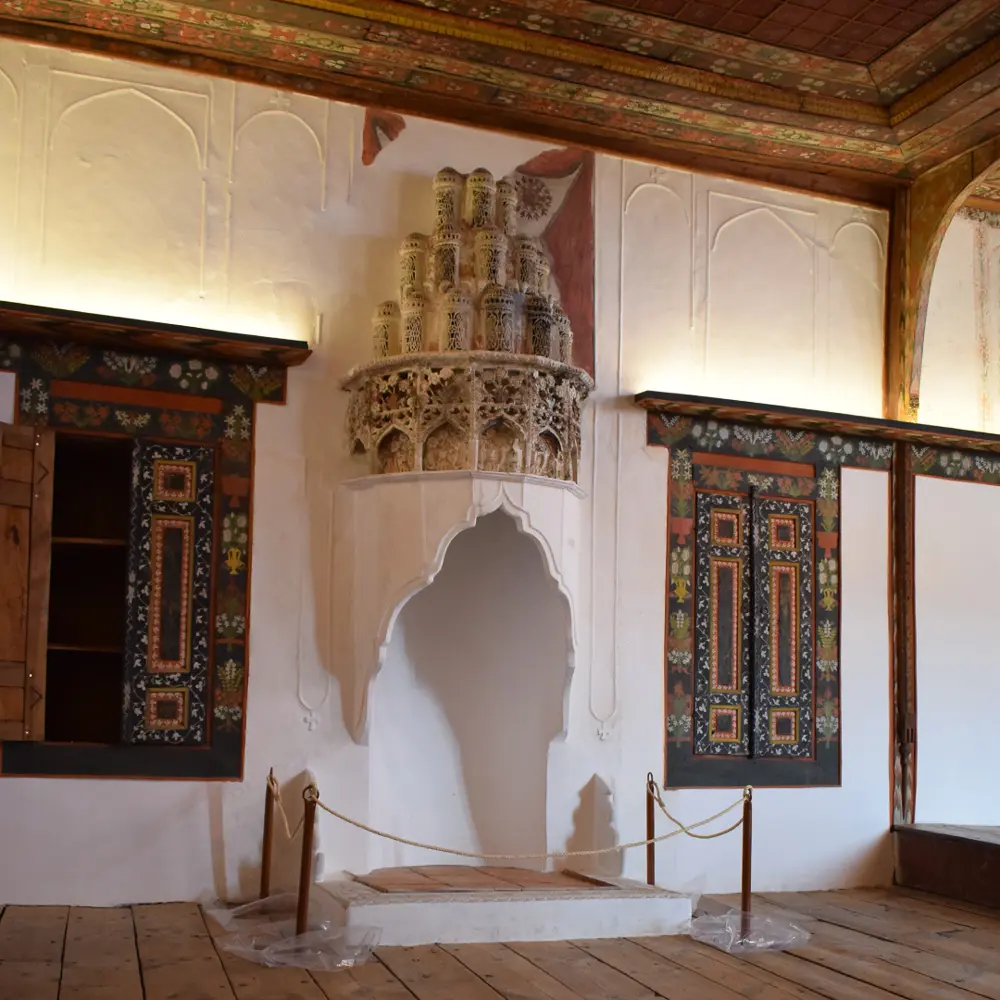
Αρχοντικό της Πούλκως, γενική άποψη του καλού οντά στον όροφο.
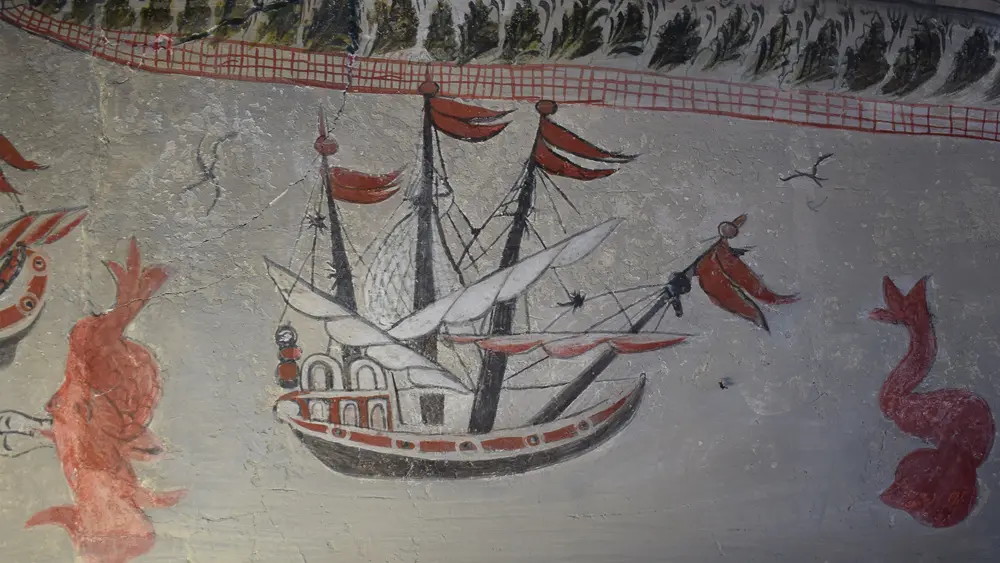
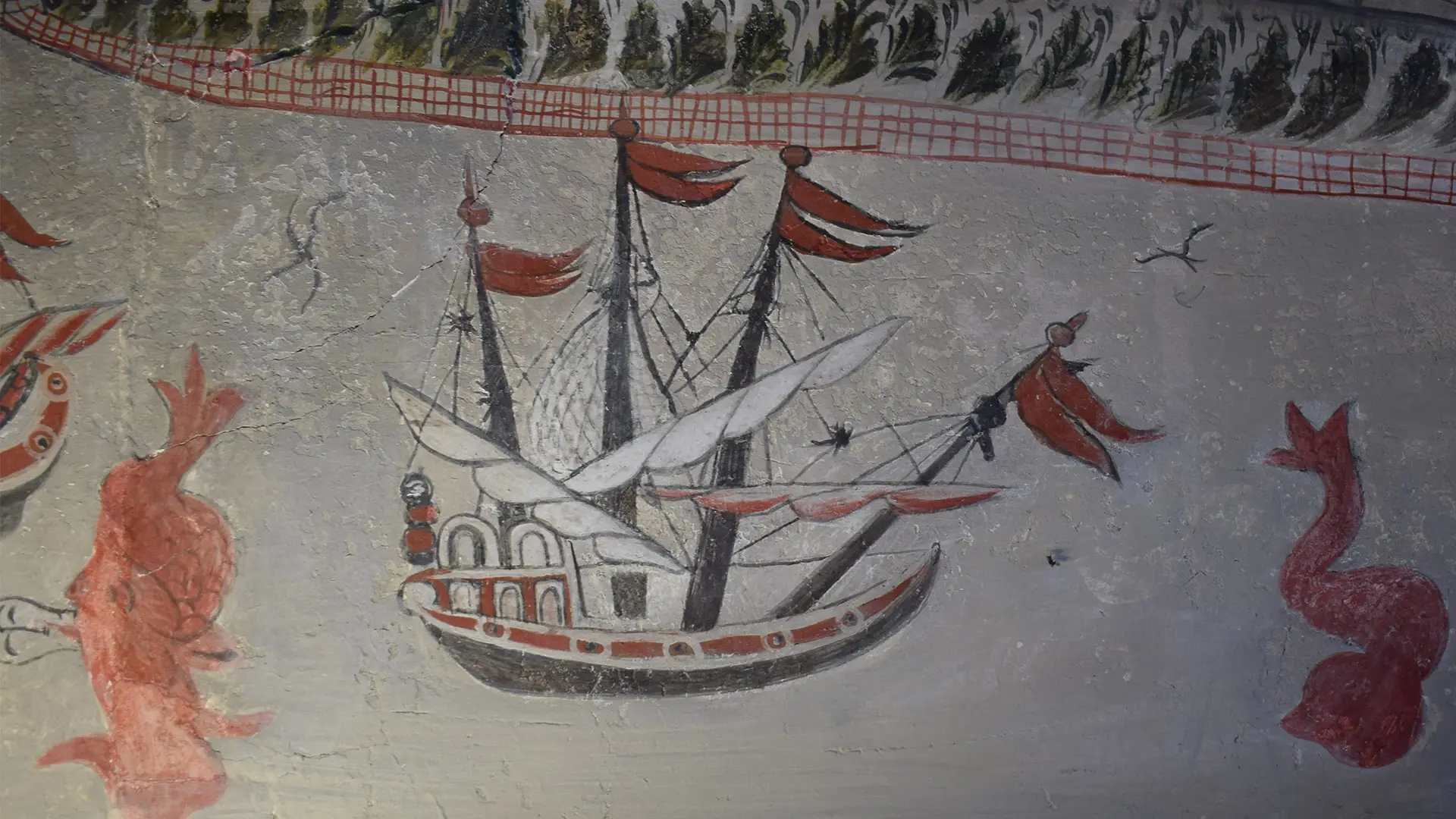
Αρχοντικό της Πούλκως, όροφος, καλός οντάς, λεπτομέρεια από την τοιχογραφία με παράσταση πόλης (πιθανώς της Κωνσταντινούπολης): Ιστιοφόρο καράβι και ψάρια.
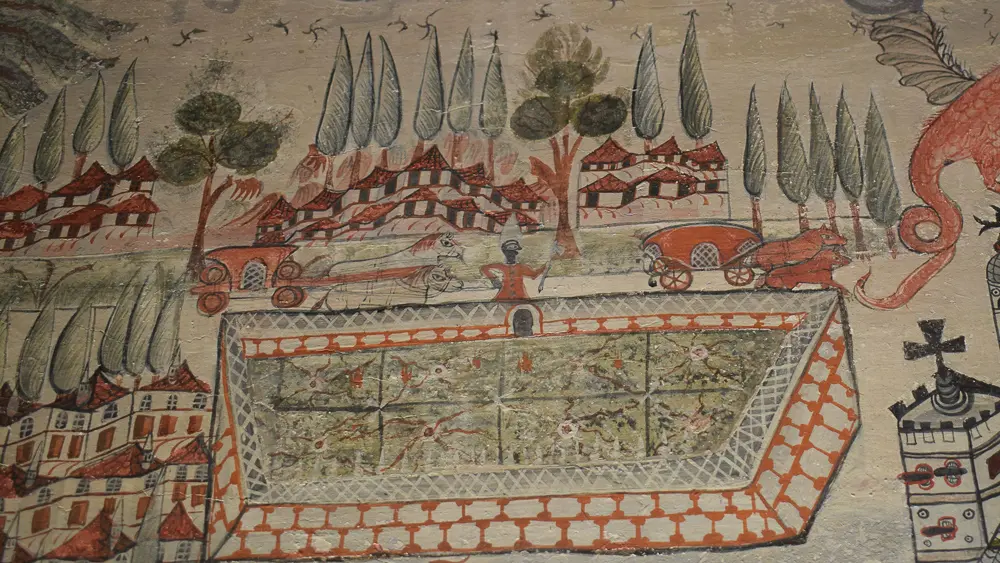
Αρχοντικό της Πούλκως, όροφος, καλός οντάς, λεπτομέρεια από την τοιχογραφία με παράσταση πόλης (πιθανώς της Κωνσταντινούπολης): Κήπος με περίβολο και άμαξες με άλογα.
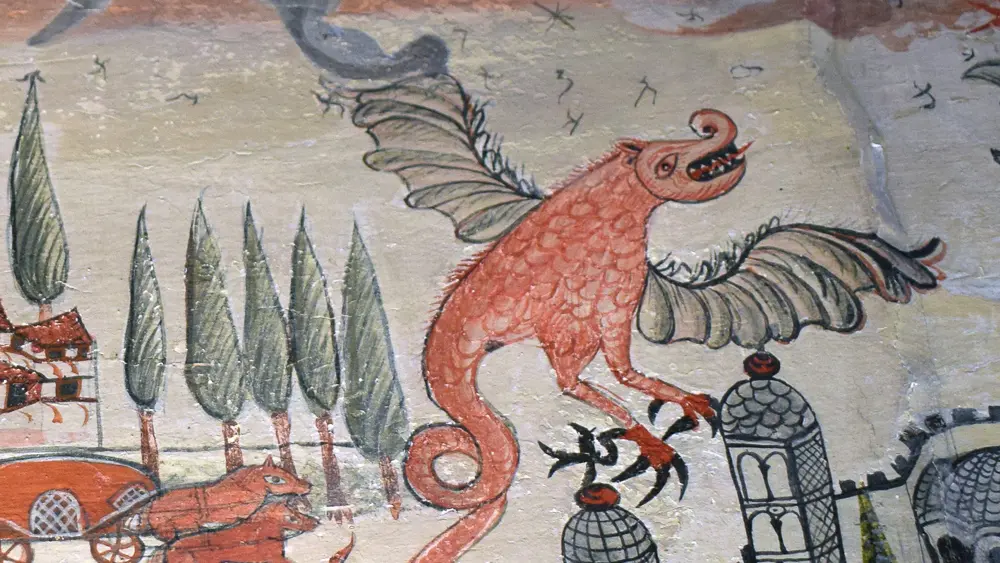
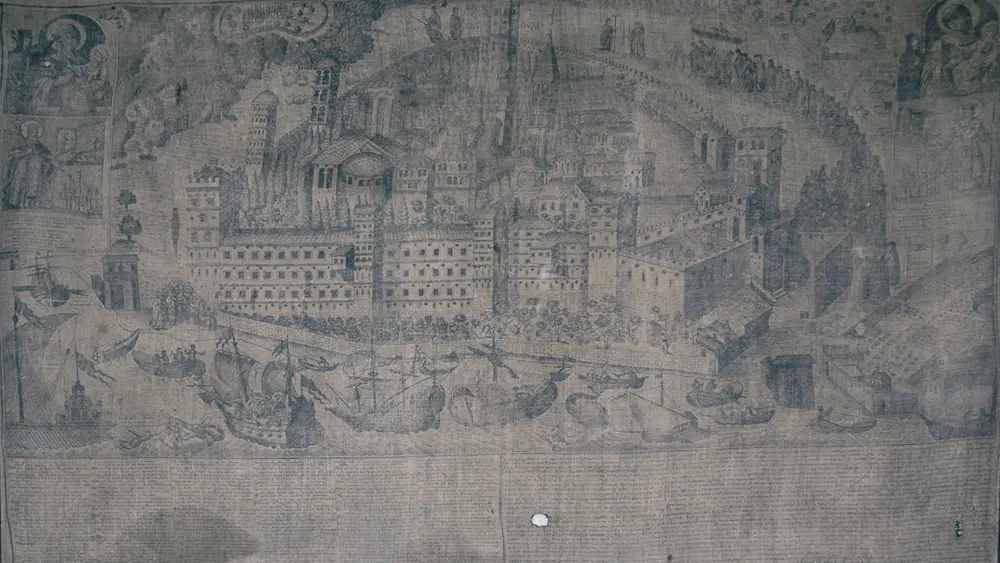
Αρχοντικό της Πούλκως, όροφος, καλός οντάς: Λεπτομέρεια από την τοιχογραφία με παράσταση πόλης (πιθανώς της Κωνσταντινούπολης). Πάνω από την πόλη δυο φτερωτοί δράκοντες, χερουβείμ και ρασοφόρος άνδρας με σταυρό. Η παράσταση βασίζεται σε χαλκογραφία με παράσταση της Μονής Βατοπεδίου.
Ιερός Ναός Αγίας Παρασκευής Σιάτιστας, χαλκογραφία τυπωμένη σε ύφασμα με παράσταση της Μονής Βατοπεδίου.
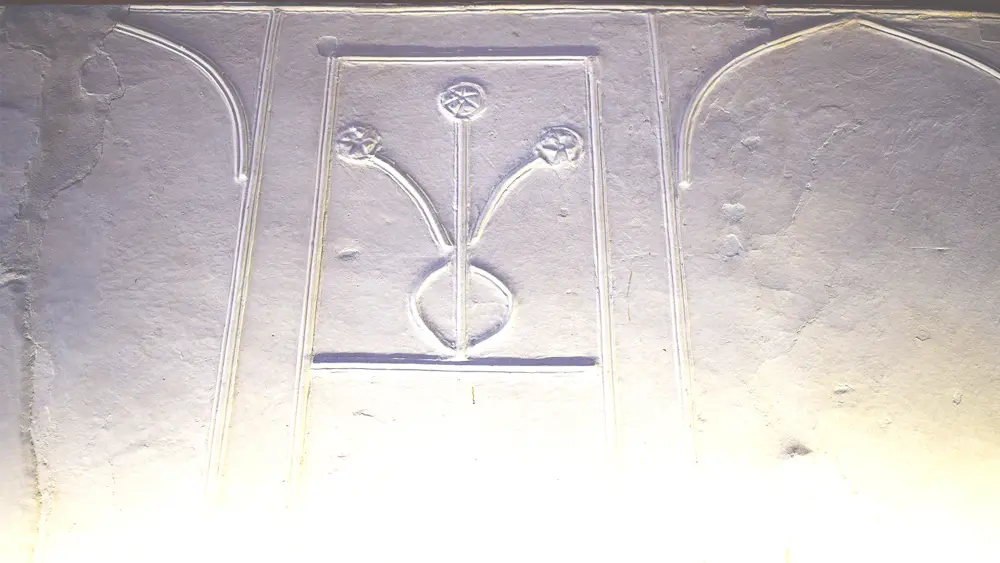
Αρχοντικό της Πούλκως, όροφος, καλός οντάς, τοιχογραφίες με γύψινες λεπτομέρειες: διακοσμητικό πλαίσιο με λουλούδια.
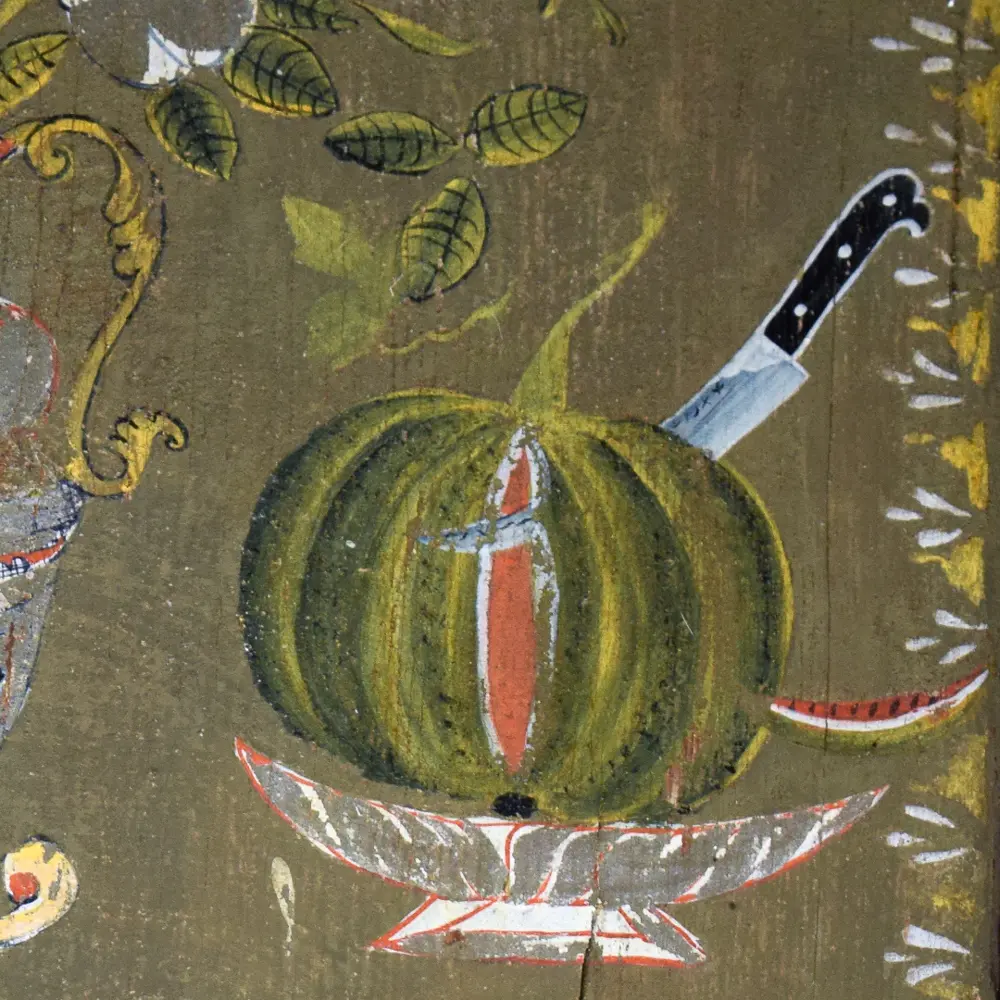
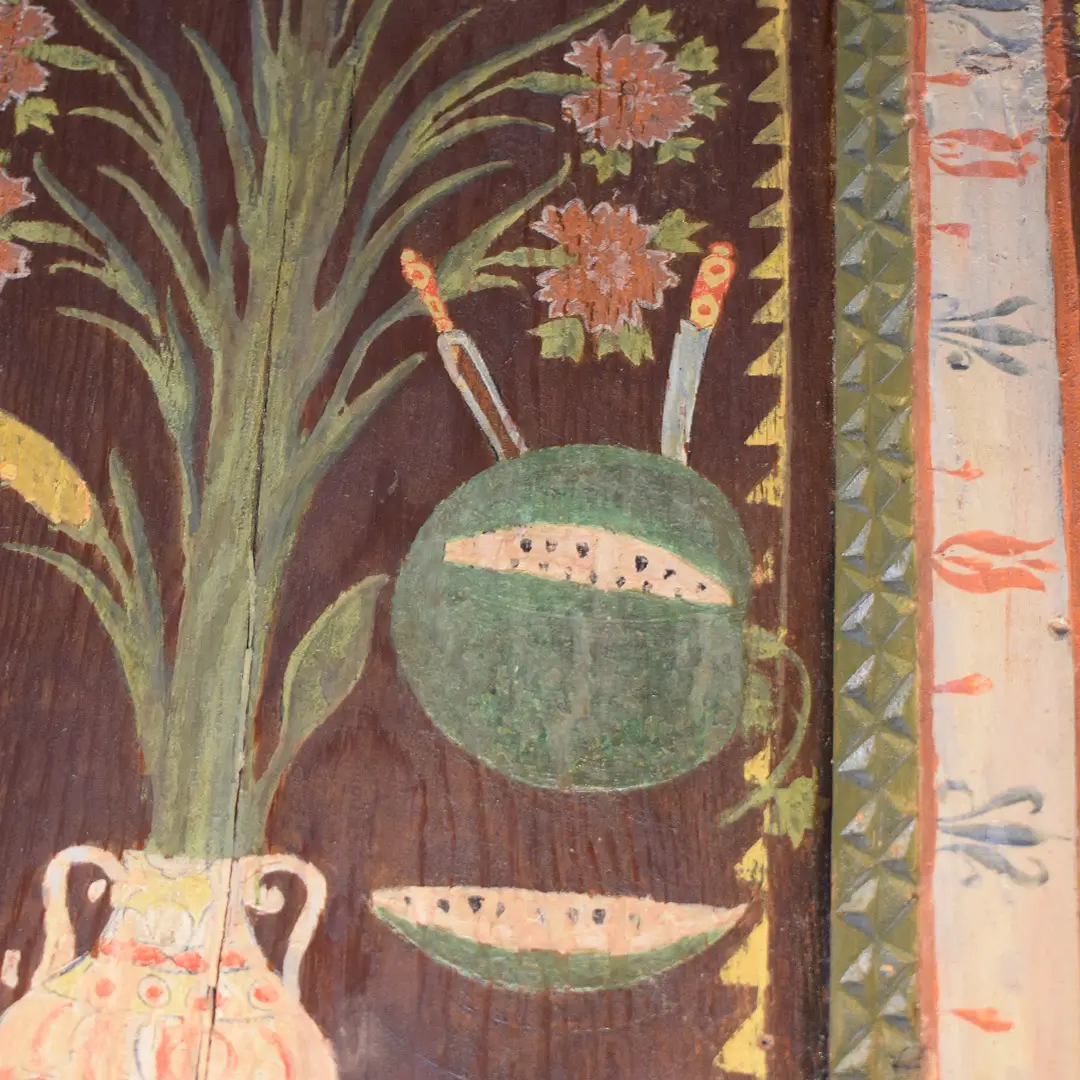
Αρχοντικό της Πούλκως, όροφος, καλός οντάς, λεπτομέρεια ξύλινης επένδυσης (φαρσώματος): Παράσταση καρπουζιού με μαχαίρι.
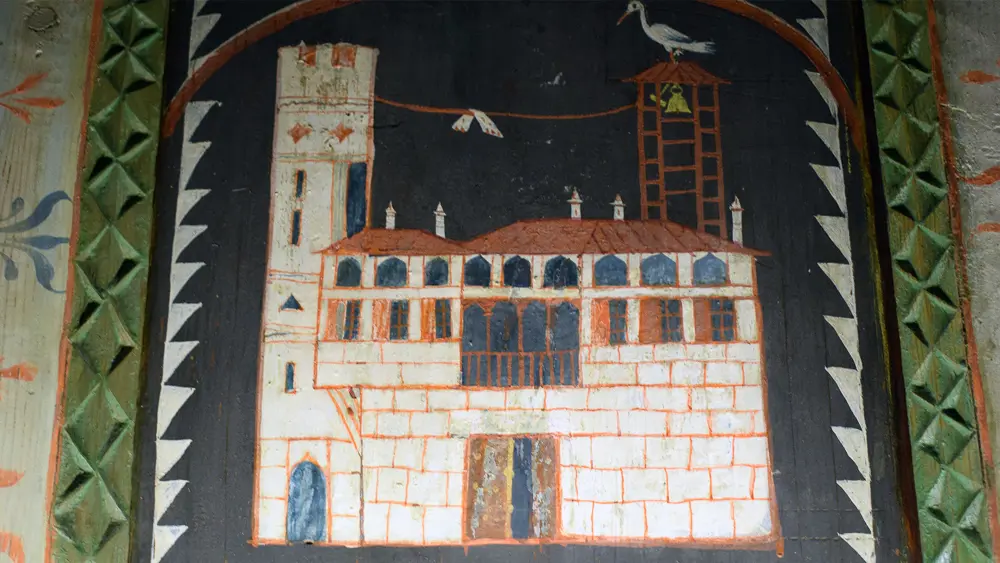
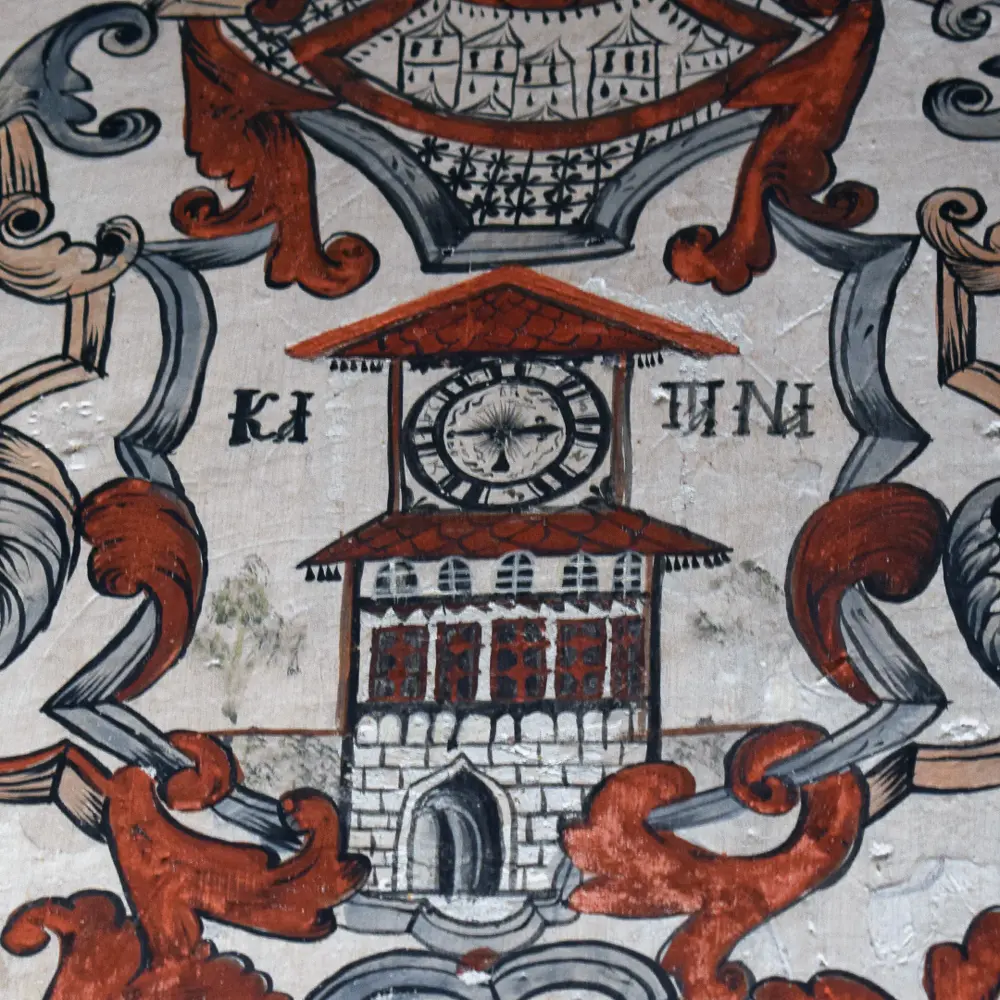
Αρχοντικό της Πούλκως, όροφος, καλός οντάς, λεπτομέρεια τοιχογραφίας: Παράσταση καμπαναριού με ρολόι.
Αρχοντικό της Πούλκως, όροφος, καλός οντάς, διακοσμητικά μοτίβα σε μεσάντρα.
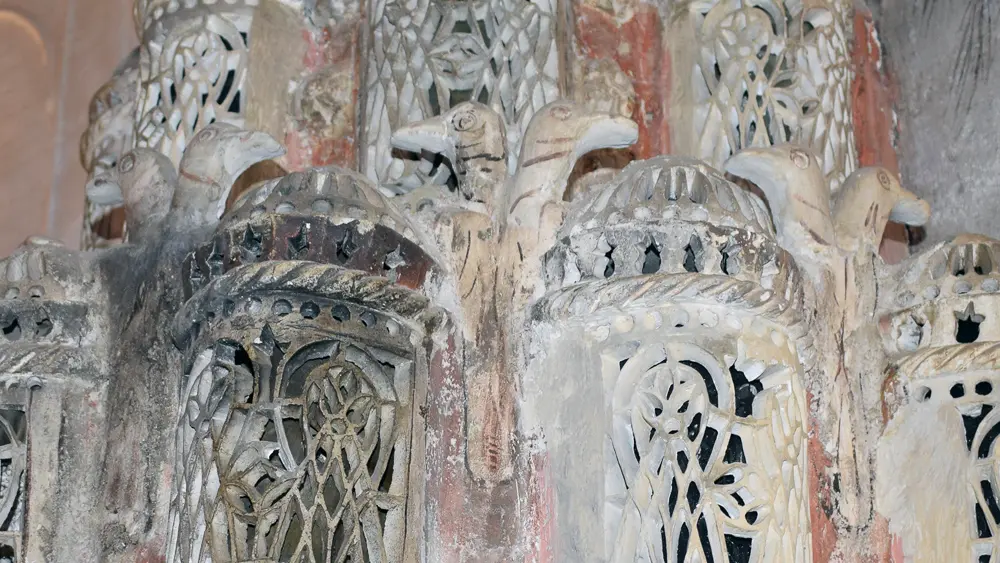
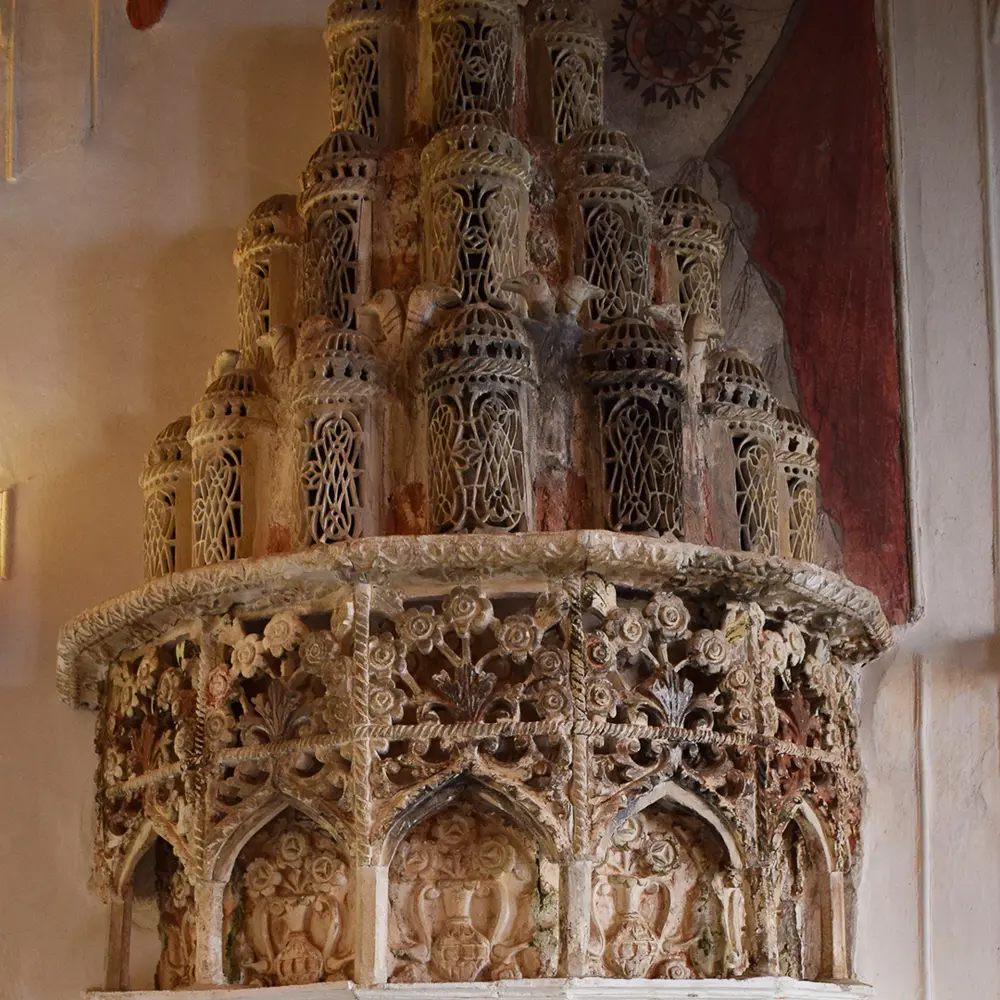
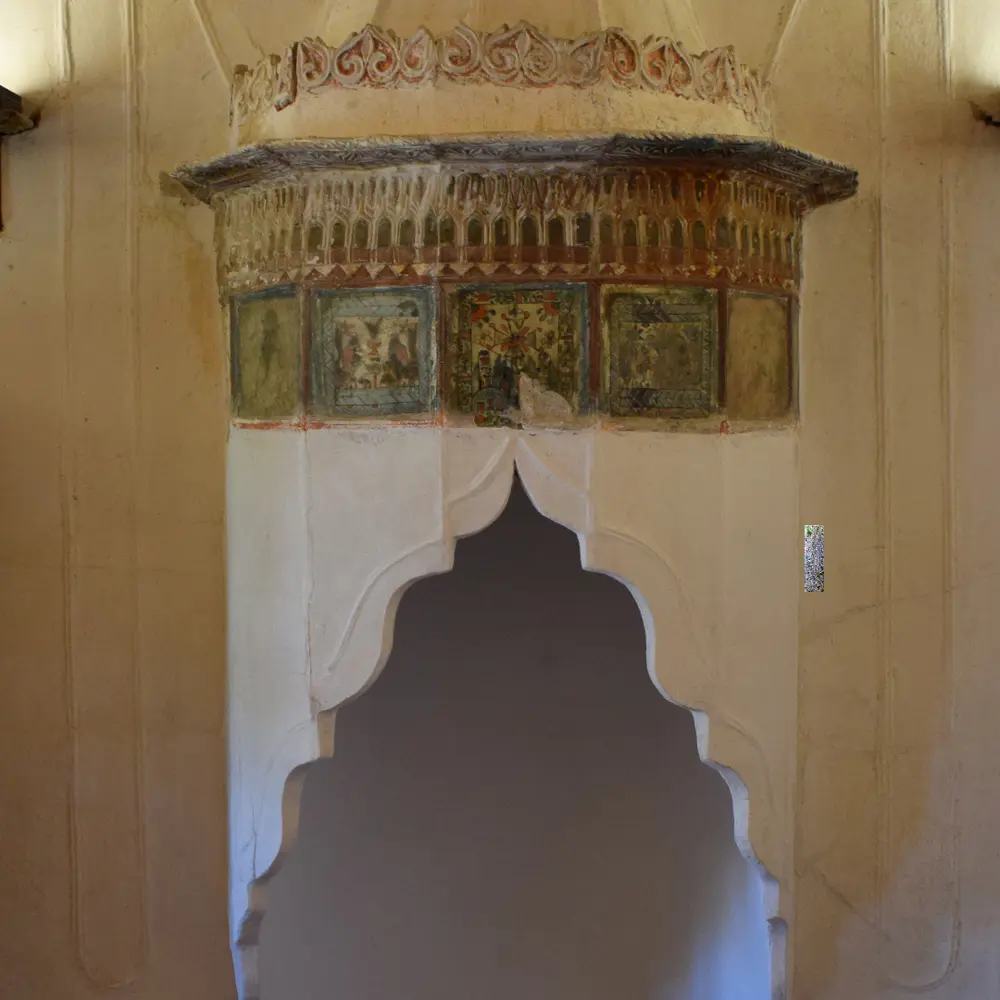
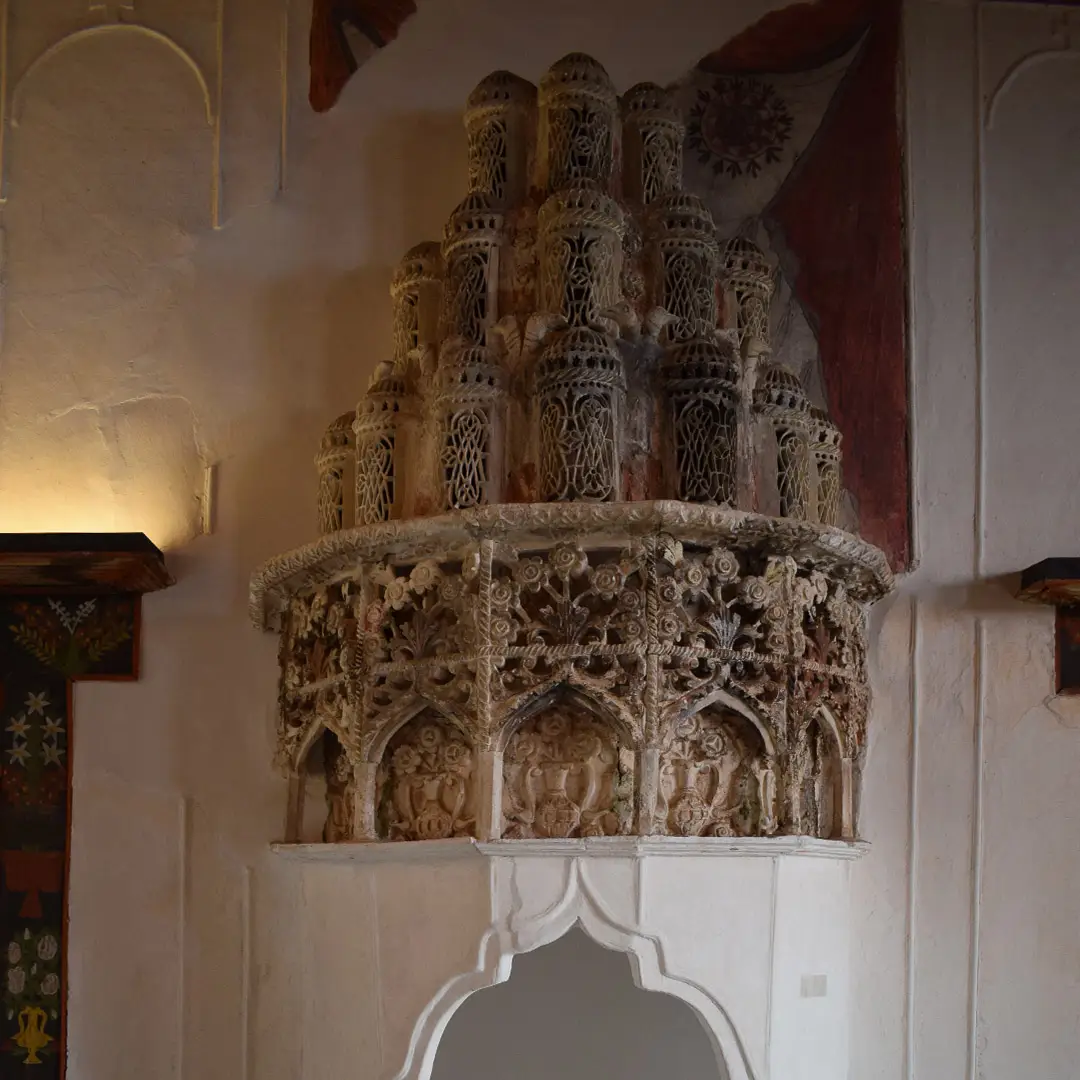
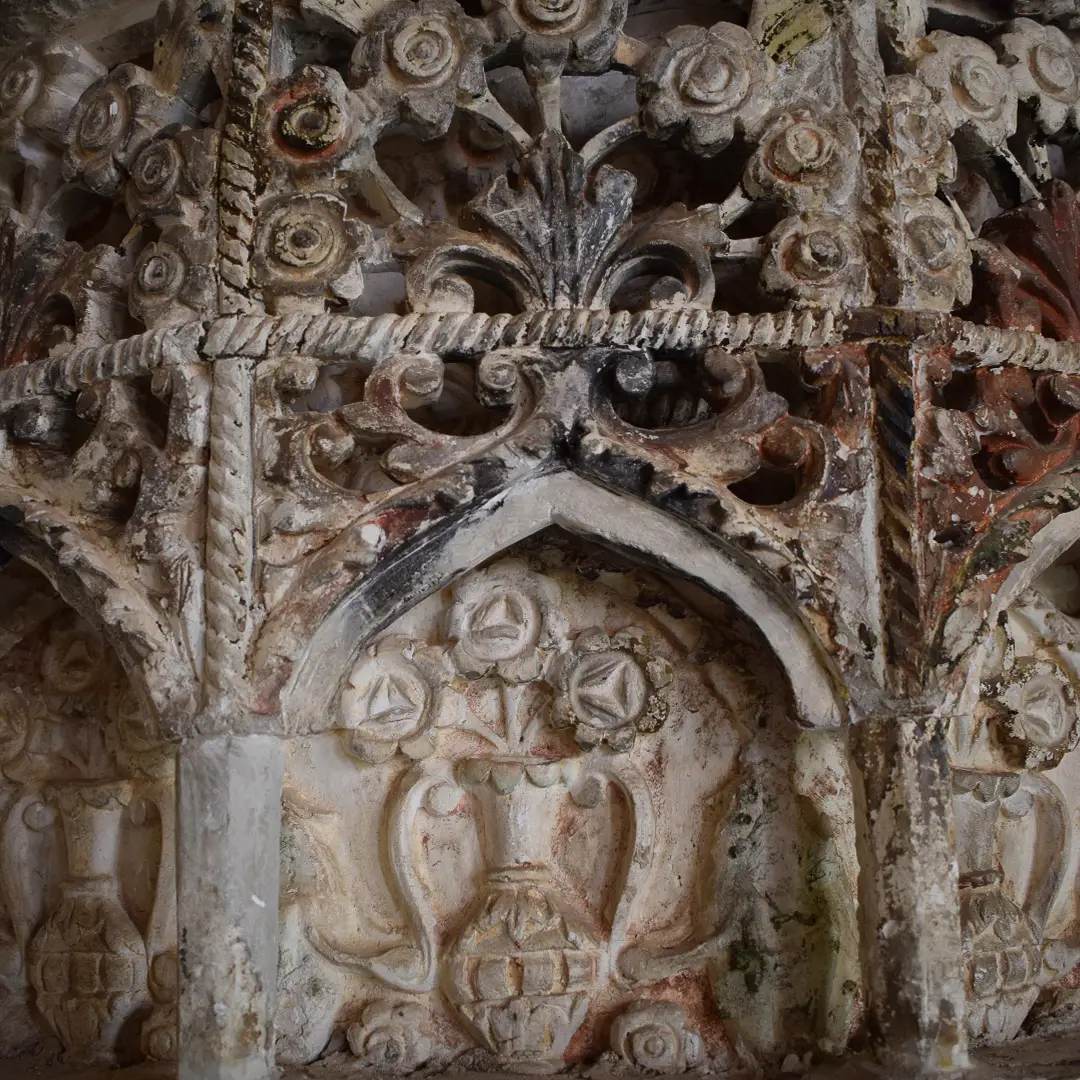
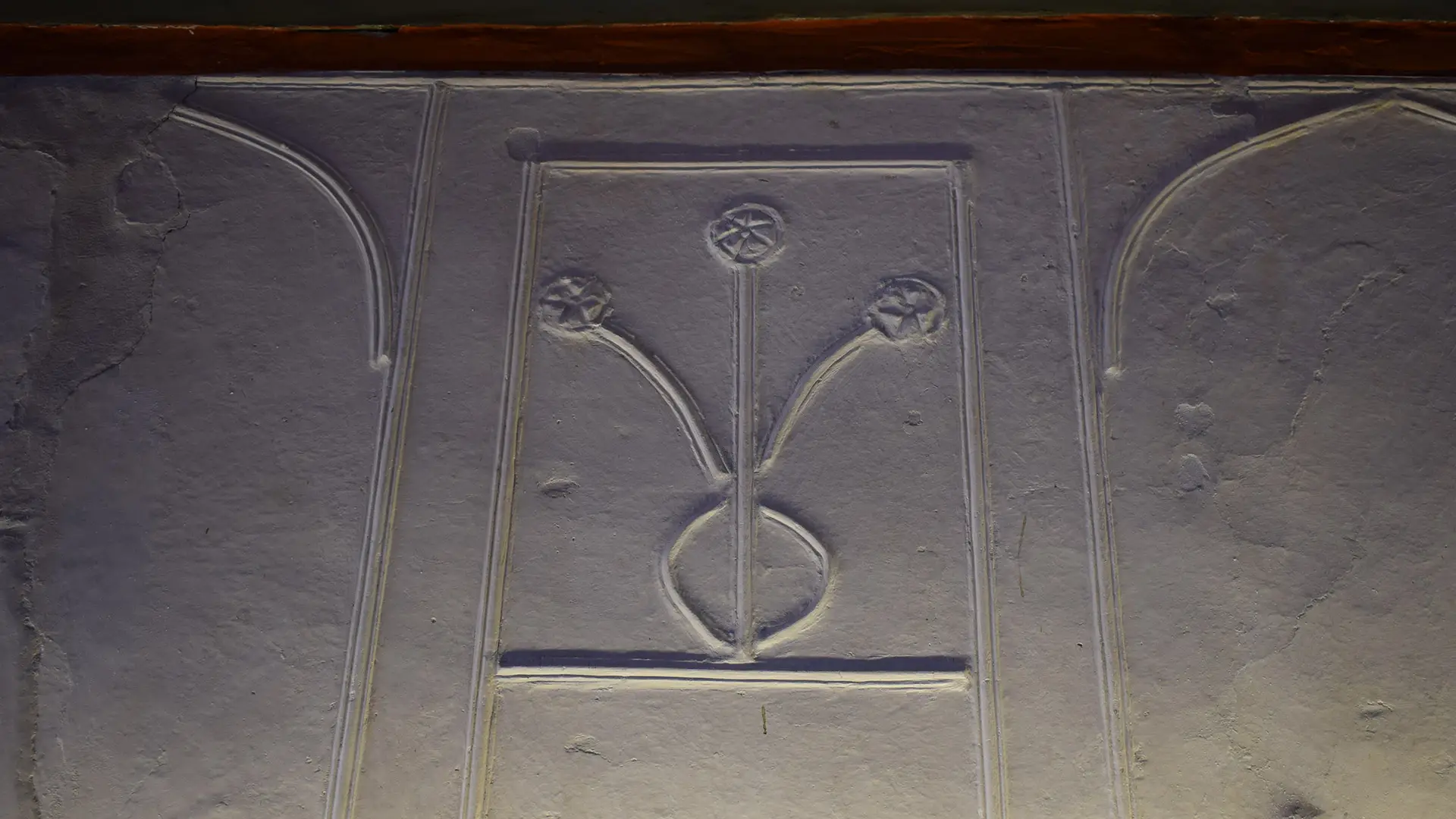
Αρχοντικό της Πούλκως, όροφος, καλός οντάς: Γύψινος διάκοσμος του τζακιού, άνθη σε βάζα, φαναράκια και δικέφαλοι αετοί.
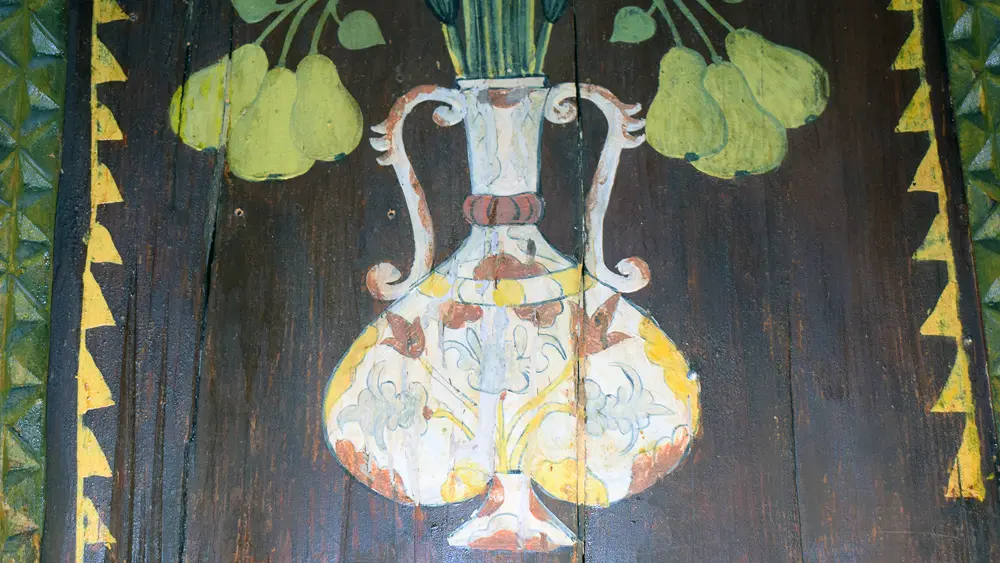
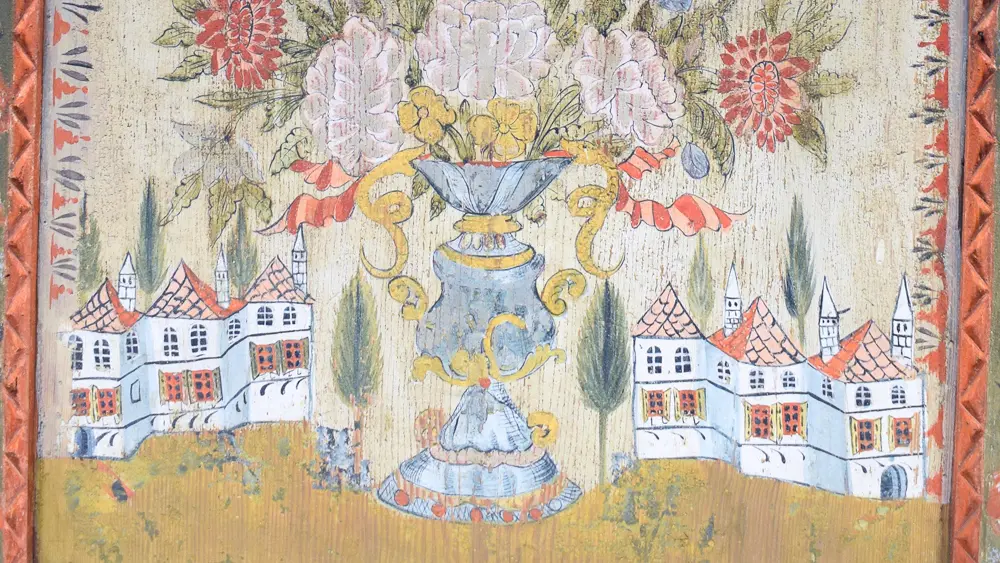
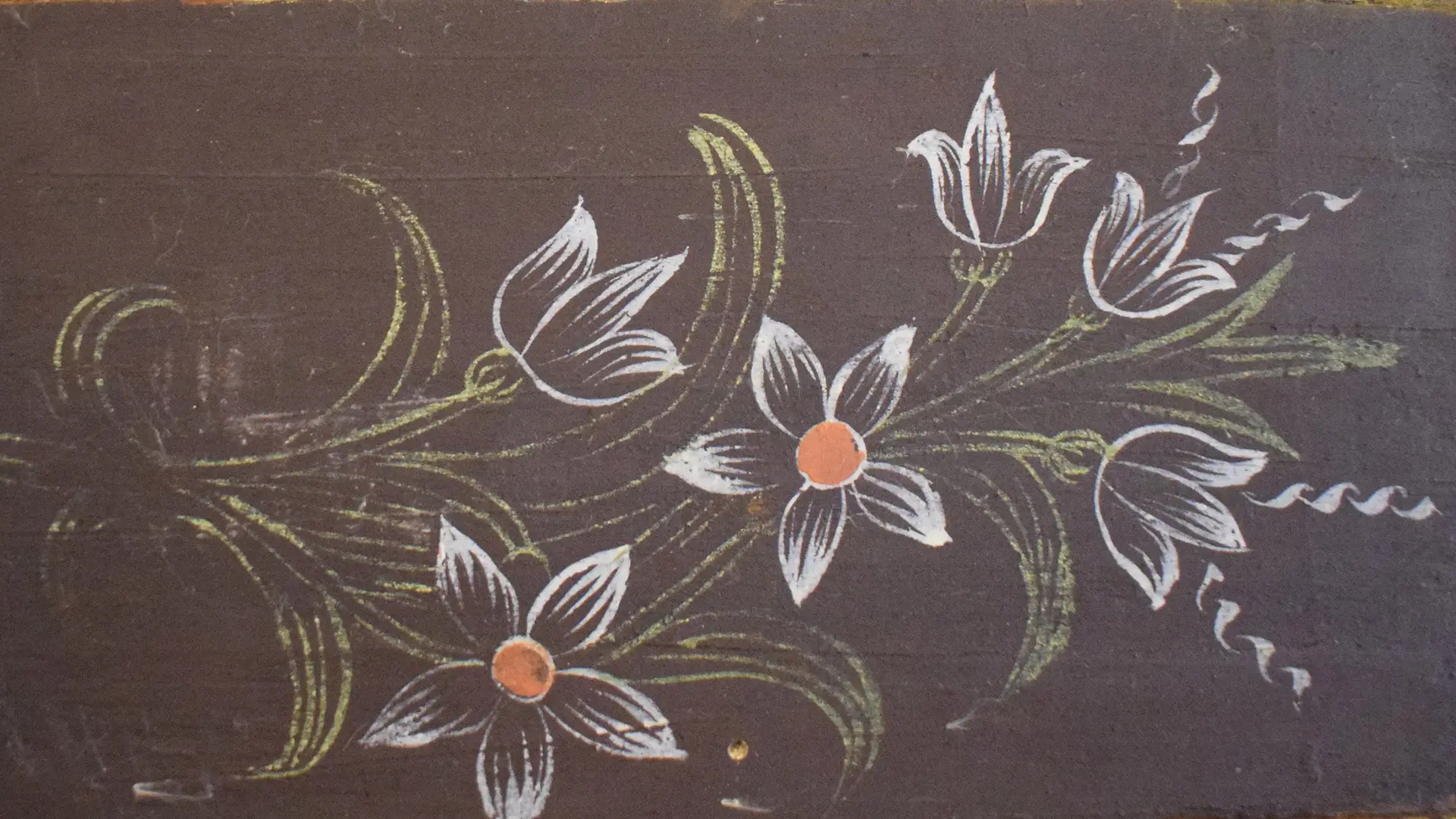
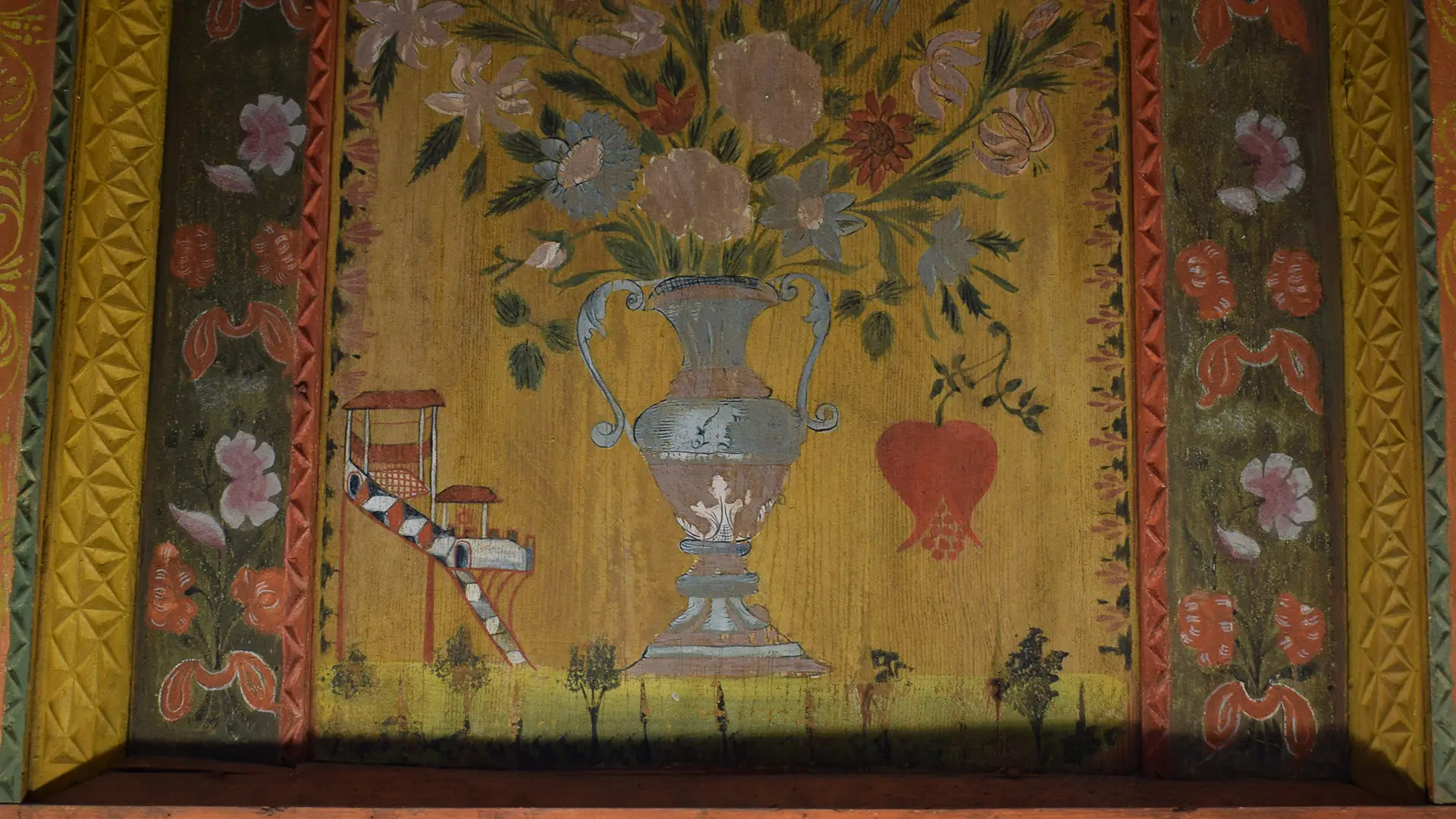
Αρχοντικό της Πούλκως, όροφος, καλός οντάς, λεπτομέρεια ξύλινης επένδυσης: Βάζο με άνθη και σπίτια σε μικρή κλίμακα.
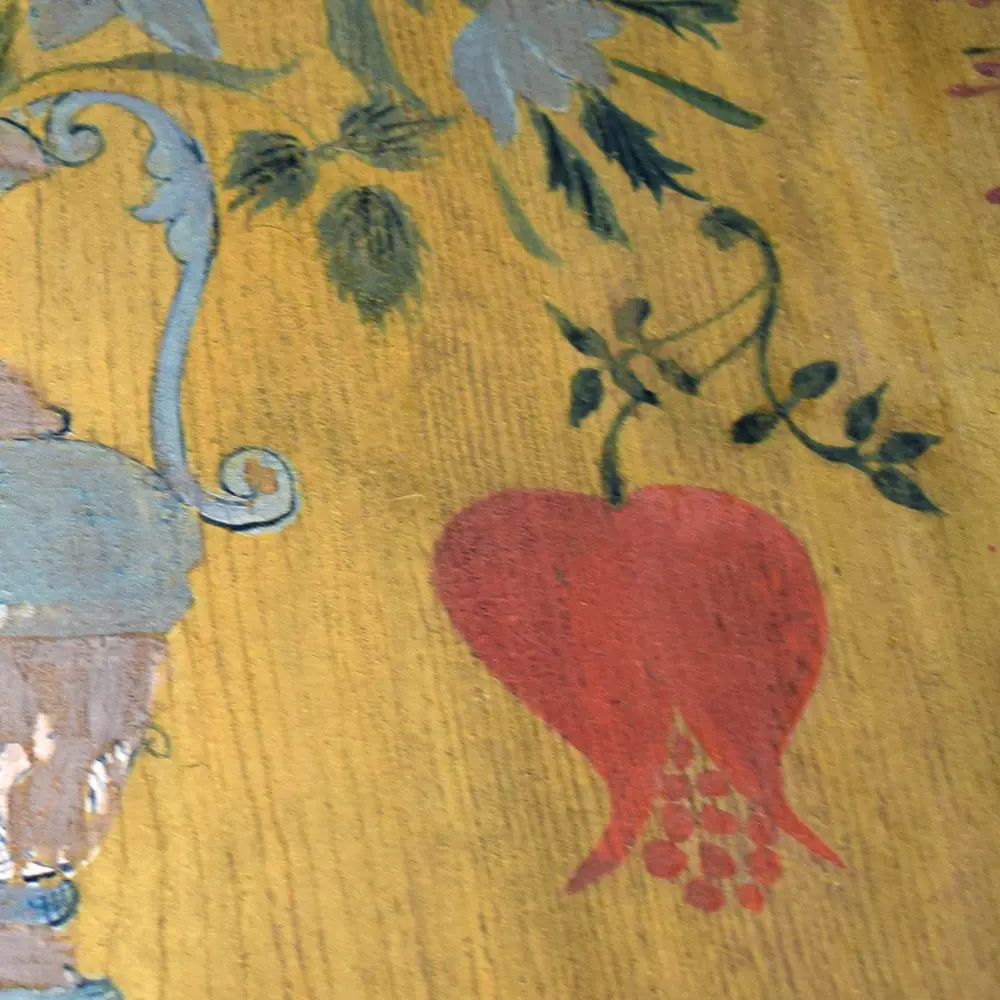
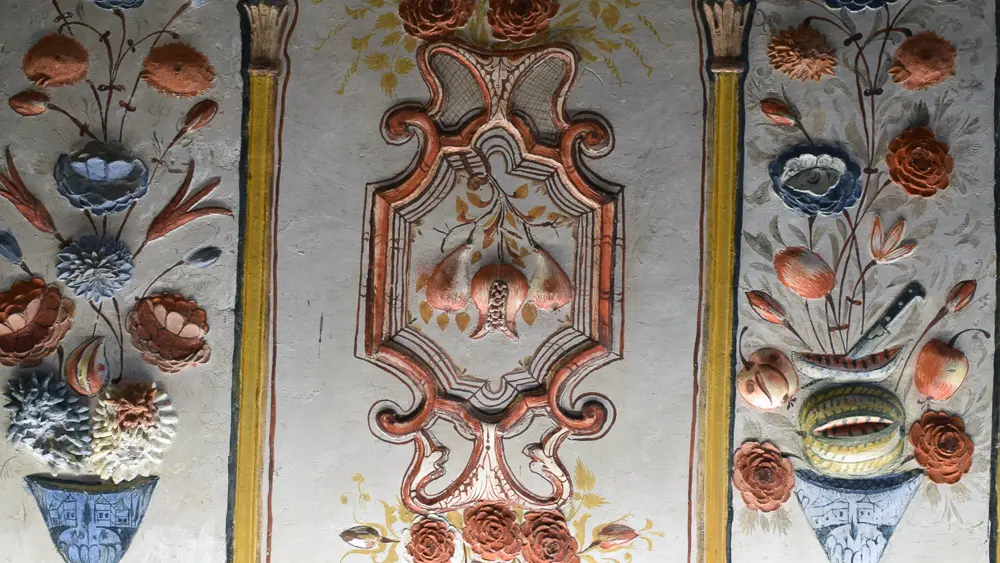
Αρχοντικό της Πούλκως, όροφος, καλός οντάς, τοιχογραφίες με γύψινες λεπτομέρειες: διακοσμητικό πλαίσιο με ρόδια και βάζα με λουλούδια και φρούτα.
Αρχοντικό της Πούλκως, όροφος, καλός οντάς, τοιχογραφίες με γύψινες λεπτομέρειες: βάζα με λουλούδια.
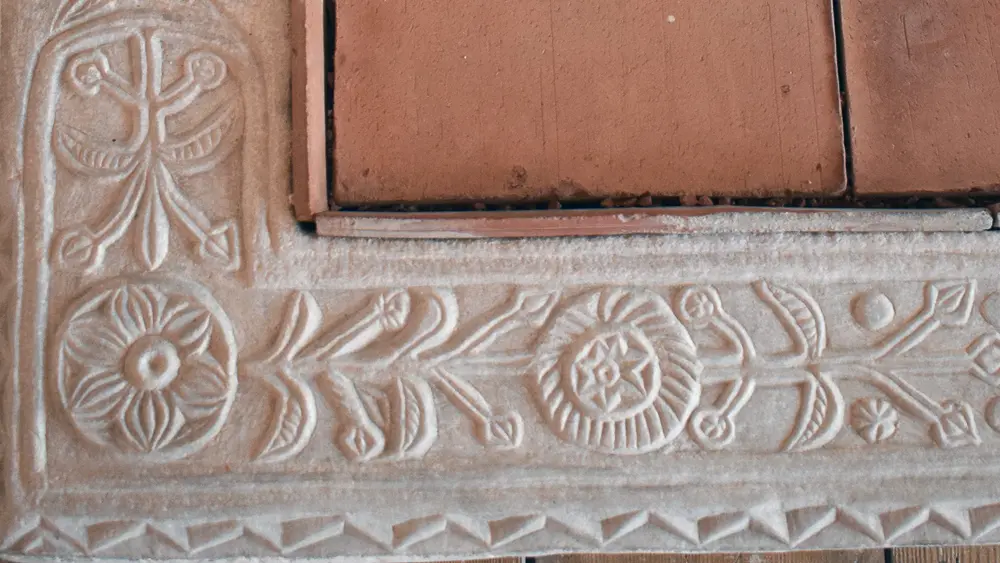
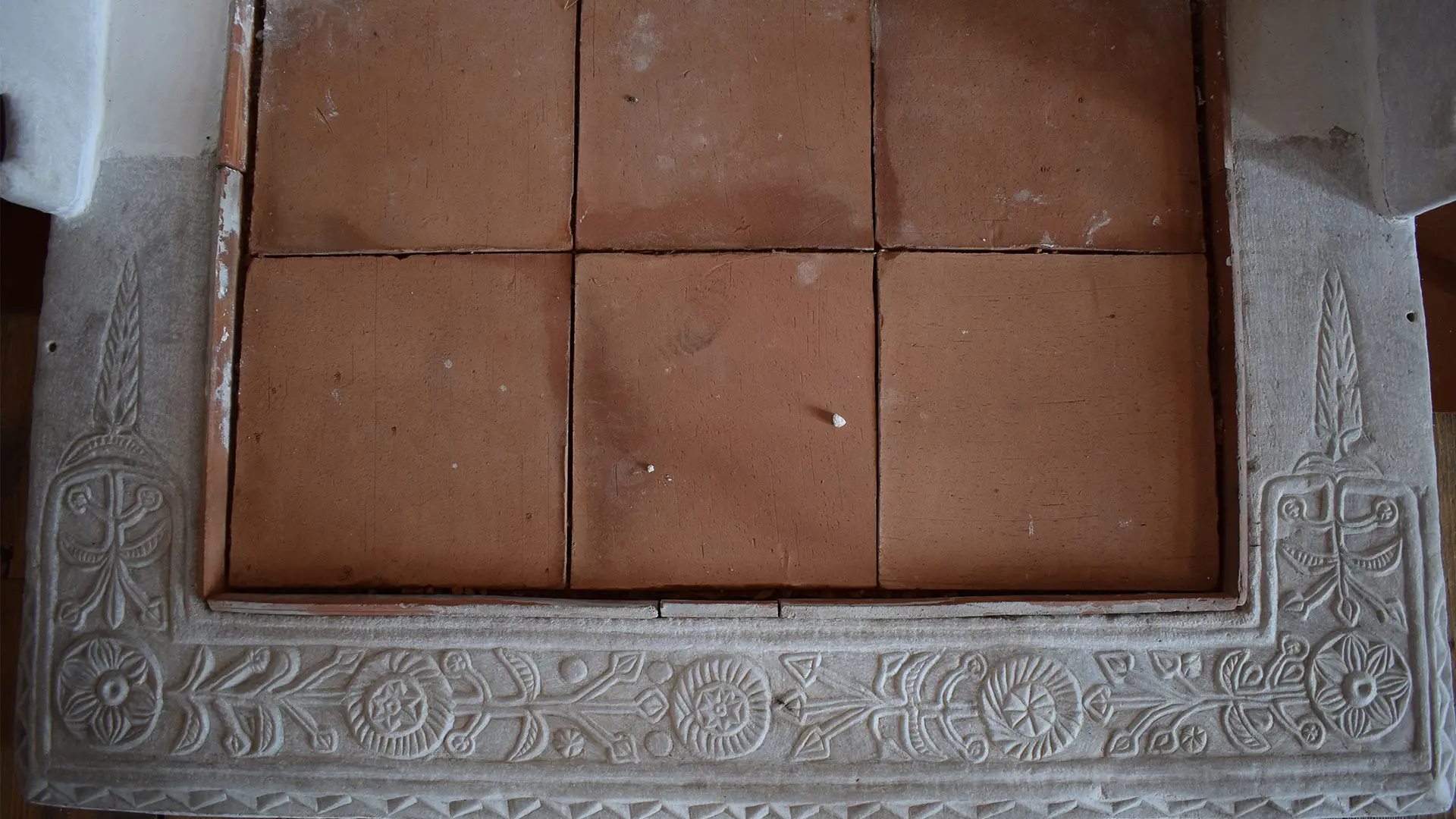
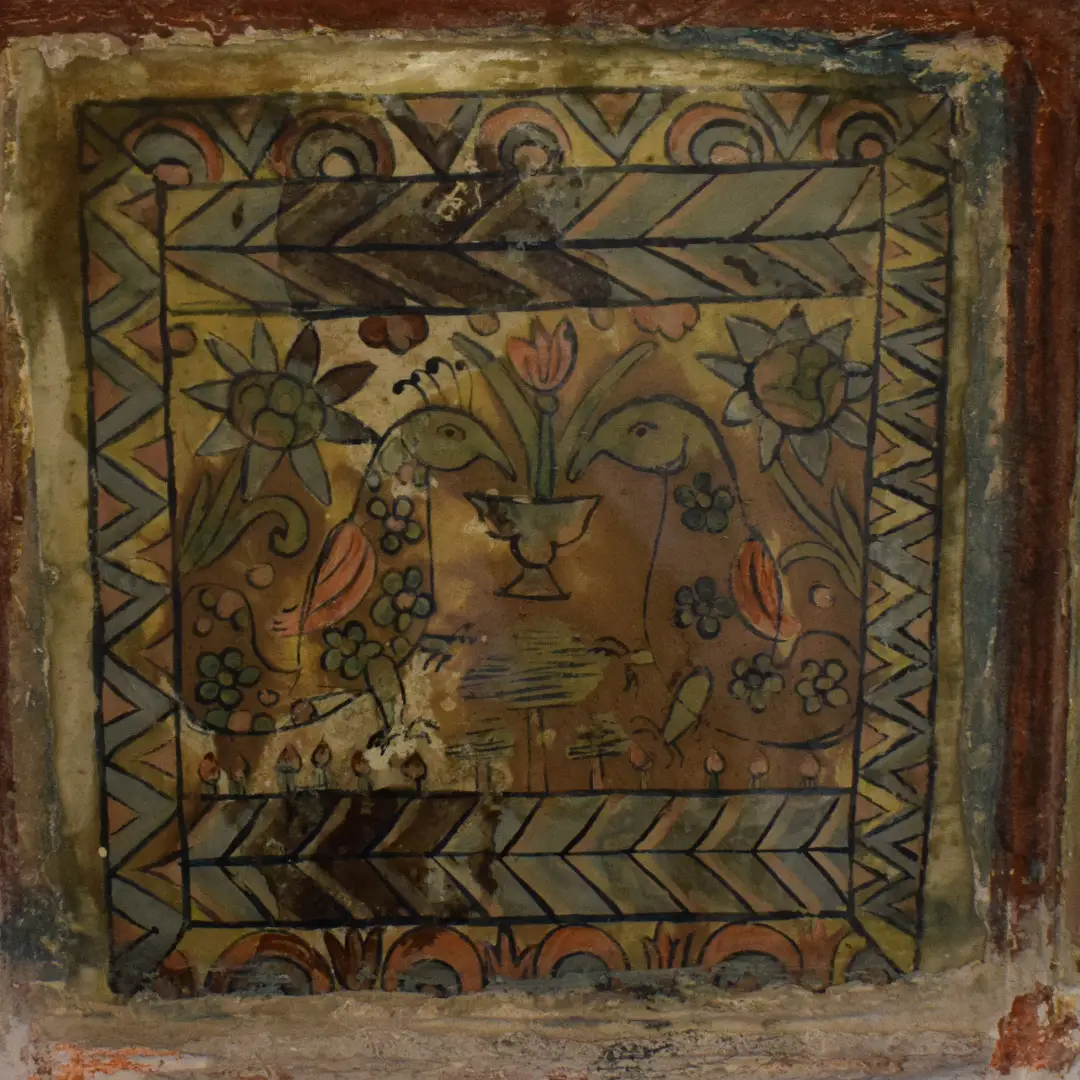
Αρχοντικό της Πούλκως, όροφος, οντάς με τζάκι: Τζάκι με γύψινη διακόσμηση και εφυαλωμένα κεραμικά πλακίδια.
Αρχοντικό της Πούλκως, όροφος: Εικονοστάσι πλαισιωμένο από φυτικό διάκοσμο.
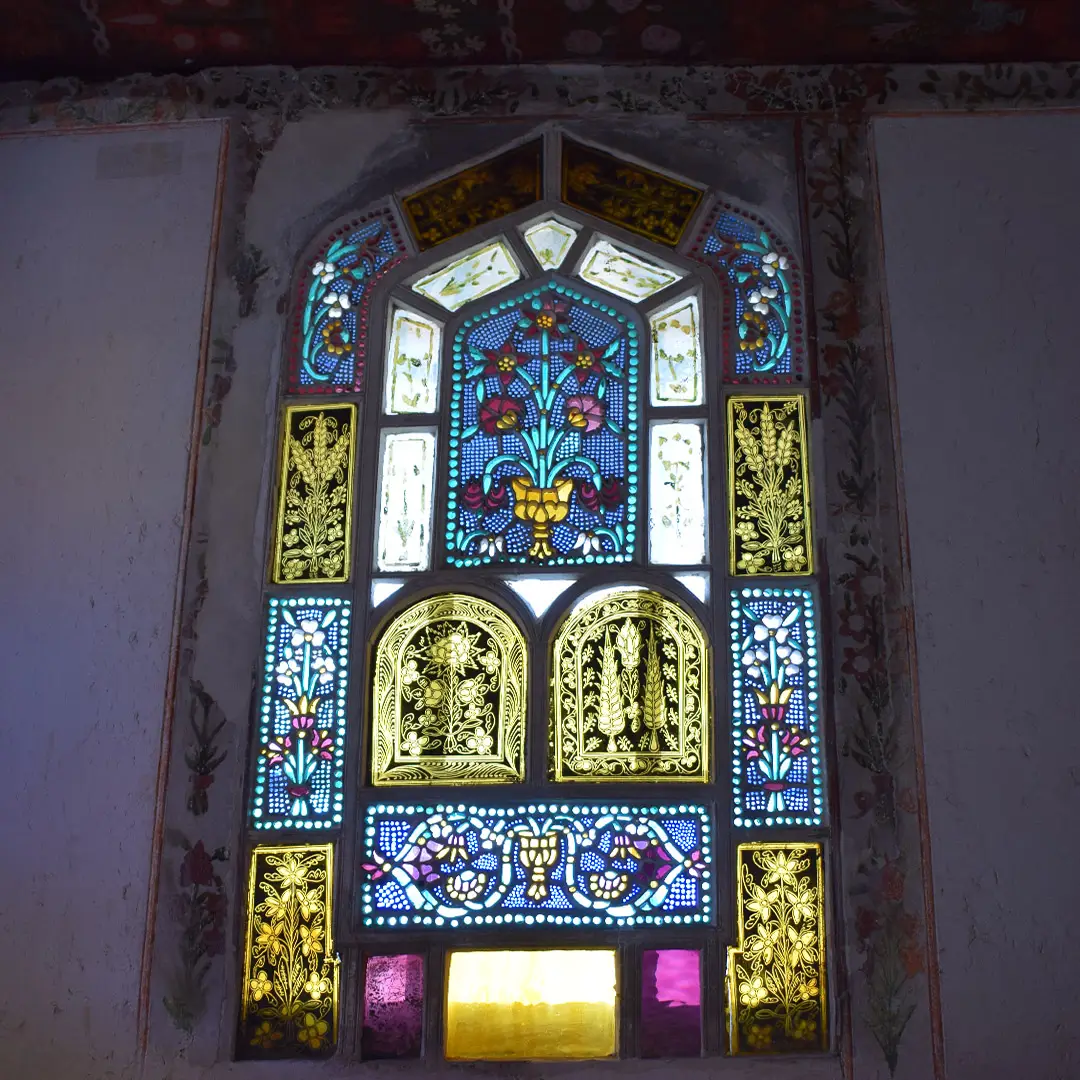
Αρχοντικό της Πούλκως, όροφος, καλός οντάς: Φεγγίτες (βιτρό) με πολύχρωμα μοτίβα, σταυρούς ή δικέφαλους αετούς και φυτική διακόσμηση.
Αρχοντικό της Πούλκως, όροφος, καλός οντάς: Φεγγίτης (βιτρό) με πολύχρωμα φυτικά και ανθικά μοτίβα (λεπτομέρεια).
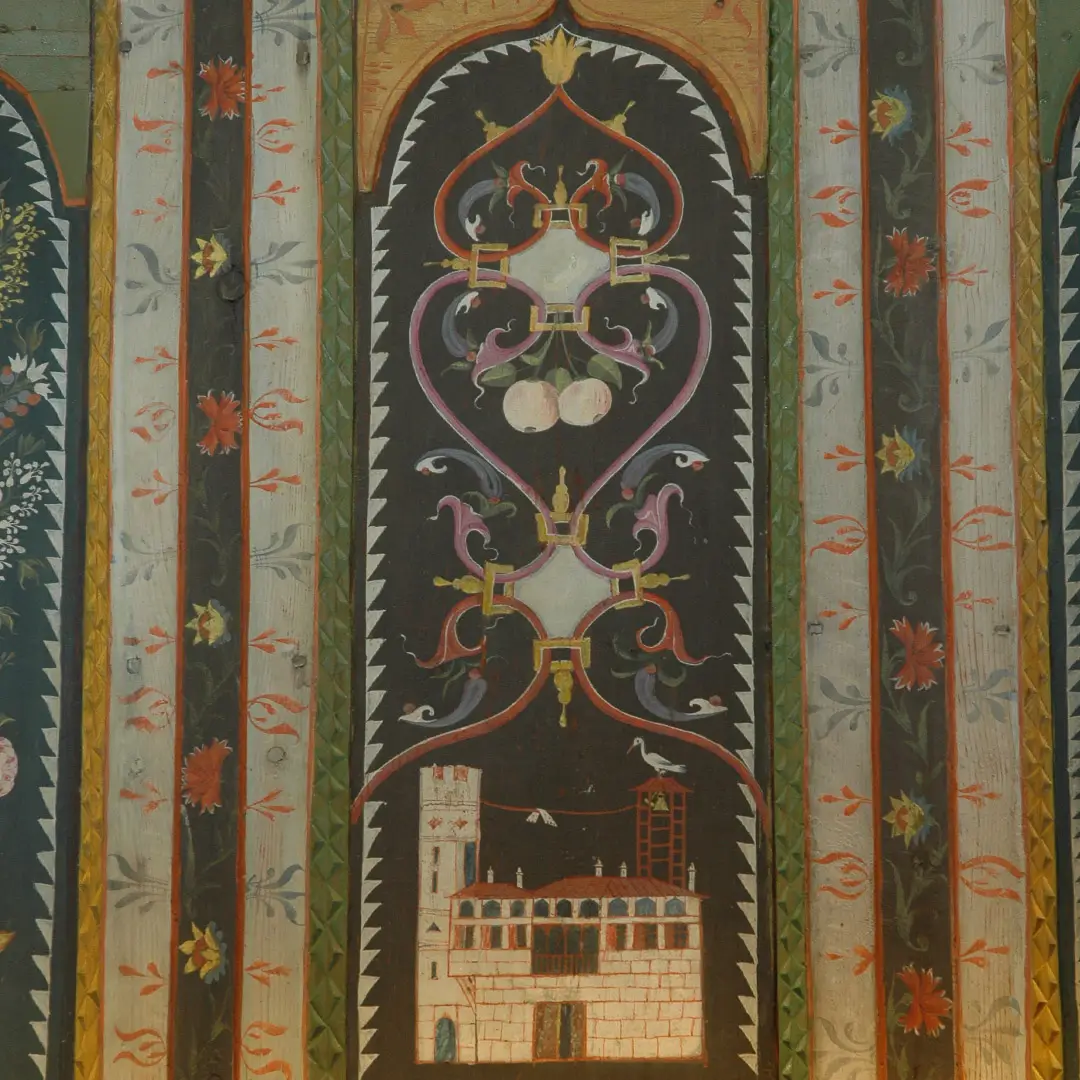
Αρχοντικό της Πούλκως, όροφος, καλός οντάς: «Ομφαλός» οροφής με εννέα ρόδακες απ’ όπου προεξέχουν ολόγλυφα ξύλινα ρόδια, πλαισιωμένος από διακοσμητικές ταινίες με κτήρια και σχηματοποιημένα φυτικά μοτίβα.
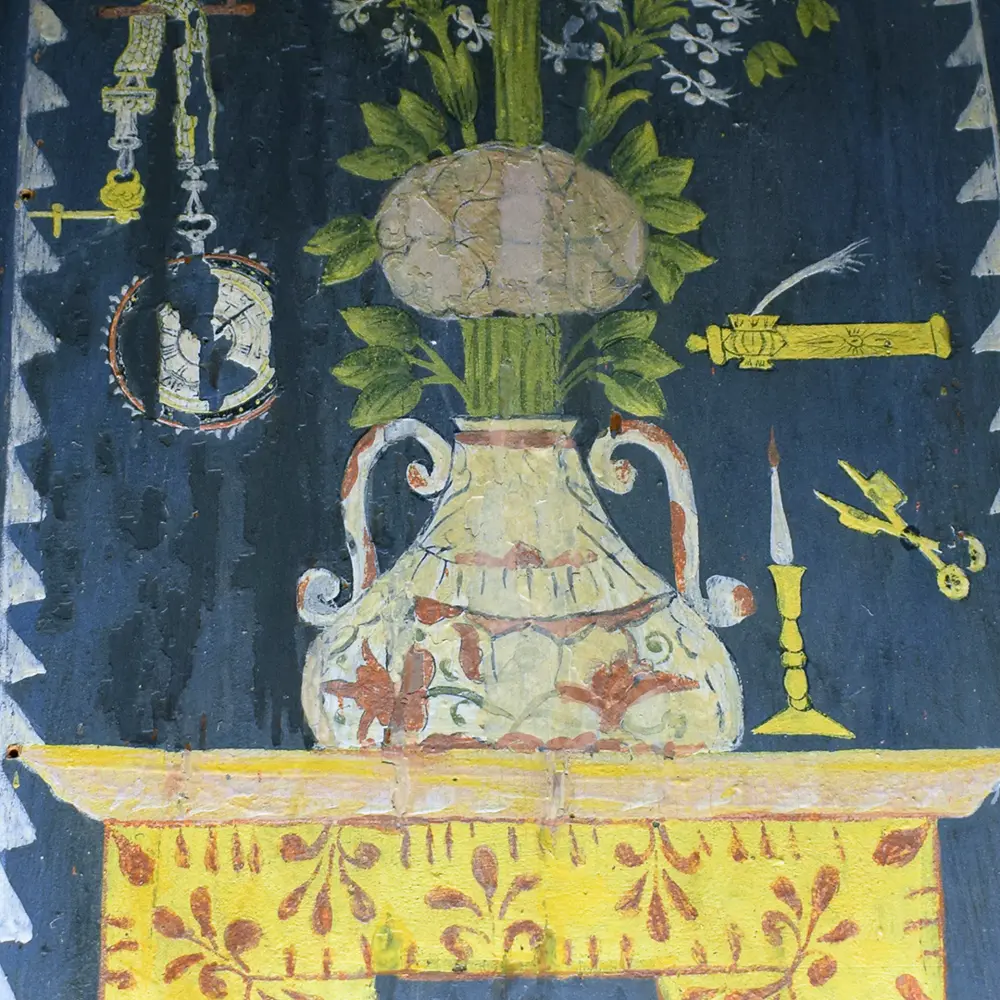
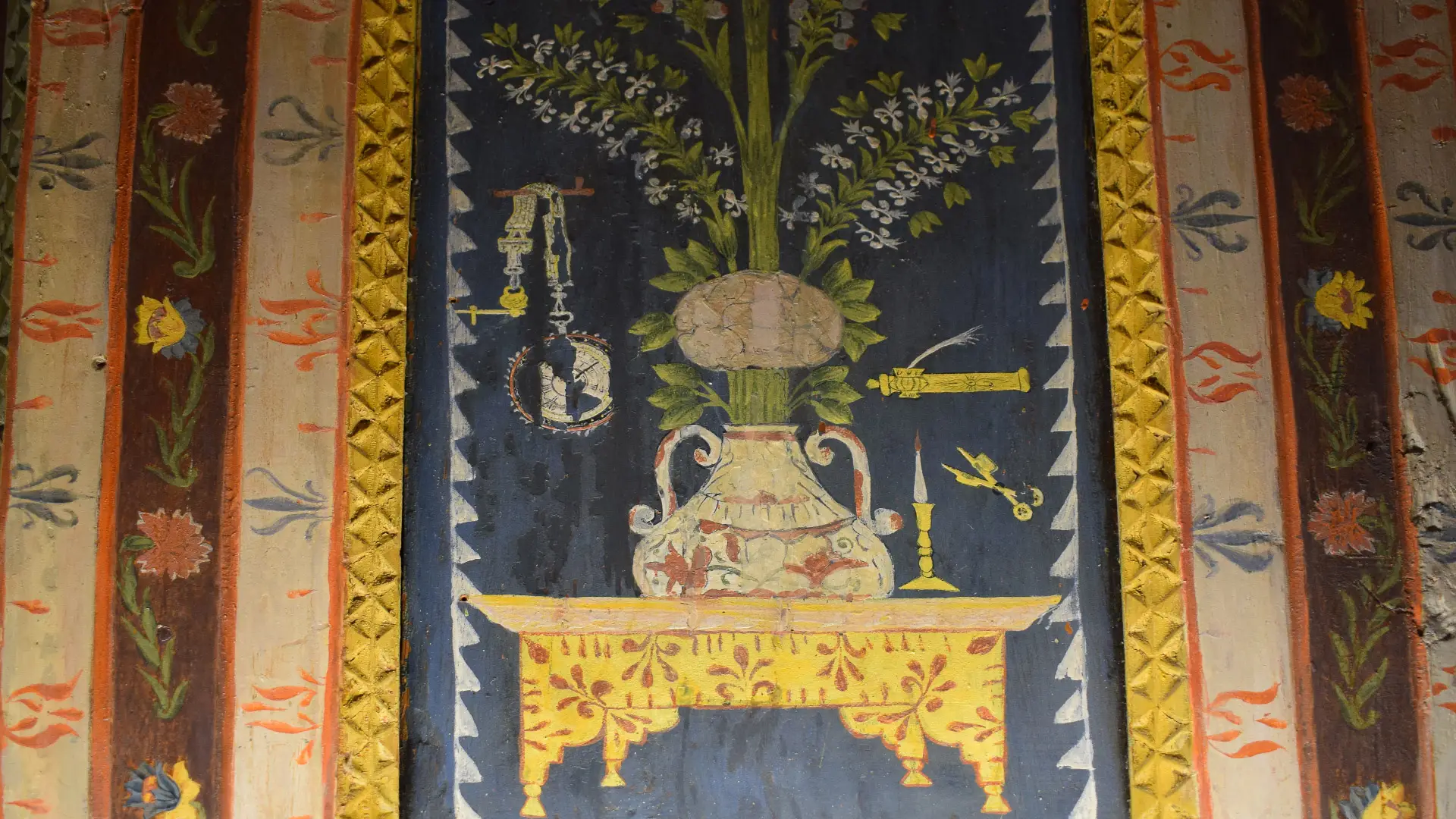
Αρχοντικό της Πούλκως, μεσοπάτωμα, χειμωνιάτικος οντάς, λεπτομέρεια ξύλινης επένδυσης (φαρσώματος): Παράσταση βάζου με άνθη πάνω σε έπιπλο. Δεξιά μελανοδοχείο, κερί, ψαλίδι κεριών (κηροσβέστης), αριστερά ρολόι τσέπης.
Αρχοντικό της Πούλκως, οντάς με τζάκι, λεπτομέρεια ξύλινης επένδυσης: Βάζο με άνθη και φρούτα.
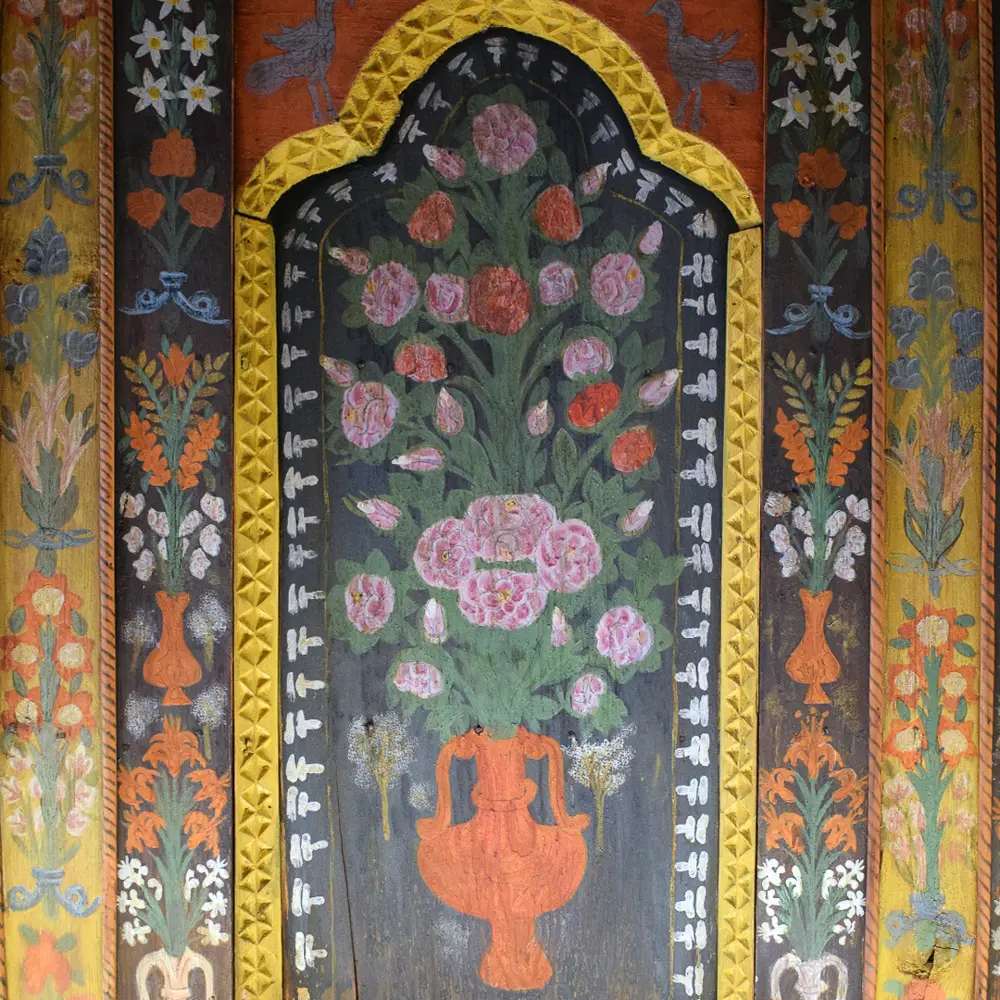
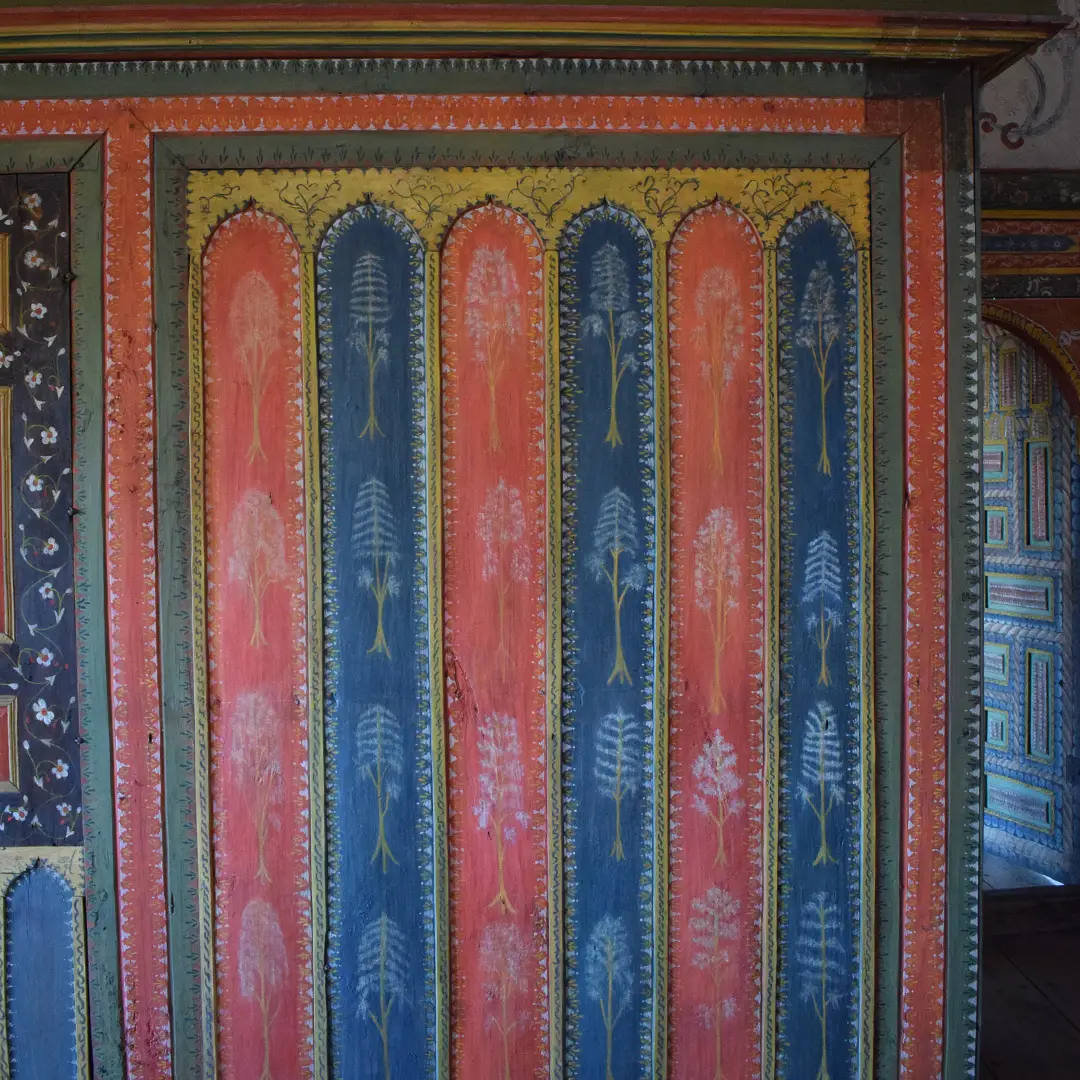
Αρχοντικό της Πούλκως, οντάς με τζάκι, λεπτομέρεια ξύλινης επένδυσης: Βάζο με άνθη με δύο ανθισμένα δέντρα και ζώνες με ανθοστήλες..
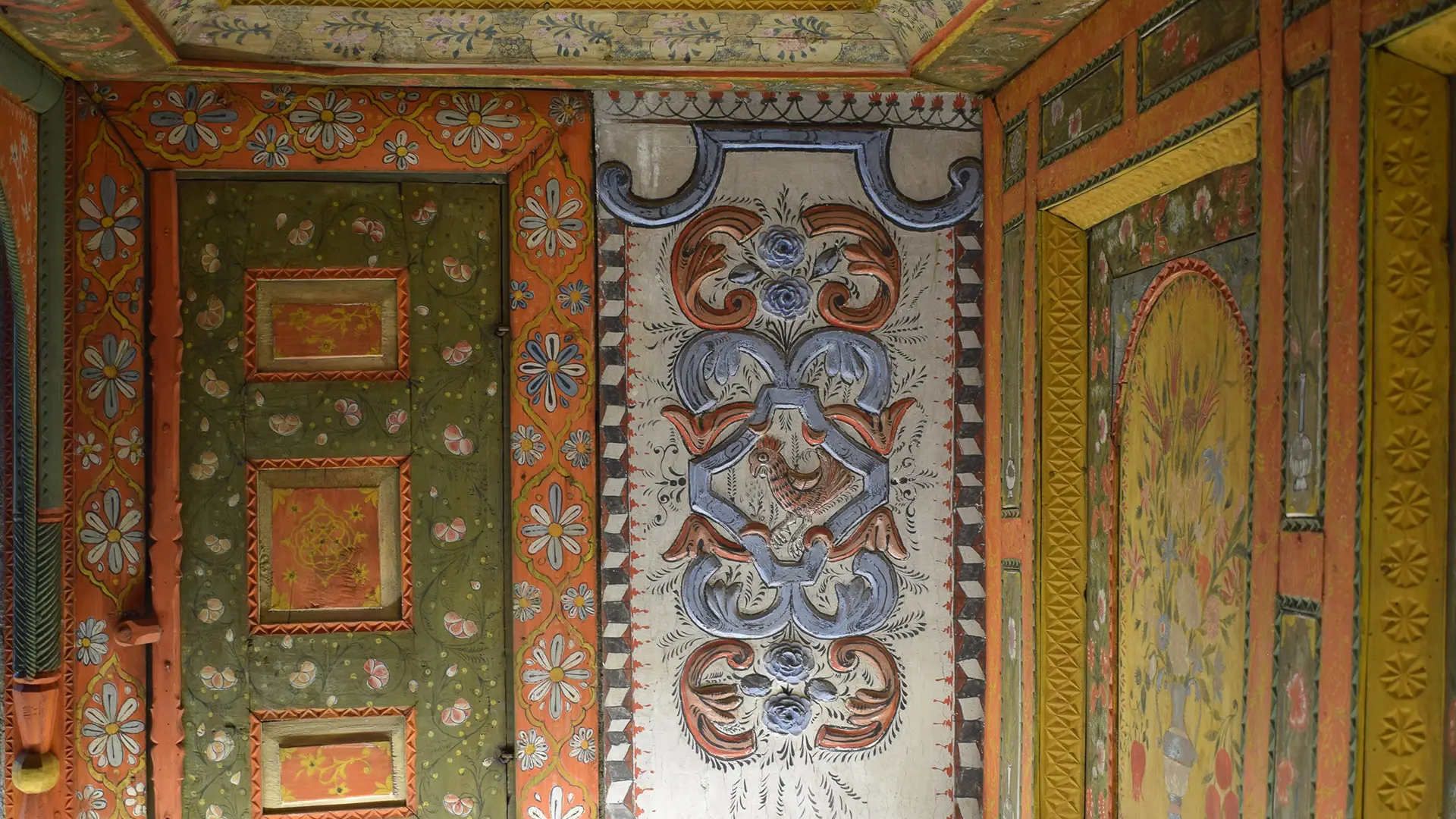
Αρχοντικό της Πούλκως, ξυλόγλυπτη και γραπτή διακόσμηση μεσάντρας.
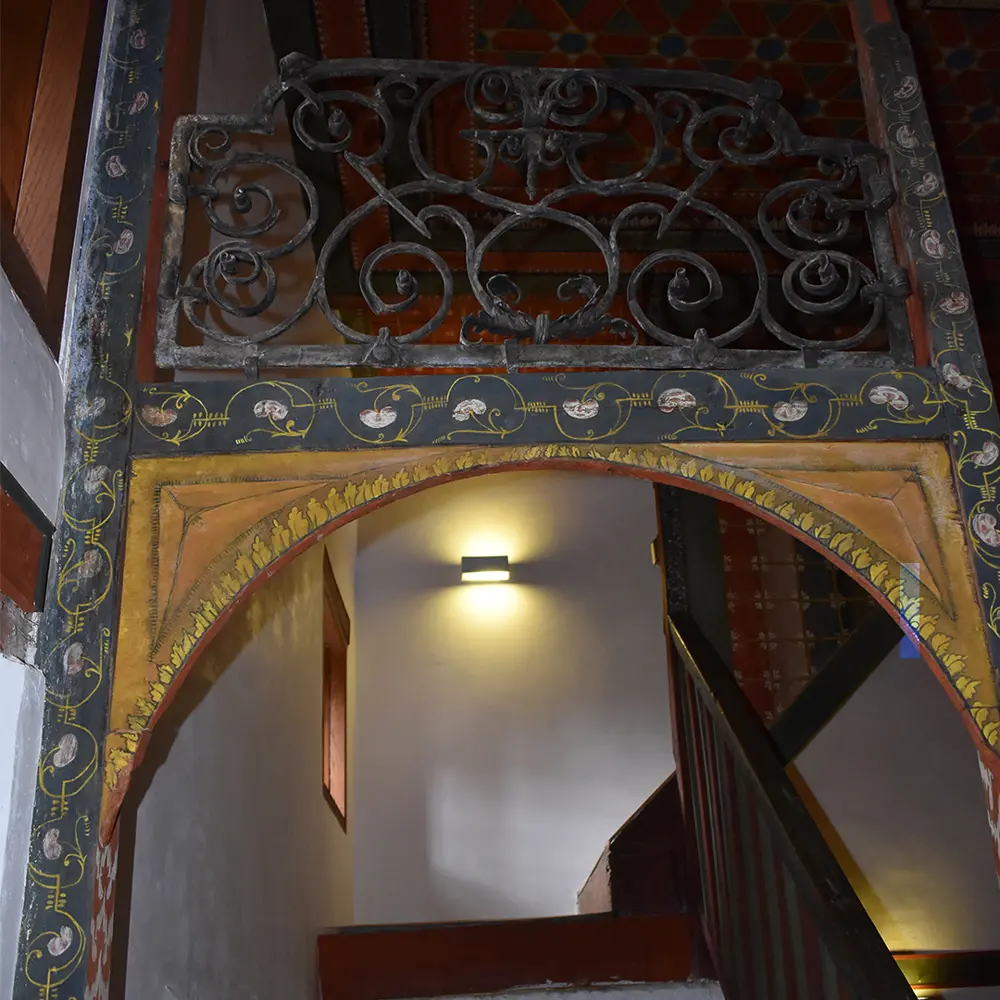
Αρχοντικό της Πούλκως, διακόσμηση της σκάλας προς τον όροφο.
Αρχοντικό της Πούλκως, όροφος, καλός οντάς: Λεπτομέρεια από τον γύψινο διάκοσμο του τζακιού, άνθη σε βάζα.
Αρχοντικό της Πούλκως, όροφος, σάλα: μιντέρι (χαμηλό ξύλινο μη κινητό ντιβάνι).
Αρχοντικό της Πούλκως, όροφος, δωμάτιο με τζάκι: διακοσμημένη μουσάντρα (εντοιχισμένη ντουλάπα)
Αρχοντικό της Πούλκως, γενική άποψη της κεντρικής σάλας του ορόφου.
Αρχοντικό της Πούλκως, Διακοσμήσεις στη σκάλα που οδηγεί από τη μεσιά στον όροφο.
Αρχοντικό της Πούλκως, όροφος, καλός οντάς: Γύψινος διάκοσμος του τζακιού, άνθη σε βάζα, φαναράκια και δικέφαλοι αετοί.
Αρχοντικό της Πούλκως, Το τζάκι στο βοηθητικό δωμάτιο του μεσοπατώματος.
Αρχοντικό της Πούλκως, Η σκάλα που οδηγεί από τη μεσιά στο μεσοπάτωμα.
Αρχοντικό της Πούλκως, Το κατώι του αρχοντικού.
Αρχοντικό της Πούλκως, Γενική άποψη του «μαγαζιού».
Αρχοντικό της Πούλκως, Γενική άποψη της πλακοστρωμένης εσωτερικής αυλής (μεσιά ή εμπατή)
Αρχοντικό της Πούλκως, Τα ξύλινα δοκάρια στήριξης ενός σαχνισιού.
Αρχοντικό της Πούλκως, Πλάγια όψη ενός σαχνισιού.
Αρχοντικό της Πούλκως, Η κεντρική είσοδος του αρχοντικού.
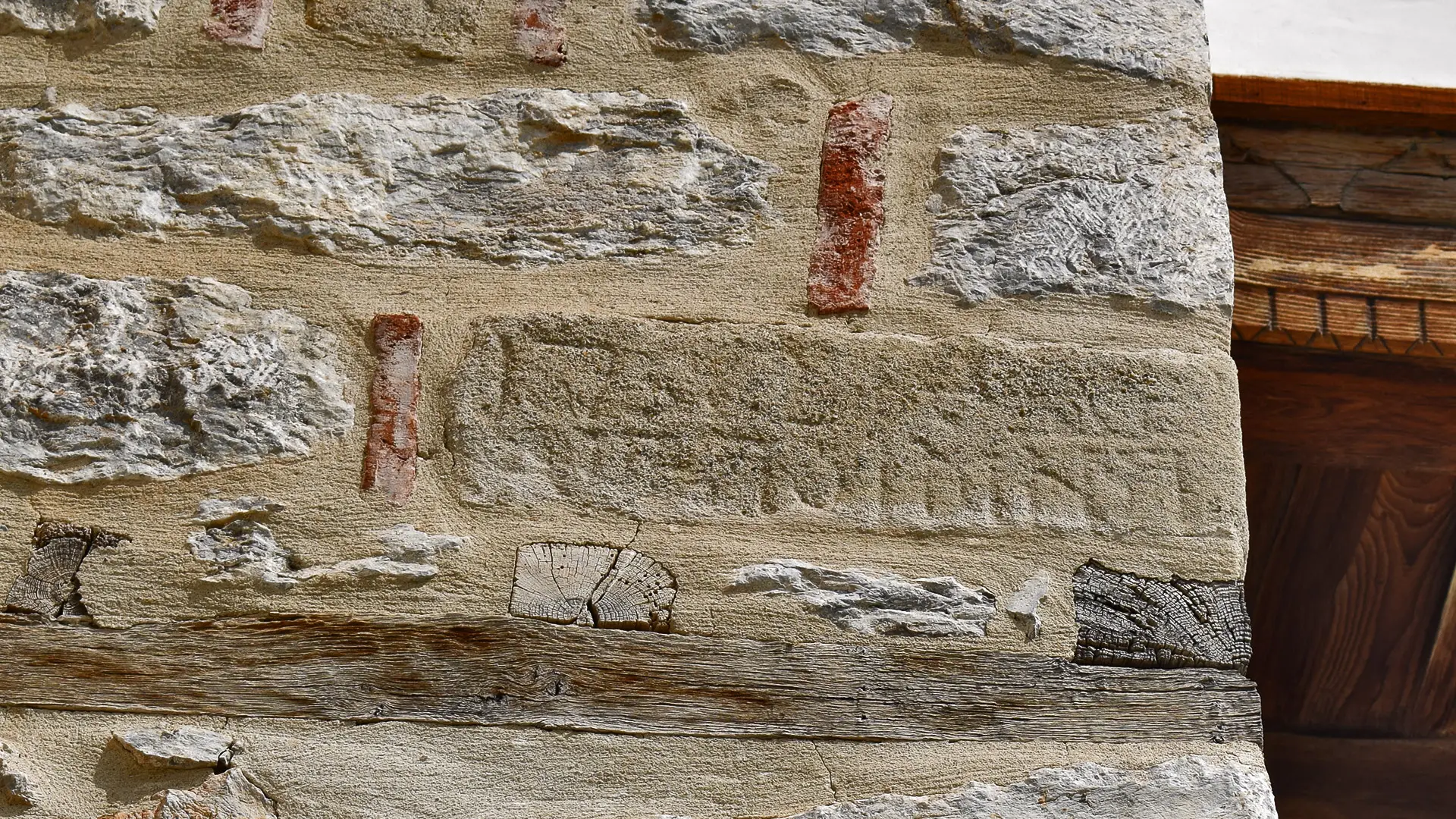
Αρχοντικό της Πούλκως, Κατά τις εργασίες ανακατασκευής του αρχοντικού αποκαλύφθηκαν τα υλικά κατασκευής των τοίχων του ορόφου του αρχοντικού.
Αρχοντικό της Πούλκως, Αυλόγυρος με ψηλό μαντρότοιχο και η αυλόθυρα του αρχοντικού
Γενική άποψη του Αρχοντικού Μανούση, γνωστού και ως Αρχοντικού Δούκα Τζάτζα στη Σιάτιστα
Γενική άποψη του Αρχοντικού της Κυρα-Σανούκως στη Σιάτιστα
Γενική άποψη του Αρχοντικού Τζουρά στη Σιάτιστα
Γενική άποψη του Αρχοντικού της Πούλκως στη Σιάτιστα
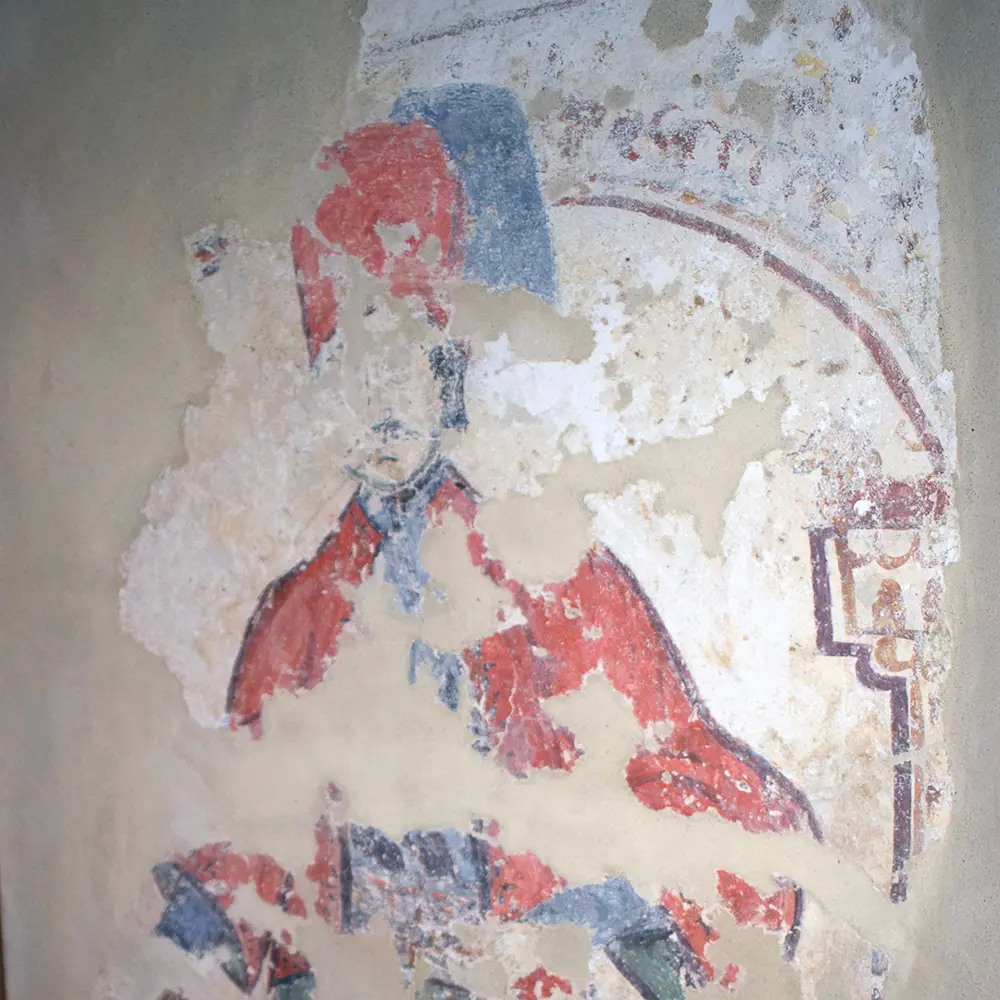
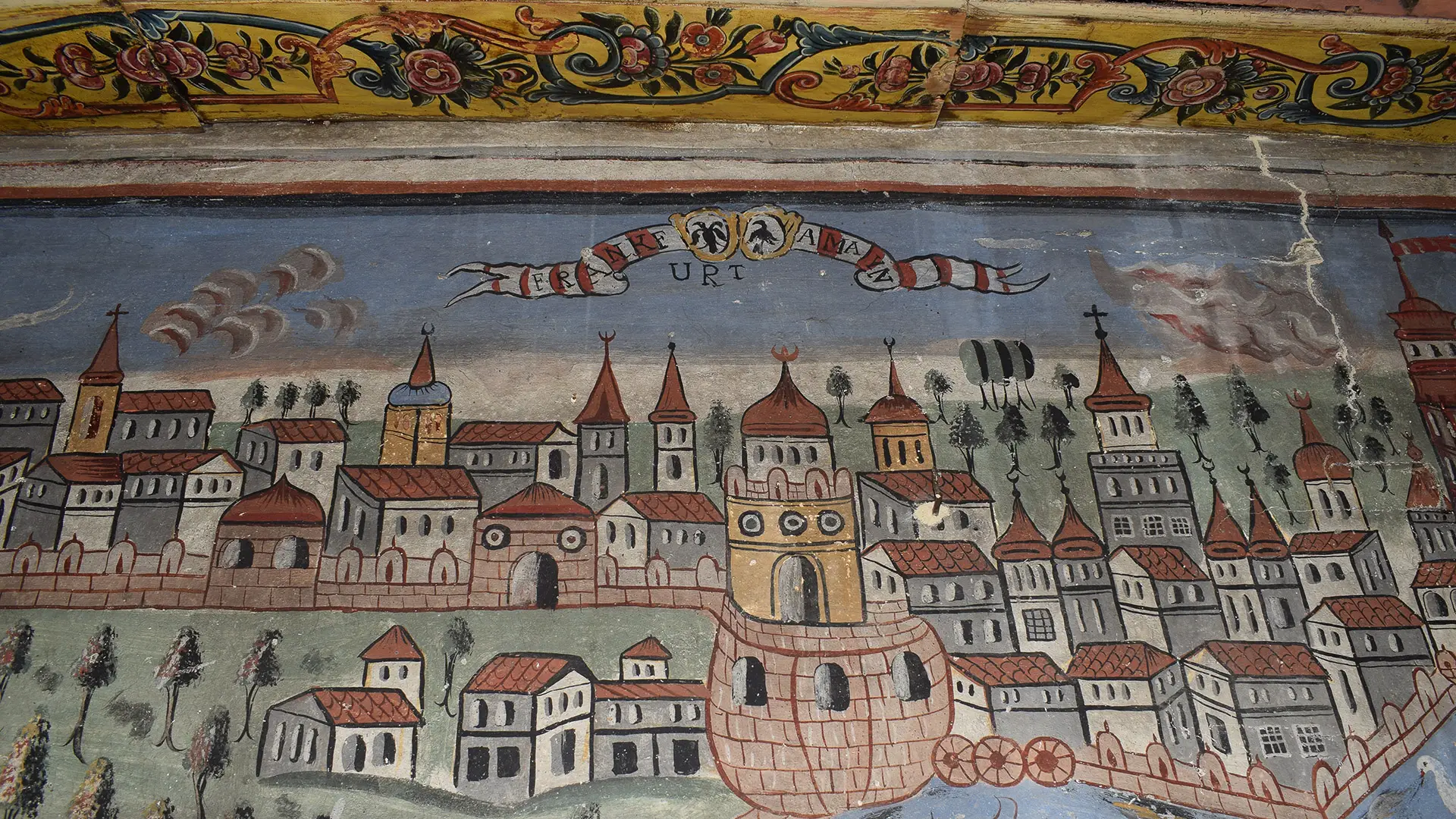
Αρχοντικό Αργυριάδη (Μαλιόγκα), ισόγειο, καλός οντάς, τοιχογραφία: Κεφάλια με πολύχρωμα καπέλα (πιθανώς ανάμνηση των νεκρών της αποτυχημένης επανάστασης της Φρανκφούρτης το 1833). Λεπτομέρεια από την παράσταση της Φρανκφούρτης στον ποταμό Μάιν.
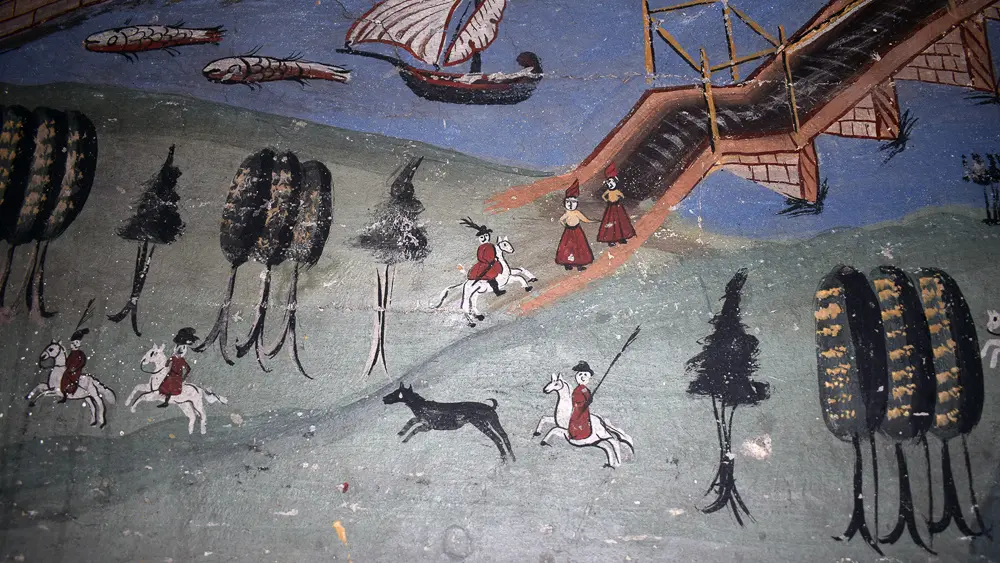
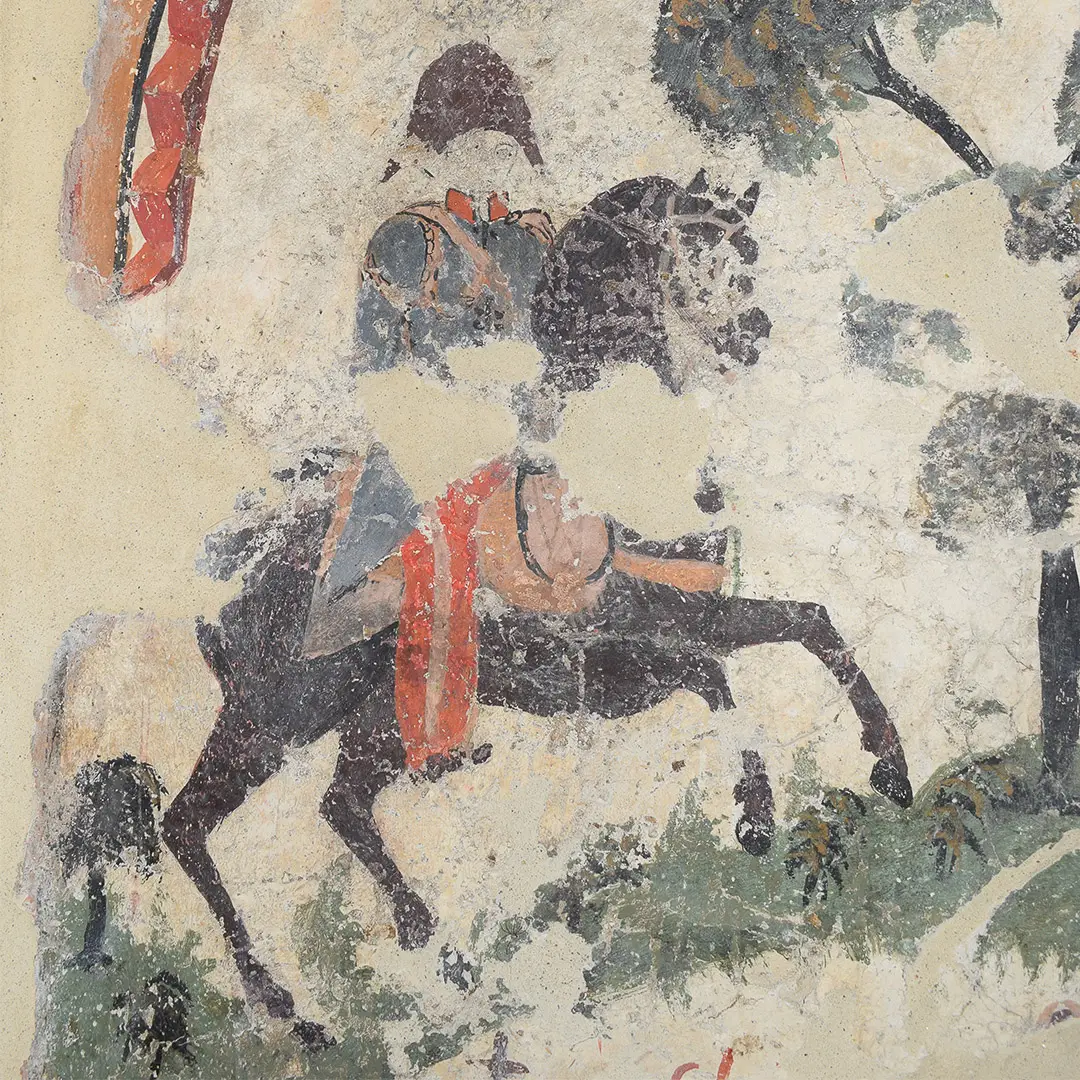
Αρχοντικό Αργυριάδη (Μαλιόγκα), ισόγειο, καλός οντάς, τοιχογραφία: Έφιπποι στρατιώτες και κυρίες σε γέφυρα Λεπτομέρεια από την παράσταση της Φρανκφούρτης στον ποταμό Μάιν.
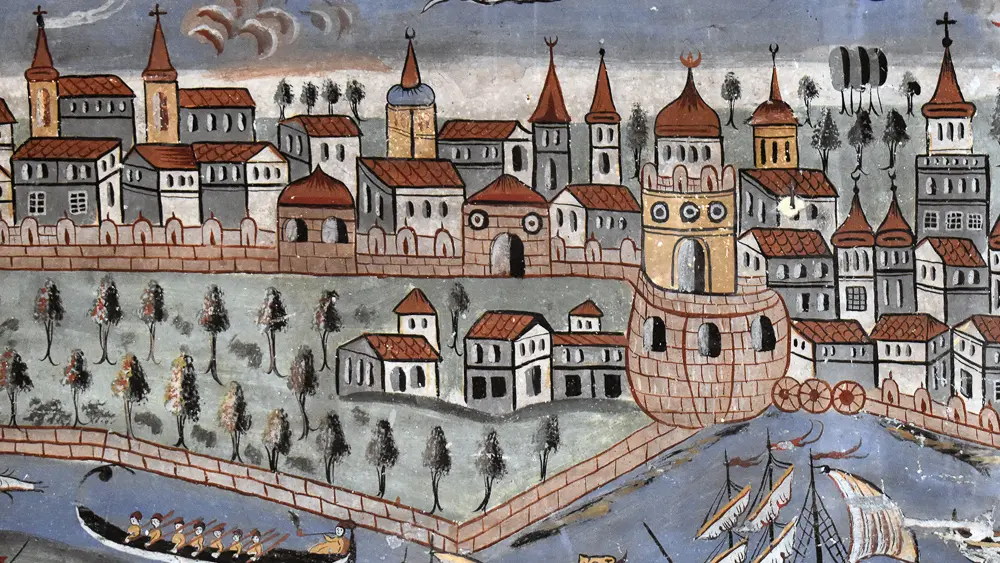
Αρχοντικό Αργυριάδη (Μαλιόγκα), ισόγειο, καλός οντάς, τοιχογραφία: Κτήρια της πόλης με σταυρούς και ημισελήνους στις στέγες. Λεπτομέρεια από την παράσταση της Φρανκφούρτης στον ποταμό Μάιν.
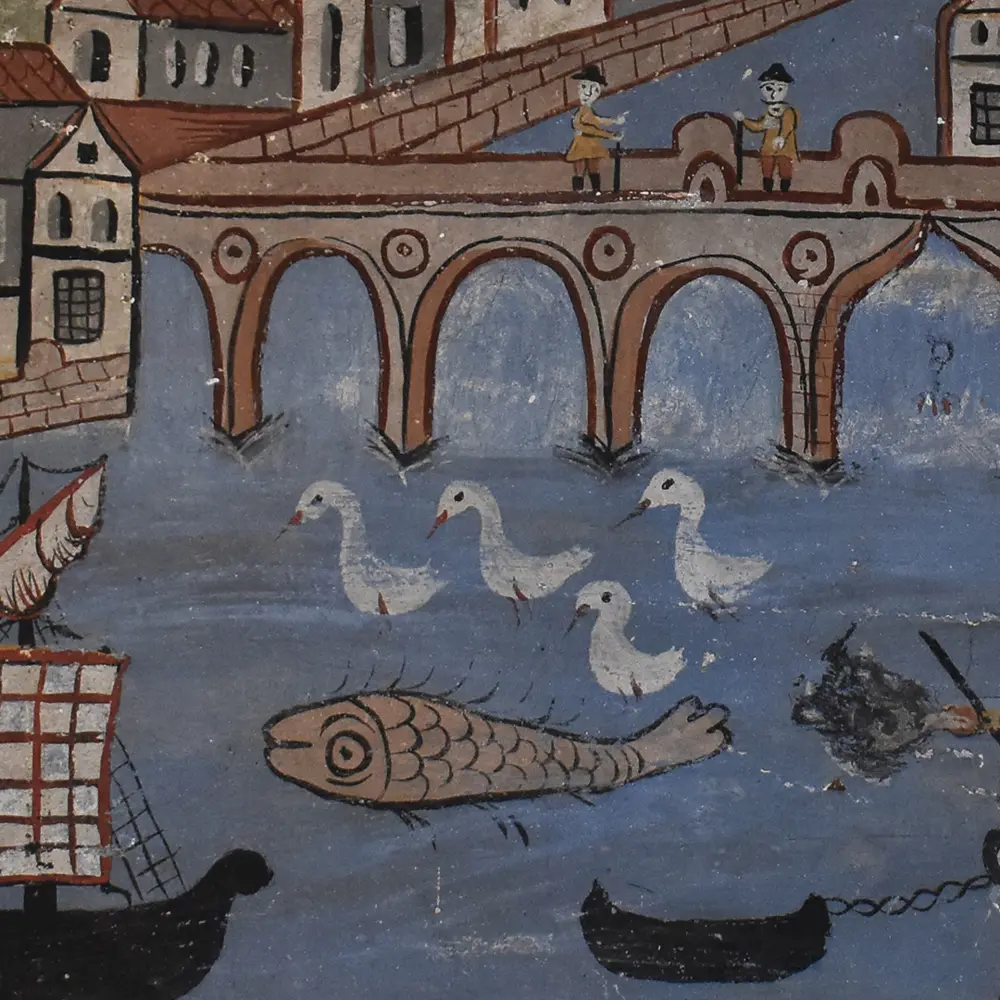
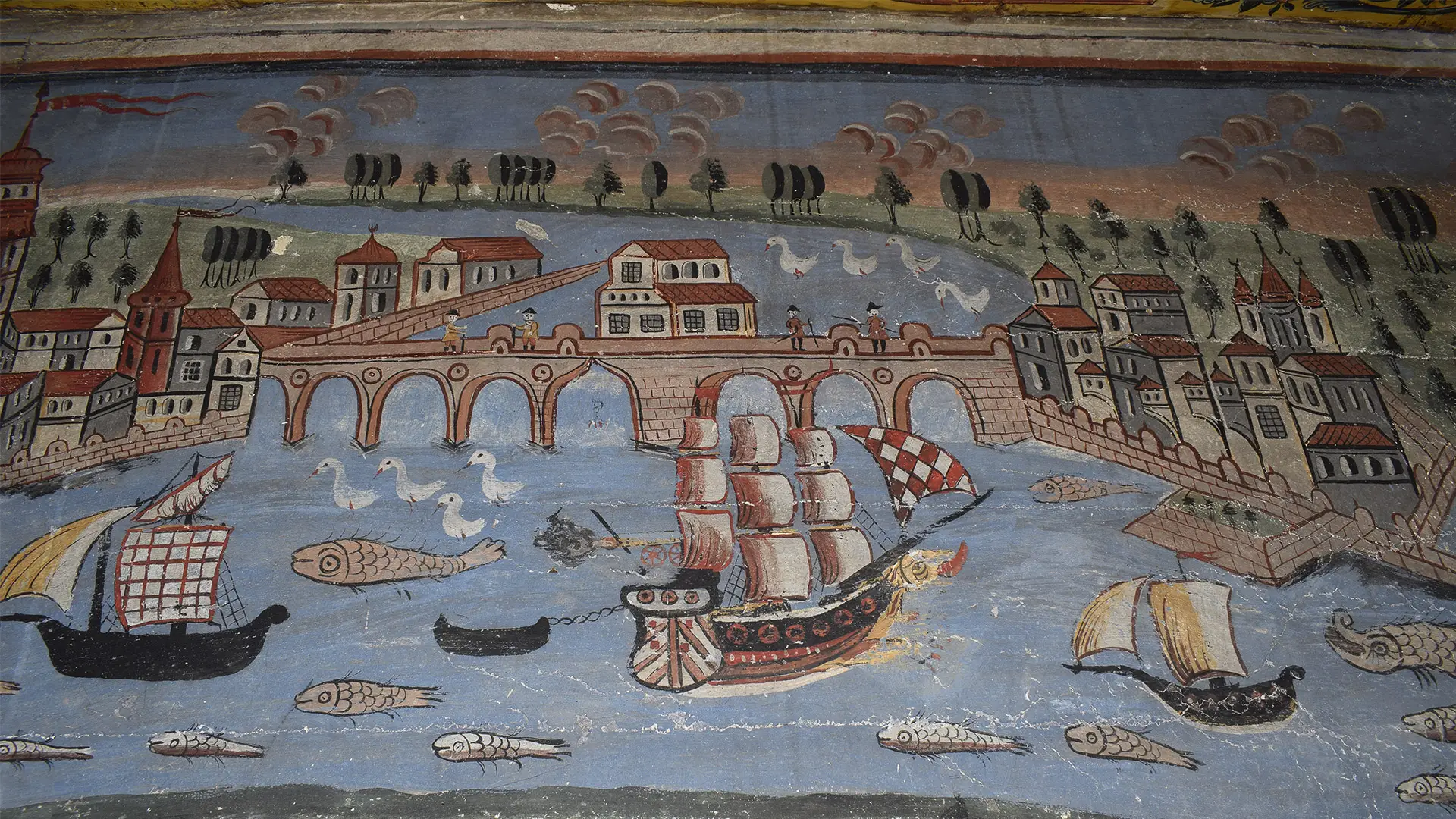
Αρχοντικό Αργυριάδη (Μαλιόγκα), ισόγειο, καλός οντάς, τοιχογραφία: Γέφυρα με στρατιώτες. Λεπτομέρεια από την παράσταση της Φρανκφούρτης στον ποταμό Μάιν.
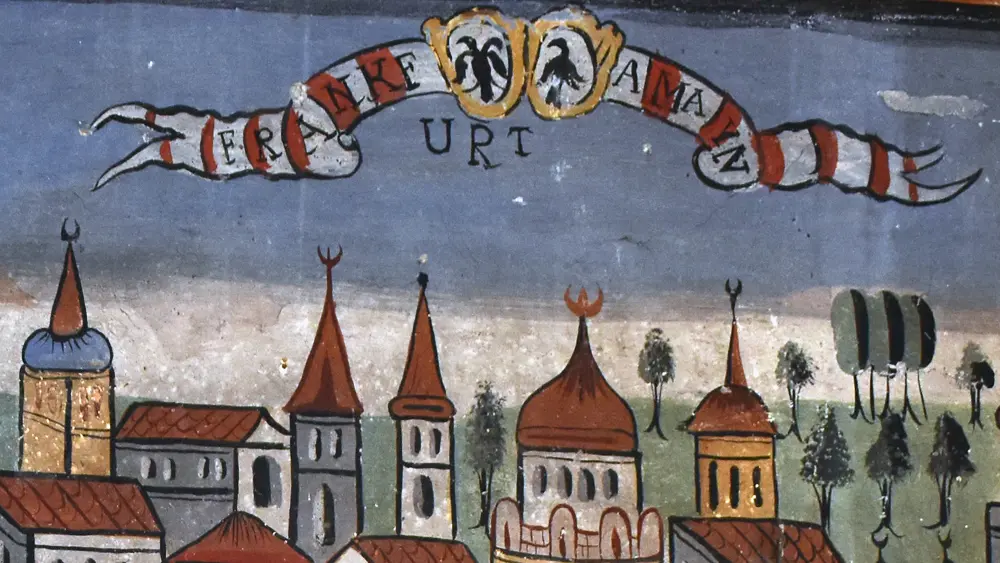
Αρχοντικό Αργυριάδη (Μαλιόγκα), ισόγειο, καλός οντάς, τοιχογραφία: Η επιγραφή FRANKFURT AM MAΥN. Λεπτομέρεια από την παράσταση της Φρανκφούρτης στον ποταμό Μάιν.
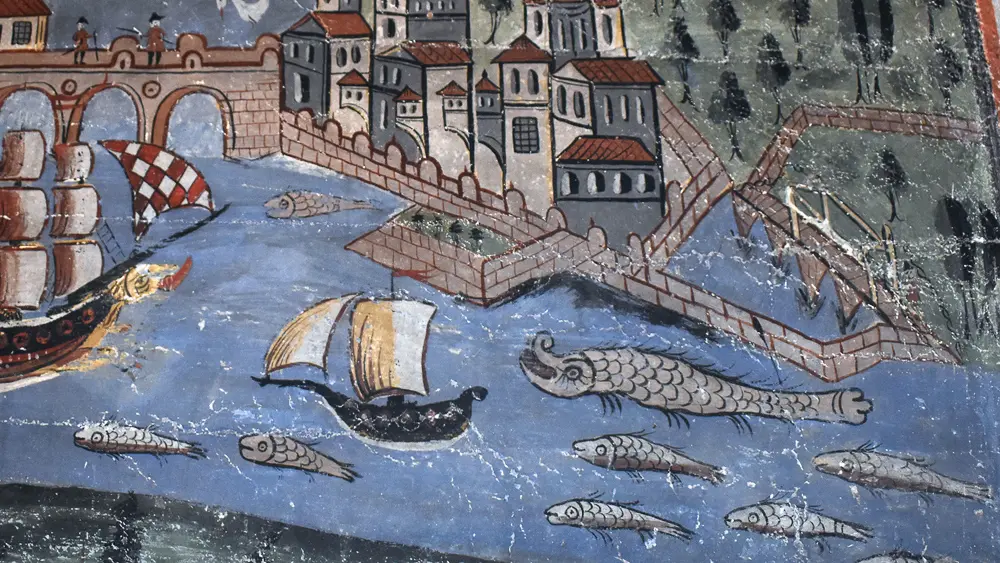
Αρχοντικό Αργυριάδη (Μαλιόγκα), ισόγειο, καλός οντάς, τοιχογραφία: Παράσταση της Φρανκφούρτης στον ποταμό Μάιν, λεπτομέρεια με καράβια και ψάρια.
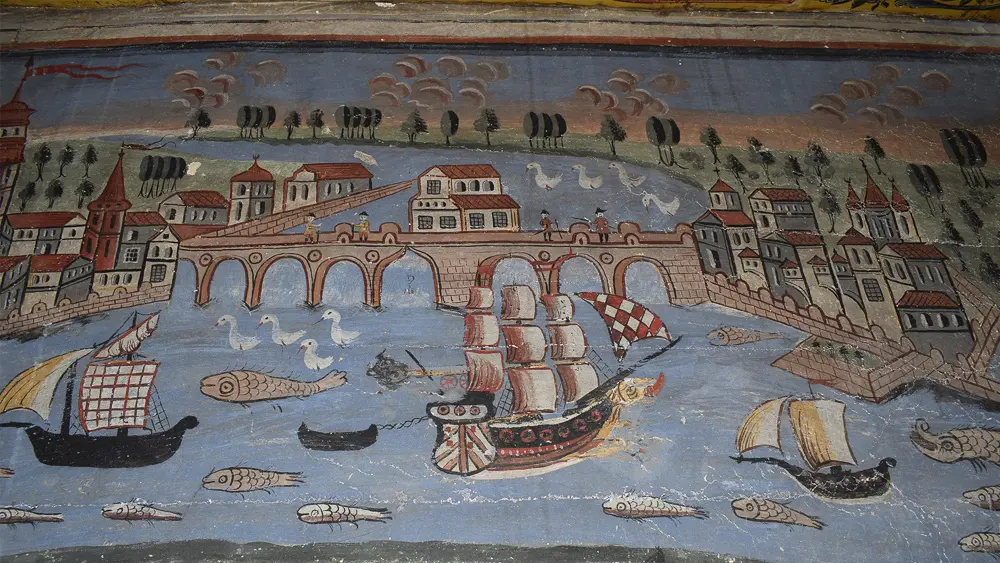
Αρχοντικό Αργυριάδη (Μαλιόγκα), ισόγειο, καλός οντάς, τοιχογραφία: Παράσταση της Φρανκφούρτης στον ποταμό Μάιν, λεπτομέρεια με τμήμα της πόλης, γέφυρα, πλεούμενα, ψάρια και πουλιά.
Αρχοντικό Αργυριάδη (Μαλιόγκα), ισόγειο, καλός οντάς, τοιχογραφία: Ψάρι στον ποταμό Μάιν. Λεπτομέρεια από την παράσταση της Φρανκφούρτης.
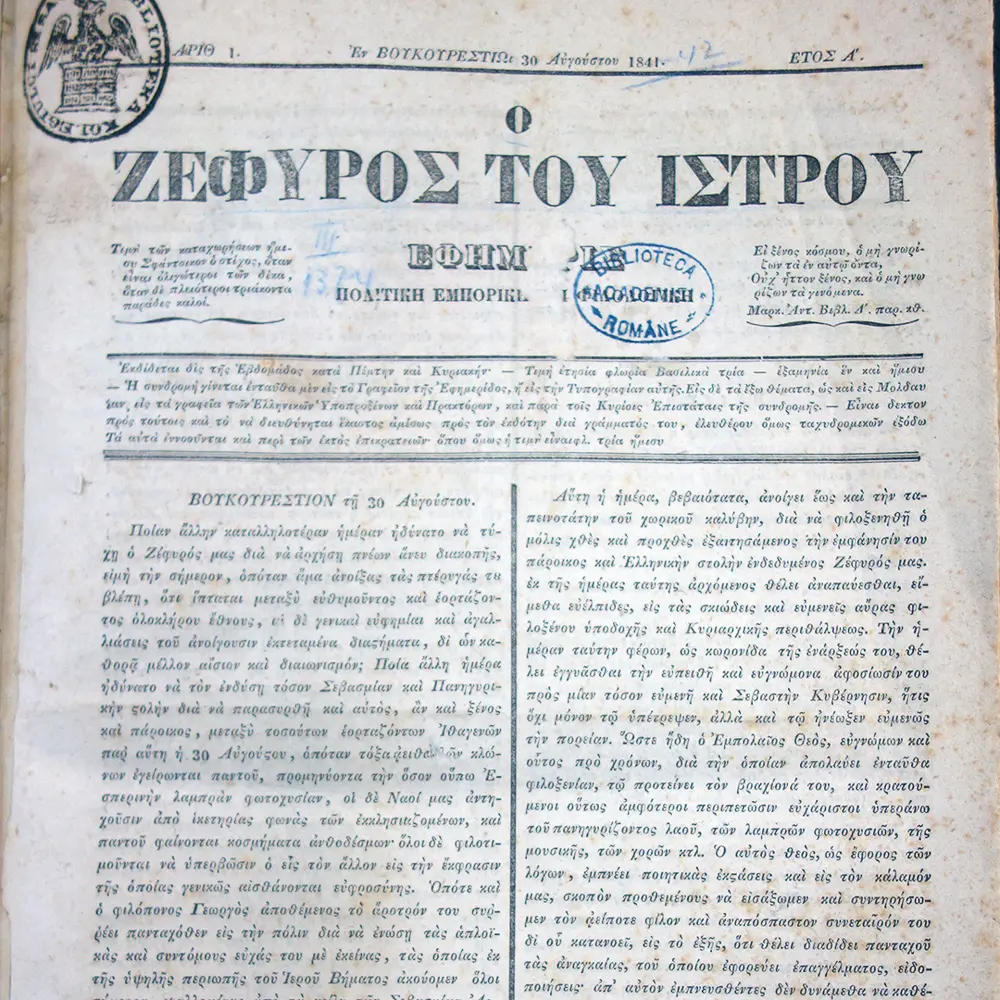
Η πρώτη σελίδα από το πρώτο φύλλο της εφημερίδας Ζέφυρος του Ίστρου (30/8/1841) που εκδίδει ο Δημήτριος Αργυριάδης στο Βουκουρέστι. [Πηγή φωτογραφίας: Καλλιόπη Μπόντα].
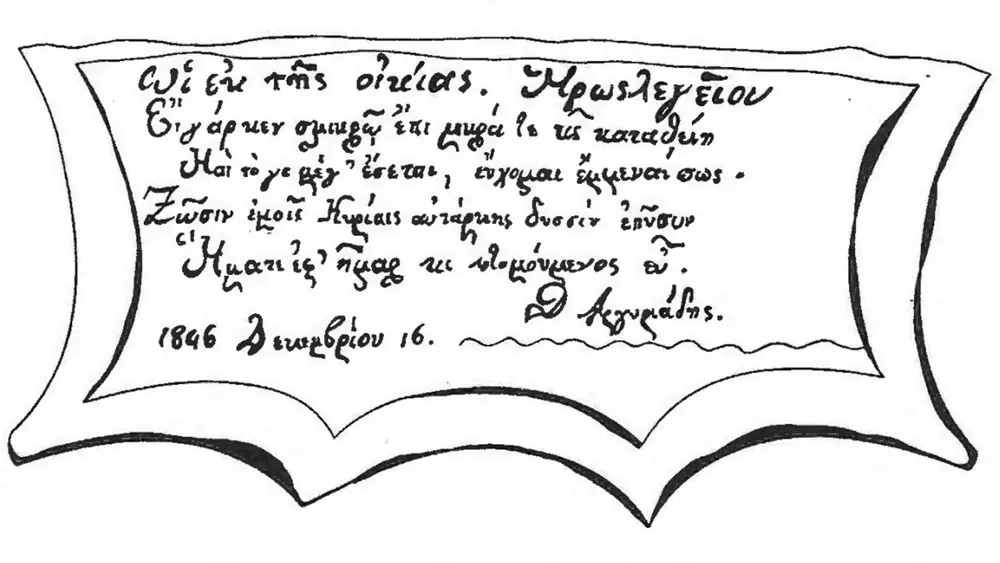
Το κατεστραμμένο σήμερα Ηρωελεγείο πάνω από το τζάκι του κεντρικού δωματίου του αρχοντικού Αργυριάδη σε μεταγραφή του Νικολάου Μουτσόπουλου. Σε μετάφραση του Θωμά Γαβρηλίδη, που δημοσιεύεται από την Καλλιόπη Μπόντα, το ηρωελεγείο έλεγε τα ακόλουθα: «Οι σπιτικοί. Ηρωελεγείον / Αν βέβαια κάποιος καταθέτει μικρά πάνω σε κάτι μικρό / Και αυτό (το μικρό) θα γίνει μεγάλο, εύχομαι να είναι κάπως έτσι. / Ζω αυτάρκης μαζί με τις κυρίες μου αν και είναι δύο / Μέρα με τη μέρα περνώντας χωρίς προβλήματα. / 1846 Δεκεμβρίου 16 Δ. Αργυριάδης»
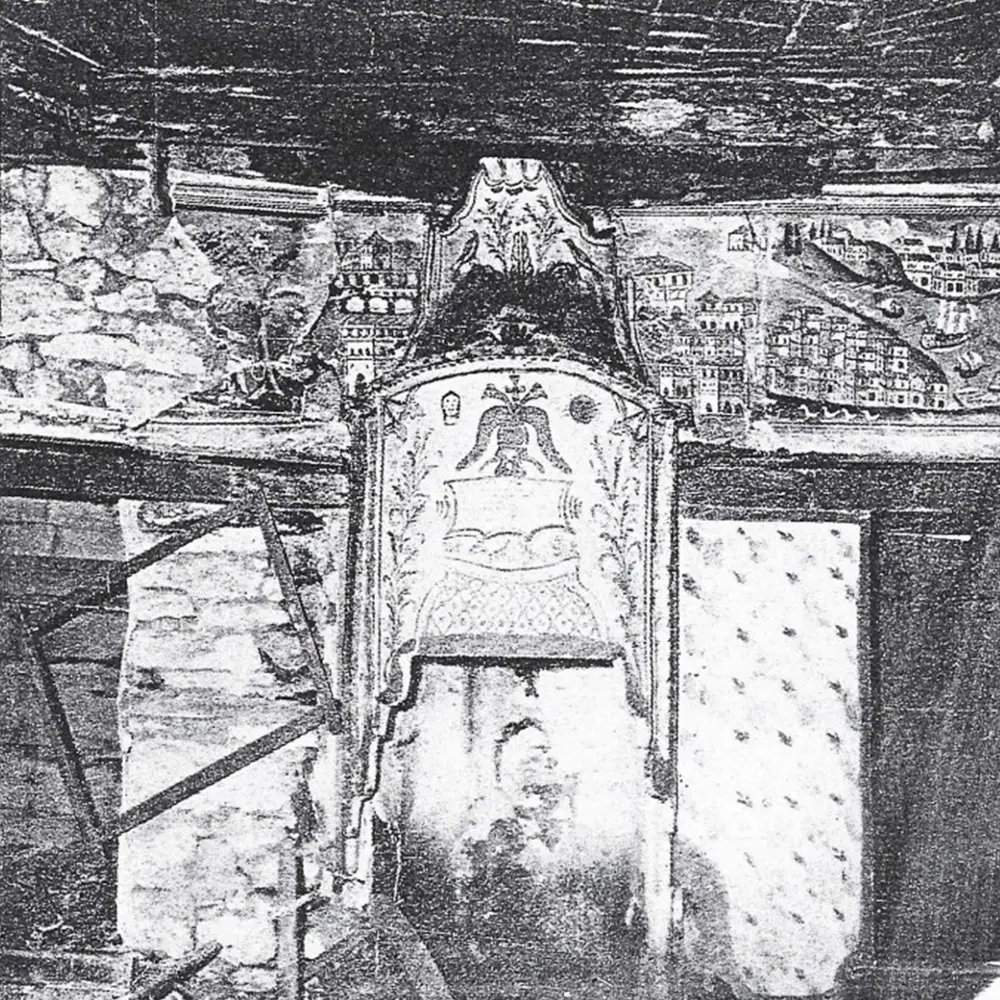
Φωτογραφία του τζακιού του κεντρικού δωματίου του ορόφου του Αρχοντικού Αργυριάδη πριν από την καταστροφή του. Η φωτογραφία ανήκει στο αρχείο του Νικολάου Μουτσόπουλου.
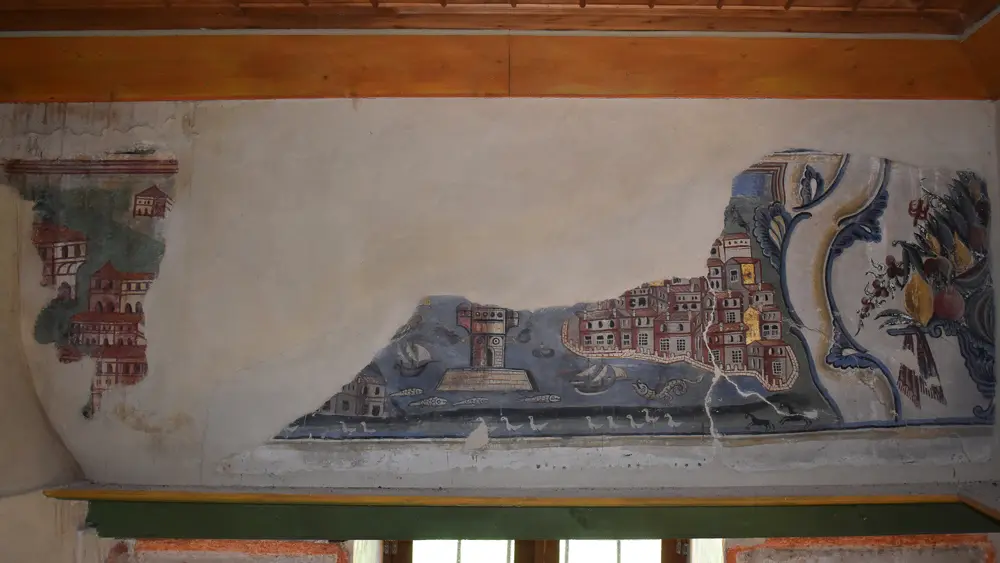
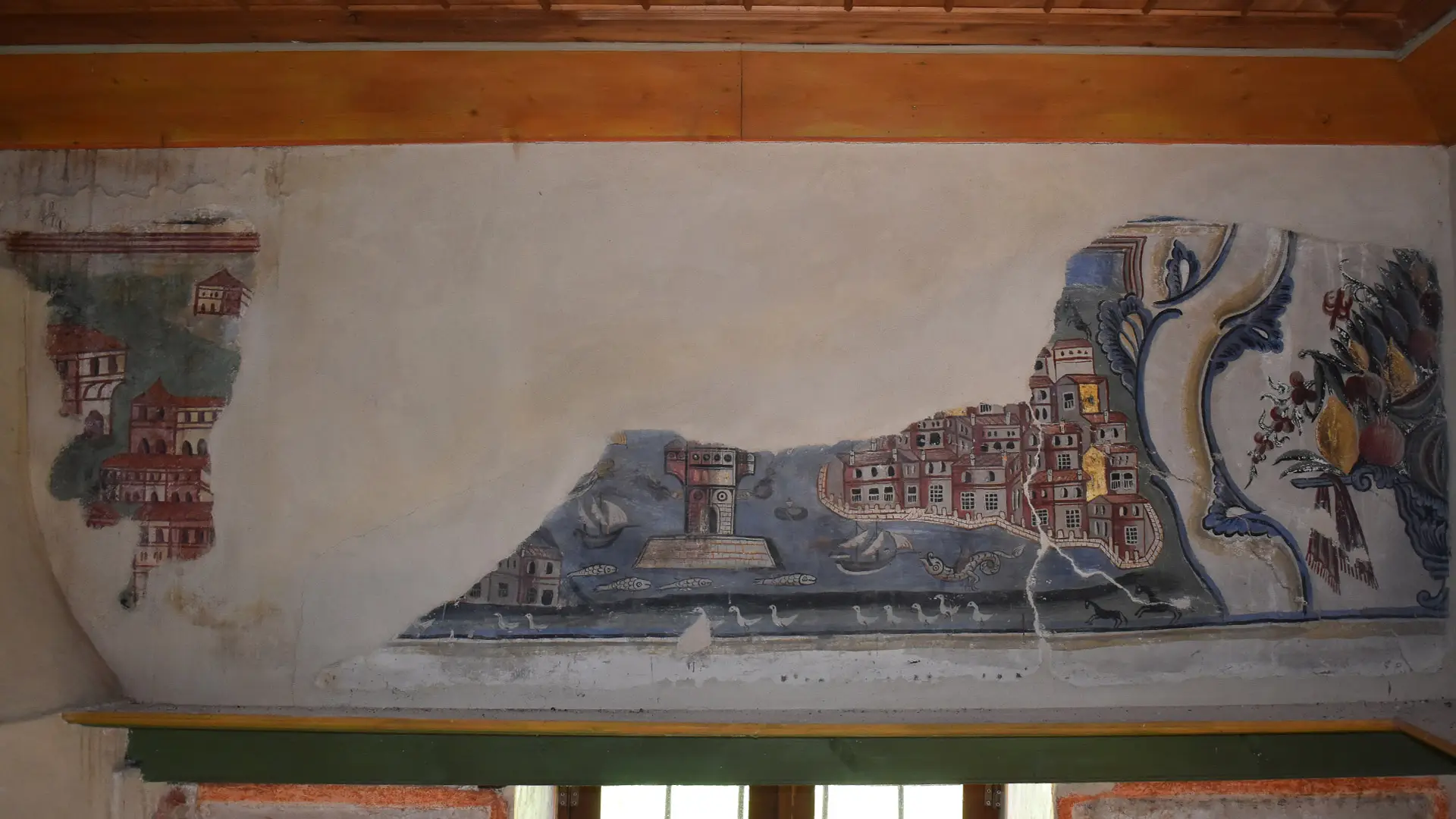
Αρχοντικό Αργυριάδη (Μαλιόγκα), όροφος, καλός οντάς, τοιχογραφία: Σωζόμενο τμήμα της παράστασης της Κωνσταντινούπολης και διακοσμητικό μοτίβο με άνθη και φρούτα.
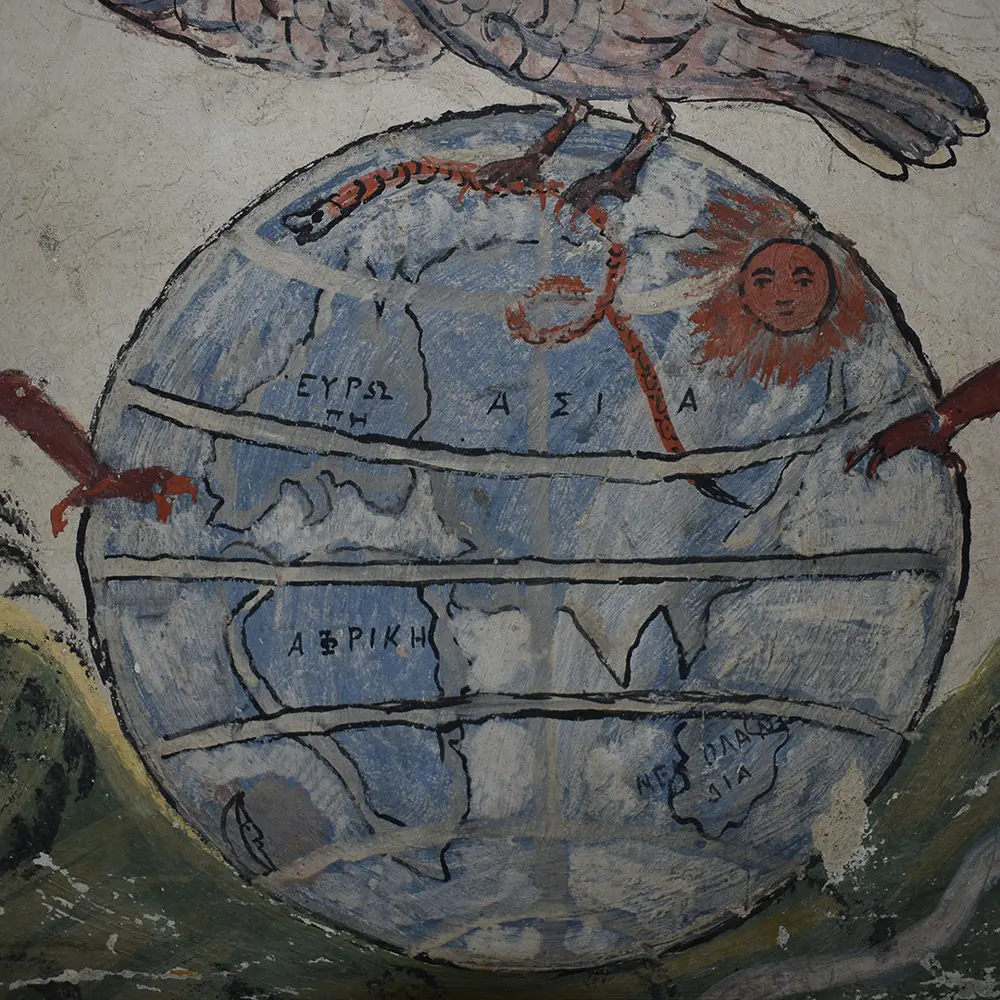
Αρχοντικό Αργυριάδη (Μαλιόγκα), όροφος, διάδρομος, τοιχογραφία: Λεπτομέρεια από την παράσταση της υδρογείου. Ενδιαφέρον παρουσιάζει το γεγονός ότι η Αυστραλία στον συγκεκριμένο χάρτη ονομάζεται ακόμα Νέα Ολλανδία.
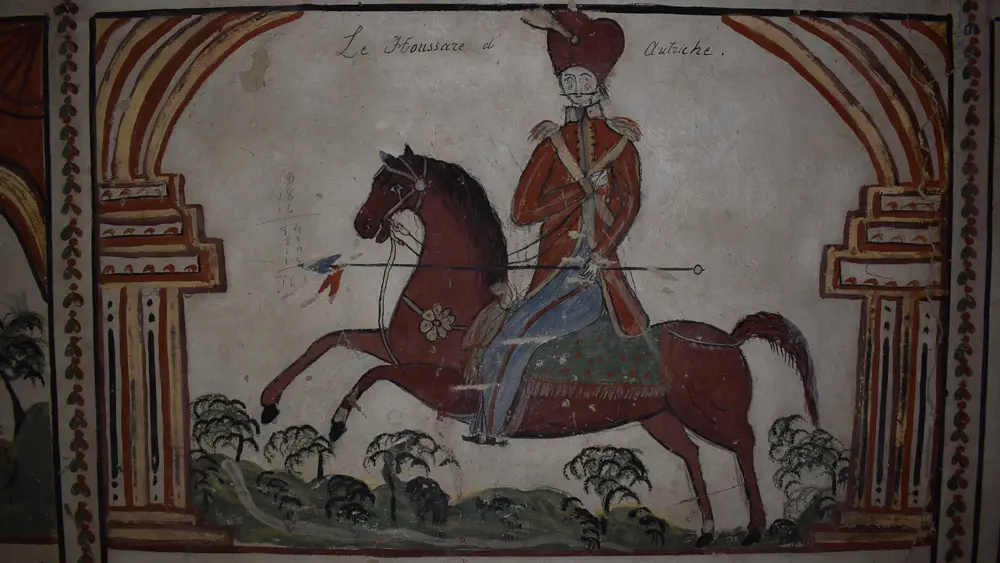
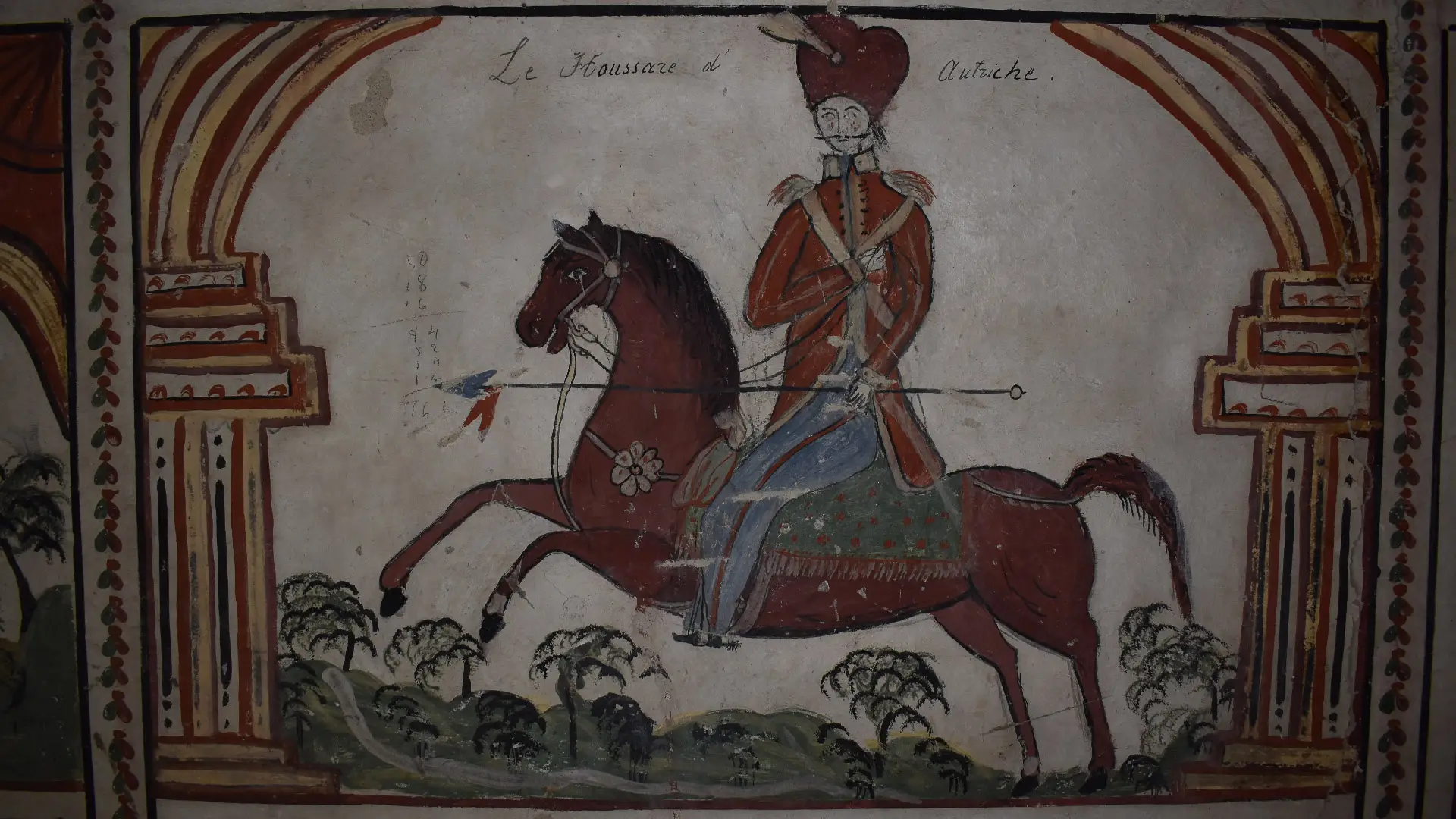
Αρχοντικό Αργυριάδη (Μαλιόγκα), όροφος, διάδρομος, τοιχογραφία: Παράσταση αυστριακού ουσάρου (έφιππου στρατιώτη). Διακρίνεται η επιγραφή: Le Houssare d’ Autriche (ο ουσάρος της Αυστρίας).
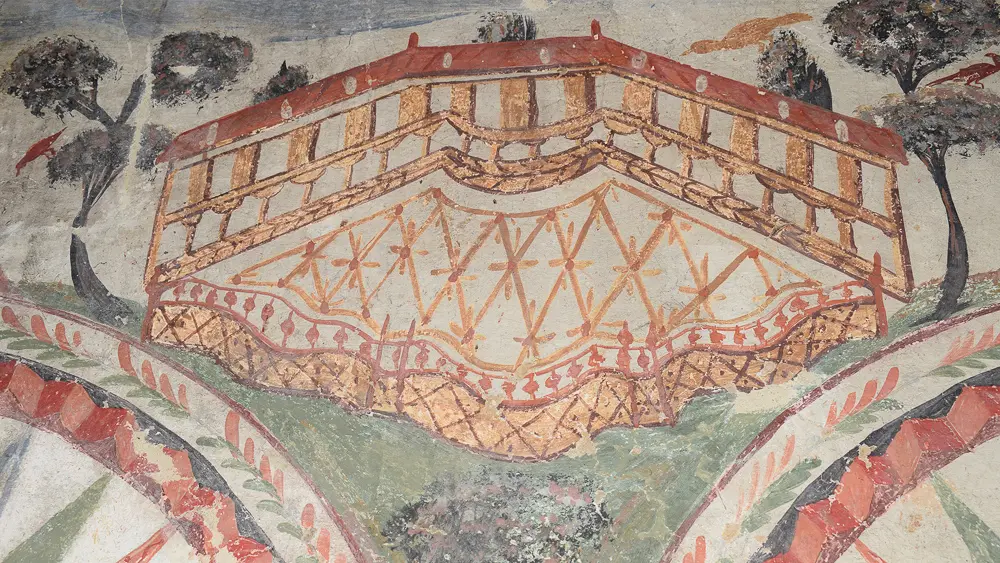
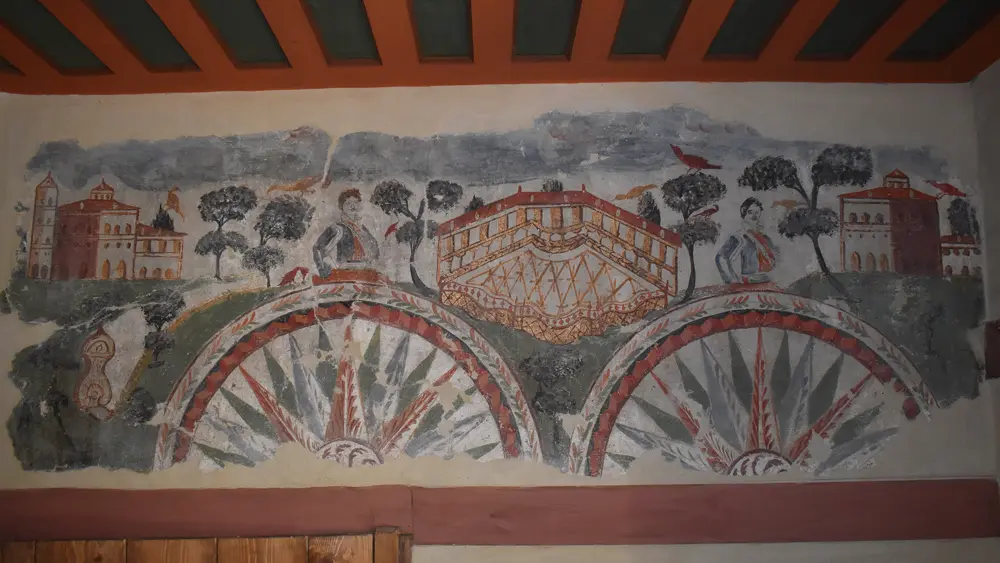
Αρχοντικό Αργυριάδη (Μαλιόγκα), δωμάτιο ισογείου, τοιχογραφία: Λεπτομέρεια από την παράσταση του Βασιλιά Όθωνα Α΄ της Ελλάδας σε κήπο. Το κτήριο πιθανώς απεικονίζει παλάτι με κιονοστήρικτες στοές και κήπο.
Αρχοντικό Αργυριάδη (Μαλιόγκα), δωμάτιο ισογείου, τοιχογραφία: Ο Βασιλιάς Όθων Α΄ της Ελλάδας σε κήπο με αρχιτεκτονήματα.
Αρχοντικό Αργυριάδη (Μαλιόγκα), δωμάτιο ισογείου, τοιχογραφία: Ο Βασιλιάς Όθων Α΄ της Ελλάδας (εικονίζεται δύο φορές) σε κήπο με αρχιτεκτονήματα. Στο κάτω μέρος της παράστασης εικονίζονται δυο ημικύκλια με γεωμετρικά μοτίβα.
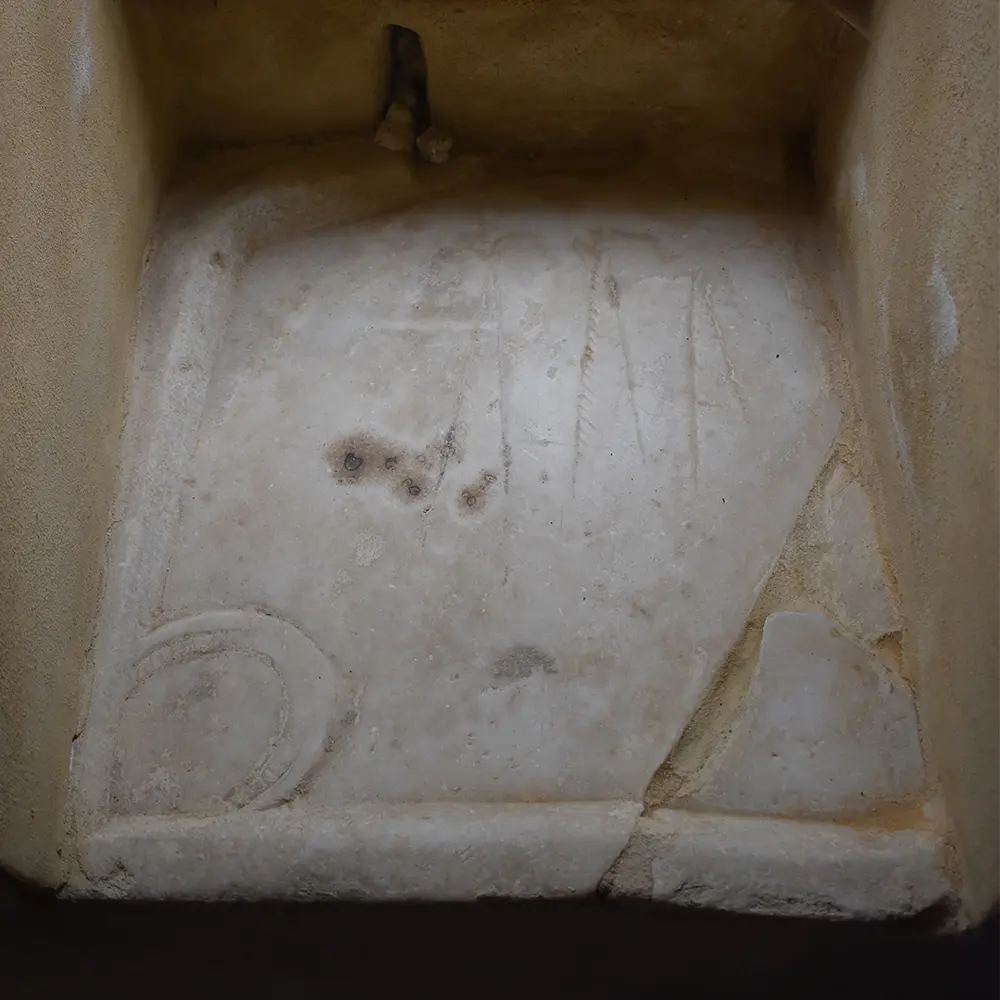
Αρχοντικό Αργυριάδη (Μαλιόγκα), δωμάτιο ισογείου: Μαρμάρινος νεροχύτης με εγχάρακτη διακόσμηση.
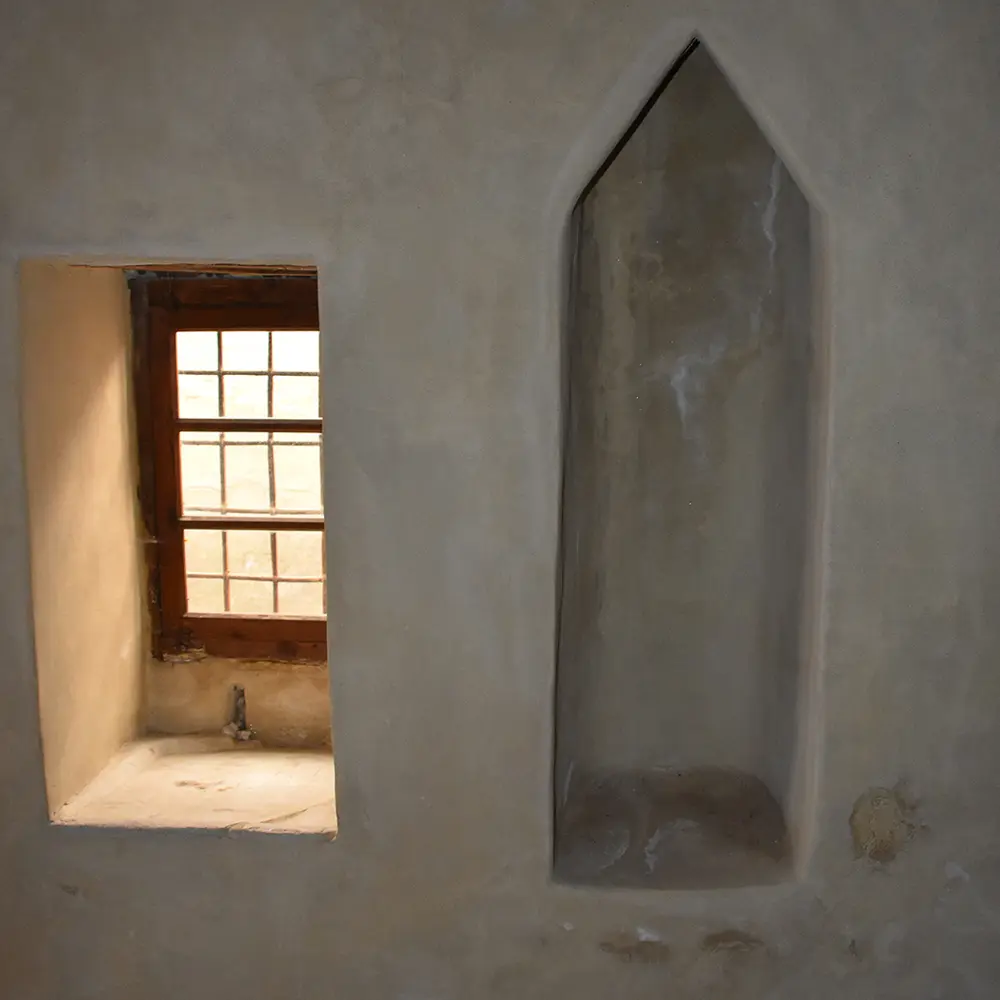
Αρχοντικό Αργυριάδη (Μαλιόγκα), δωμάτιο ισογείου: Μαρμάρινος νεροχύτης με εγχάρακτη διακόσμηση κάτω από παράθυρο και εσοχή τζακιού.
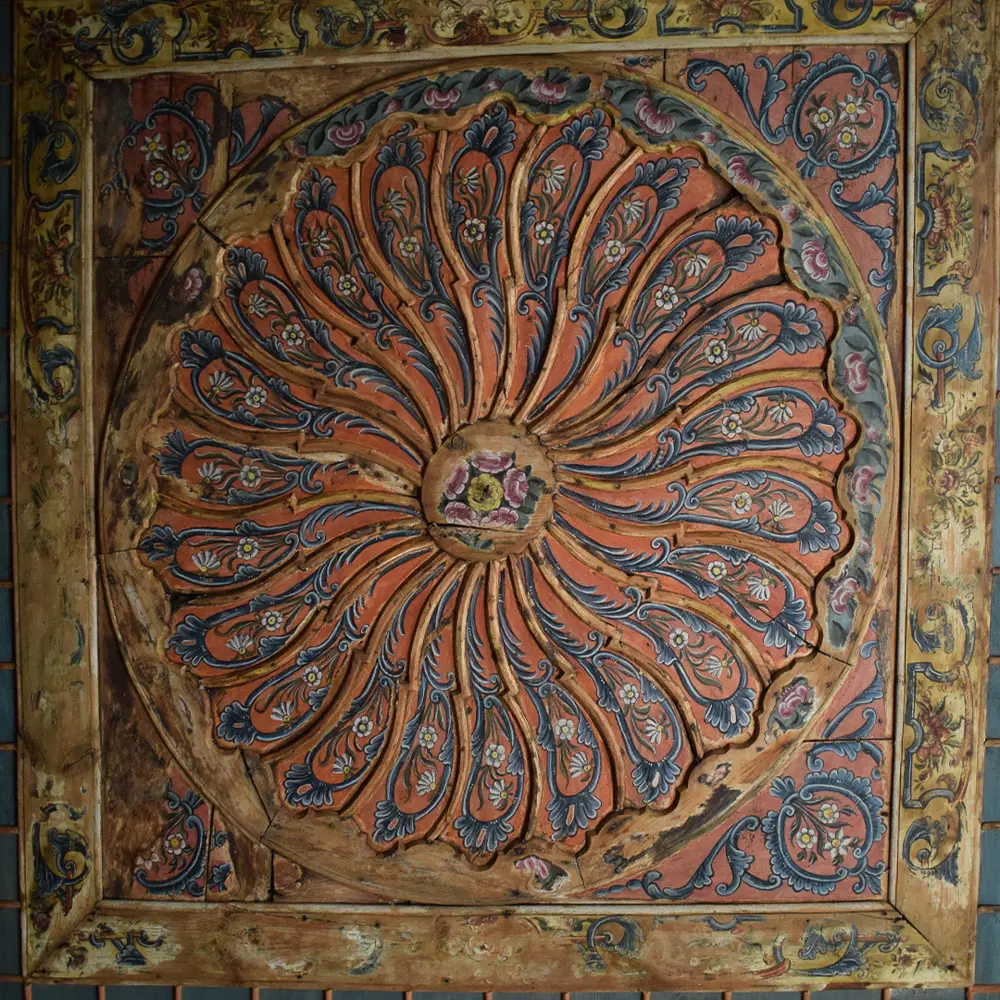
Αρχοντικό Αργυριάδη (Μαλιόγκα), ισόγειο, καλός οντάς: Ξύλινος «ομφαλός» (κεντρική σύνθεση) της οροφής του δωματίου με πολύχρωμη ζωγραφιστή διακόσμηση λουλουδιών.
Αρχοντικό Αργυριάδη (Μαλιόγκα), ισόγειο, καλός οντάς, τοιχογραφία: Παράσταση της Φρανκφούρτης στον ποταμό Μάιν (λεπτομέρεια). Η τοιχογραφία του αρχοντικού βασίζεται σε χαλκογραφία του Johann Friedrich Probst με το ίδιο θέμα.
Αρχοντικό Αργυριάδη (Μαλιόγκα), ισόγειο, καλός οντάς, τοιχογραφία: Παράσταση της Φρανκφούρτης στον ποταμό Μάιν. Η τοιχογραφία του αρχοντικού βασίζεται σε χαλκογραφία του Johann Friedrich Probst με το ίδιο θέμα.
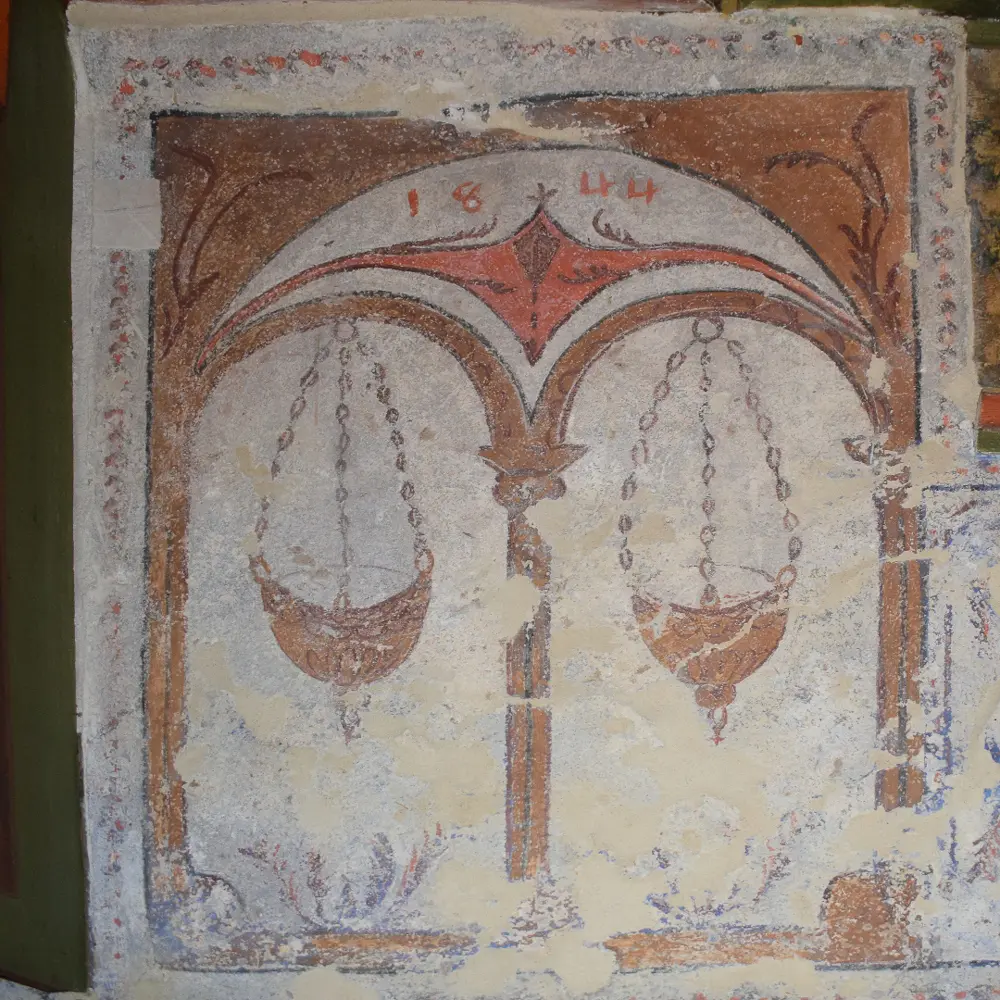
Αρχοντικό Αργυριάδη (Μαλιόγκα), κεντρικός χώρος ισογείου, τοιχογραφία: Δύο καντήλια και ανάμεσά τους η χρονολογία τοιχογράφησης του αρχοντικού (1844).
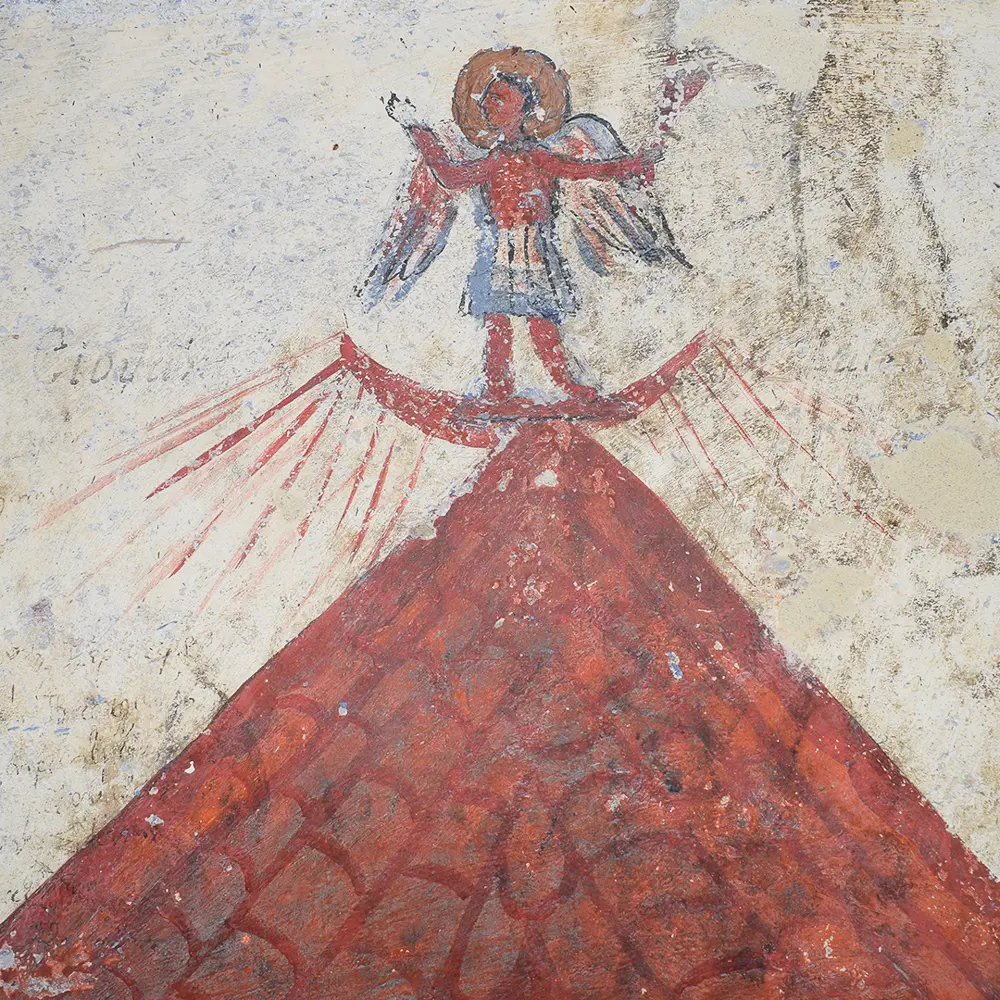
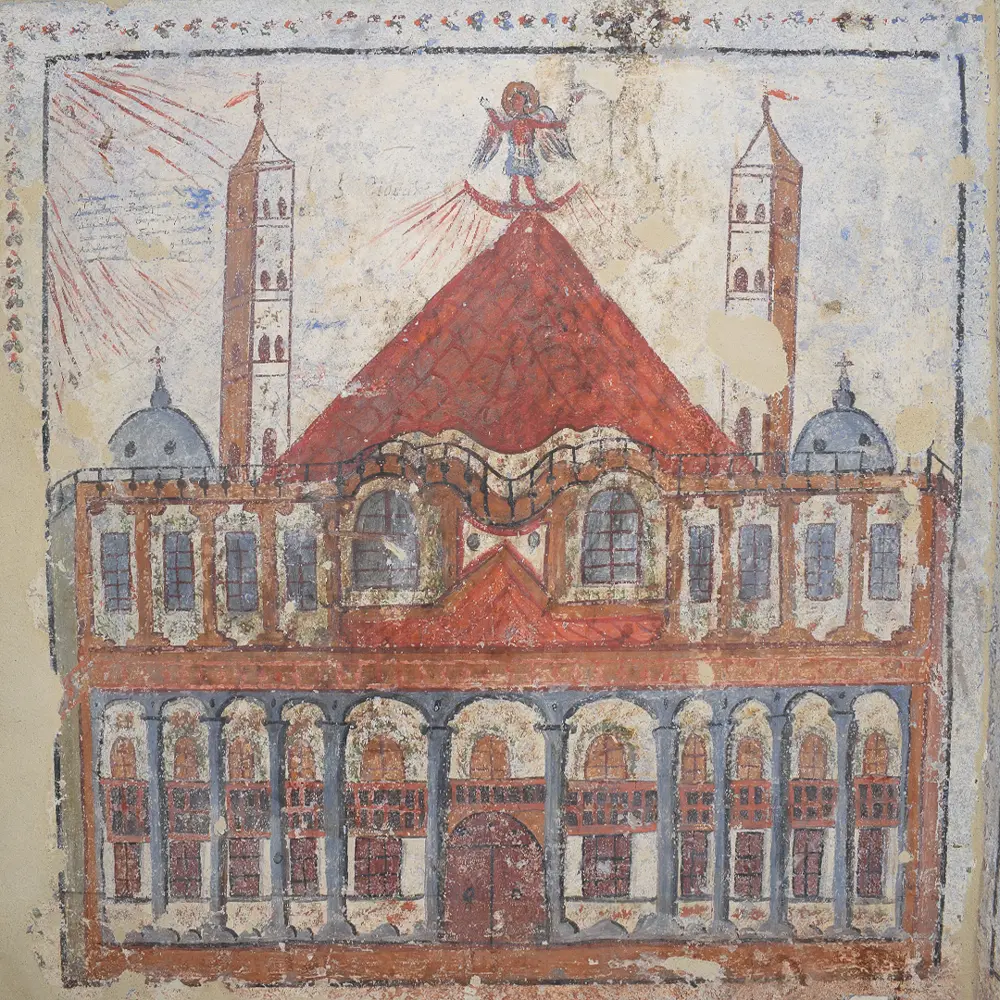
Αρχοντικό Αργυριάδη (Μαλιόγκα), κεντρικός χώρος ισογείου, τοιχογραφία: Λεπτομέρεια από παράσταση εκκλησίας με άγγελο στην στέγη του.
Αρχοντικό Αργυριάδη (Μαλιόγκα), κεντρικός χώρος ισογείου, τοιχογραφία: Παράσταση εκκλησίας με άγγελο στην στέγη του. Διακρίνεται η επιγραφή S. Giovanni (Πιθανώς να εικονίζεται εκκλησία της Ρώμης, ενδεχομένως ο Άγιος Ιωάννης του Λατερανού ή η Santa Maria Maggiore).
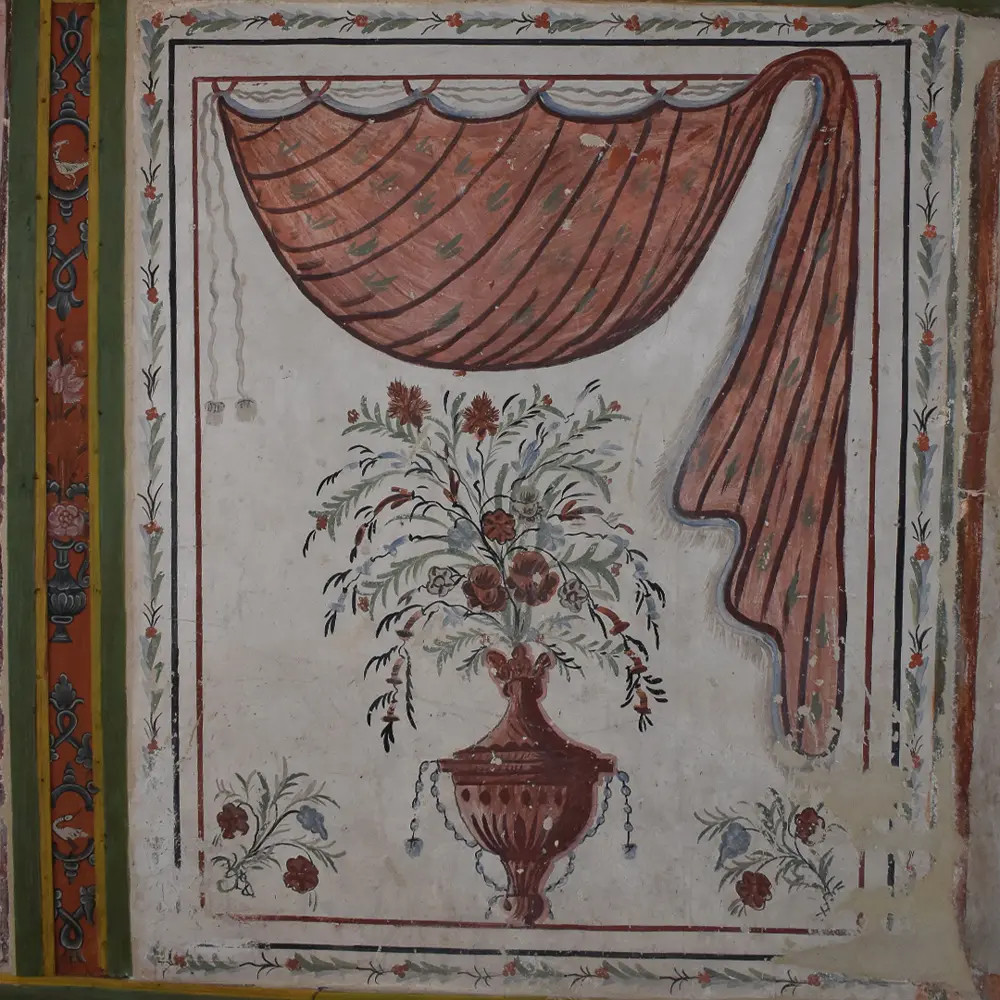
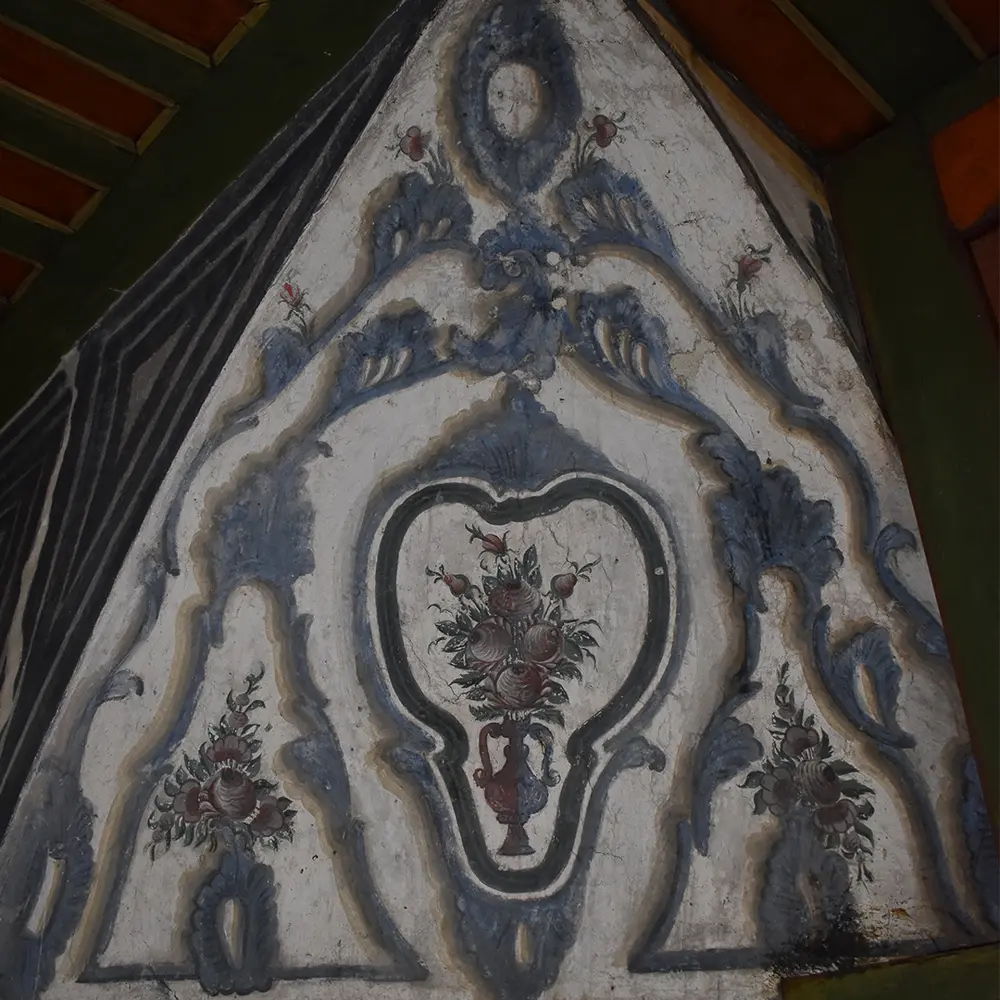
Αρχοντικό Αργυριάδη (Μαλιόγκα), κεντρικός χώρος ισογείου, τοιχογραφία: Διακοσμητικό πλαίσιο με άνθη και ανθοδοχείο.
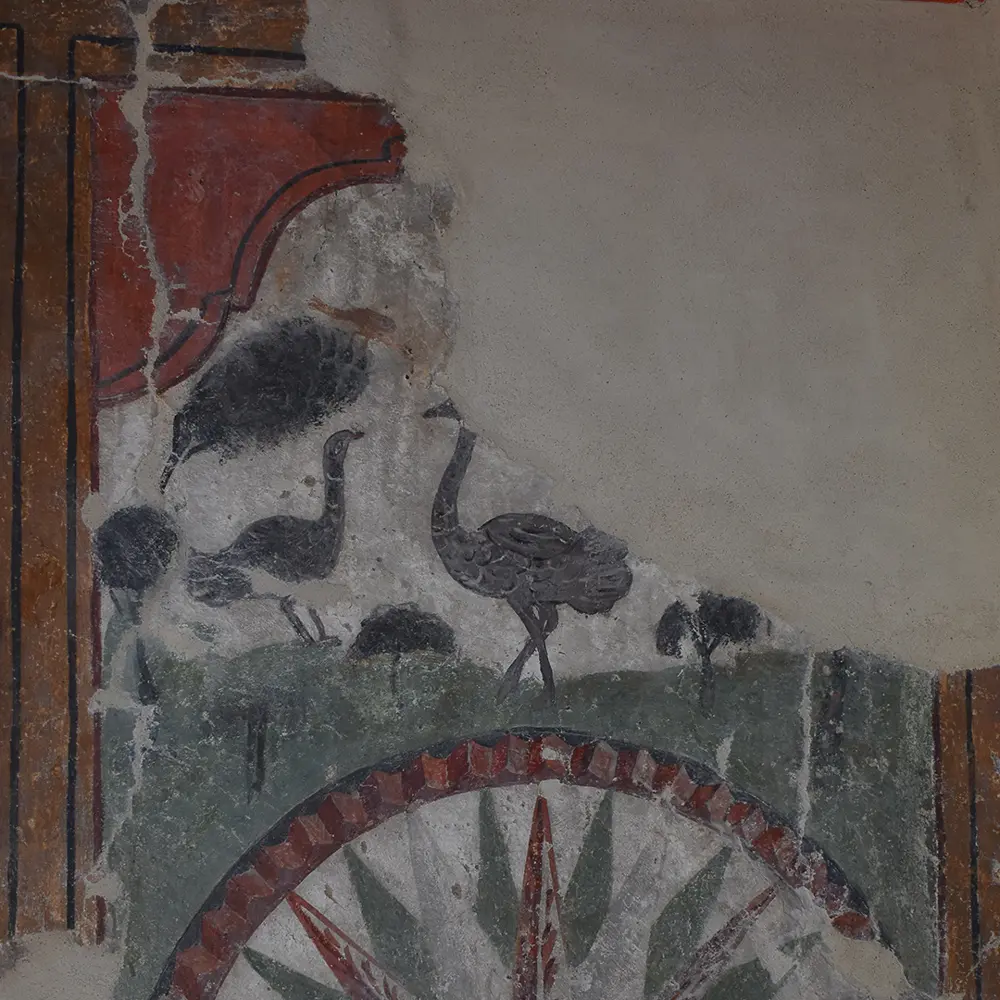
Αρχοντικό Αργυριάδη (Μαλιόγκα), κεντρικός χώρος ισογείου, τοιχογραφία: Τοπίο με στρουθοκαμήλους και πουλιά.
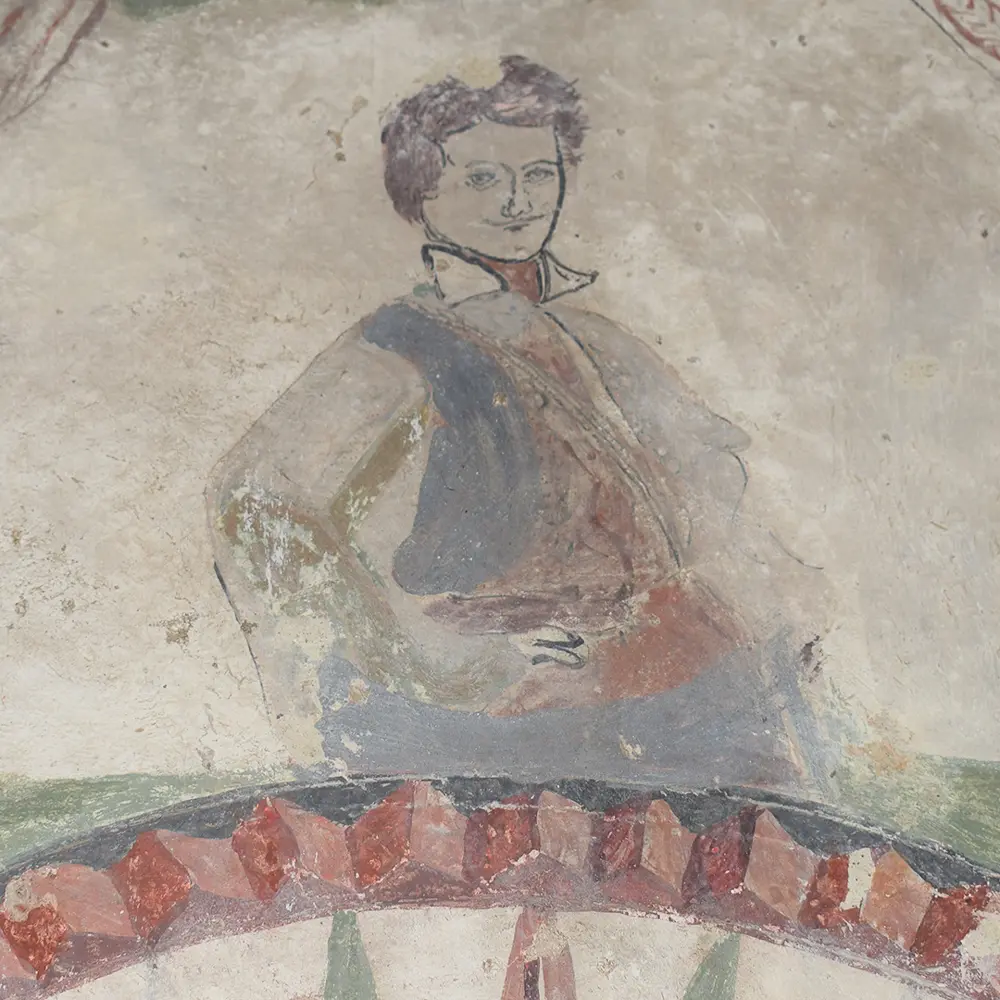
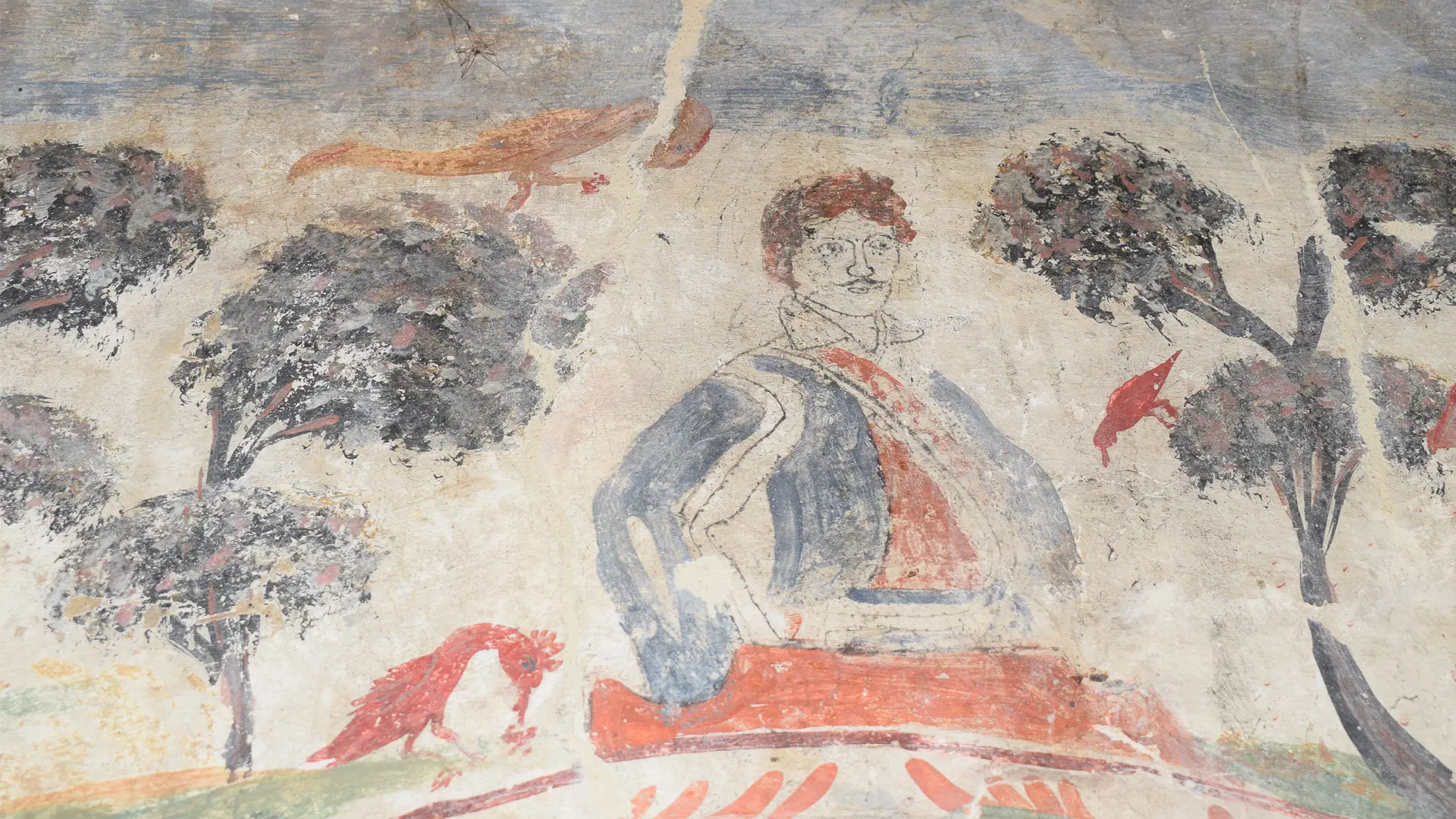
Αρχοντικό Αργυριάδη (Μαλιόγκα), κεντρικός χώρος ισογείου, τοιχογραφία: Ο Βασιλιάς Όθων Α΄ της Ελλάδας.
Αρχοντικό Αργυριάδη (Μαλιόγκα), κεντρικός χώρος ισογείου, τοιχογραφία: Ο Ρήγας Βελεστινλής.
Αρχοντικό Αργυριάδη (Μαλιόγκα), εξωτερική όψη του αρχοντικού: Εξωτερικές τοιχογραφίες στον όροφο του αρχοντικού. Διακρίνεται στο κέντρο η επιγραφή με τη χρονολογία τοιχογράφησης του αρχοντικού (1844).
Αρχοντικό Αργυριάδη (Μαλιόγκα), εξωτερική όψη του αρχοντικού.
Αρχοντικό Αργυριάδη (Μαλιόγκα), ισόγειο, καλός οντάς, τοιχογραφία: Παράσταση της Φρανκφούρτης στον ποταμό Μάιν, λεπτομέρεια με τμήμα της πόλης, γέφυρα, πλεούμενα, ψάρια και πουλιά. Ενύπωση προκαλεί το μεγάλο ιστιοφόρο που φέρει μεγάλο κανόνι.
Αρχοντικό Αργυριάδη (Μαλιόγκα), όροφος, καλός οντάς, τοιχογραφία: Σωζόμενο τμήμα της απράστασης της Κωνσταντινούπολης και διακοσμητικό μοτίβο με άνθη και φρούτα.
Αρχοντικό Αργυριάδη (Μαλιόγκα), όροφος, διάδρομος, τοιχογραφία: Παράσταση αυστριακού ουσάρου (έφιππου στρατιώτη). Διακρίνεται η επιγραφή: Le Houssare d’ Autriche (ο ουσάρος της Αυστρίας).
Αρχοντικό Αργυριάδη (Μαλιόγκα), ισόγειο, καλός οντάς, τοιχογραφία: Παράσταση της Φρανκφούρτης στον ποταμό Μάιν (λεπτομέρεια). Η τοιχογραφία του αρχοντικού βασίζεται σε χαλκογραφία του Johann Friedrich Probst με το ίδιο θέμα.
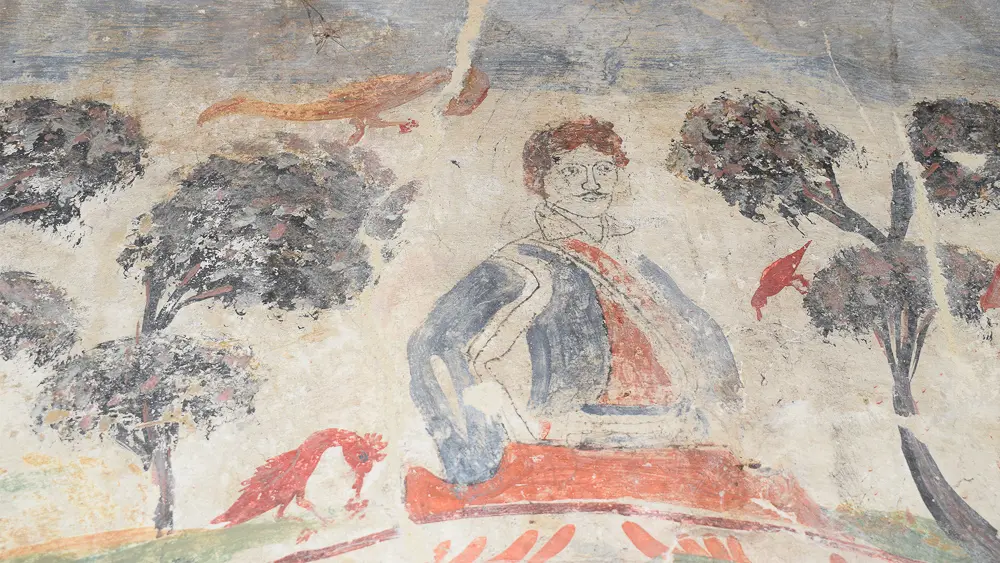
Αρχοντικό Αργυριάδη (Μαλιόγκα), δωμάτιο ισογείου, τοιχογραφία: Ο Βασιλιάς Όθων Α΄ της Ελλάδας σε κήπο (λεπτομέρεια).
Αρχοντικό Αργυριάδη (Μαλιόγκα), δωμάτιο ισογείου, τοιχογραφία: Ο Βασιλιάς Όθων Α΄ της Ελλάδας σε κήπο (λεπτομέρεια).